
What the symptom usually means
When you see your fuel economy drop by a noticeable margin—say, losing a couple of miles per gallon over several fill-ups—yet the check engine light stays off, the culprit is often a sensor whose readings have drifted out of calibration without yet crossing the fault threshold, a mechanical drag that the computer can't detect, or a behavioral change in your driving or vehicle loading. The engine control unit (ECU) uses many inputs to calculate fuel delivery, and if one of them, like the engine coolant temperature (ECT) or mass air flow (MAF) sensor, reports a value that's slightly off but still plausible, the ECU will compensate with fuel trim adjustments, causing you to burn extra fuel. Similarly, a sticking brake caliper, underinflated tire, or even a roof rack adds mechanical load that the engine must overcome, silently eroding efficiency. Because these conditions don't immediately set a diagnostic trouble code (DTC), the first sign is often just a lighter wallet.
Common causes
- Underinflated or mismatched tires – increased rolling resistance forces the engine to work harder, often costing several percent in MPG.
- Brake drag – a caliper that does not fully retract or a seized slider pin causes constant friction; you may feel a pull, hear grinding, or notice a hot wheel after driving.
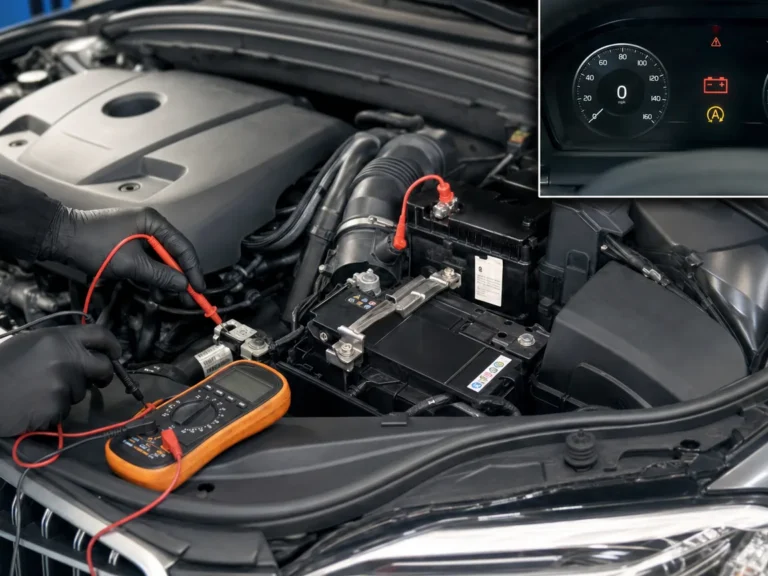
- Dirty or faulty MAF sensor – incorrect airflow data makes the ECU inject the wrong amount of fuel, usually driving long-term fuel trim positive or negative without setting a code immediately.
- Failing ECT sensor – if the sensor reports a colder temperature than actual, the ECU stays in enrichment mode, burning extra fuel even on a fully warmed engine.
- Aggressive driving – heavy throttle, high cruising speed, and prolonged idling all waste fuel; the ECU does not flag these behaviors.
- Excess weight or aerodynamic drag – roof racks, cargo boxes, bike carriers, or towing increase air resistance and load, silently hurting MPG.
- Worn spark plugs or aging ignition components – incomplete combustion can occur without reaching the misfire threshold needed to illuminate the light, gradually cutting efficiency.
Quick checks
Before buying parts, perform these free driveway checks to narrow the suspect list. Tire pressure has a direct effect on rolling resistance, and even moderate underinflation adds up across all four wheels.
Also walk around the car after a drive without heavy braking and feel each wheel hub with the back of your hand. A hub that's hot to the touch, especially on one side, suggests brake drag. Then perform a coast-down test on a flat road: accelerate toonce road speed rises, shift to neutral, and note how far the car coasts to a stop. If it slows dramatically or pulls to one side, you likely have brake drag or alignment drag.
When it is urgent
- Brake smoke or a burning smell from a wheel – can indicate a stuck caliper that may boil brake fluid or cause a fire.
- A wheel that is excessively hot to the touch after a short drive – scalding risk and severe drag.
- A sudden drastic drop in MPG accompanied by raw fuel odor – possible fuel leak, fire hazard.
- Engine misfiring or severe hesitation – can damage catalytic converters and leave you stranded.
- A flashing check engine light – indicates a severe misfire that will harm the catalyst if driven.
If your MPG is gradually worsening with no other abnormal symptoms, you can schedule a diagnostic appointment at your convenience.
Diagnostic order
- Perform a manual MPG calculation over three tanks to rule out trip computer error. If the hand-calculated average confirms a real drop, proceed.
- Set all tires to the pressure listed on the driver’s door placard. Inspect tread for uneven wear that could indicate alignment or suspension issues.
- Conduct a coast-down test and hub temperature check. If coast-down distance is significantly shorter than expected or one hub is much hotter than the others, focus on brake or bearing drag before any sensor diagnosis.
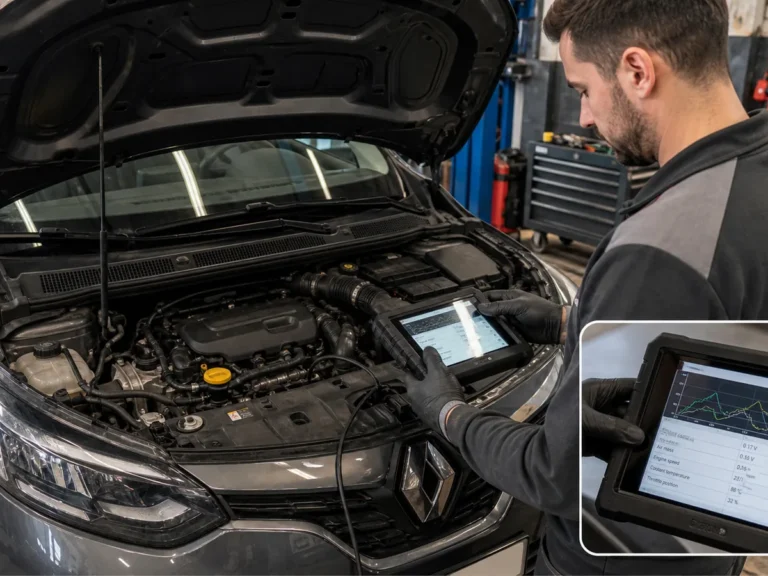
- Connect an OBD-II scanner and check for pending codes—even without a solid check engine light, the ECU may have stored a pending code that points to a system.
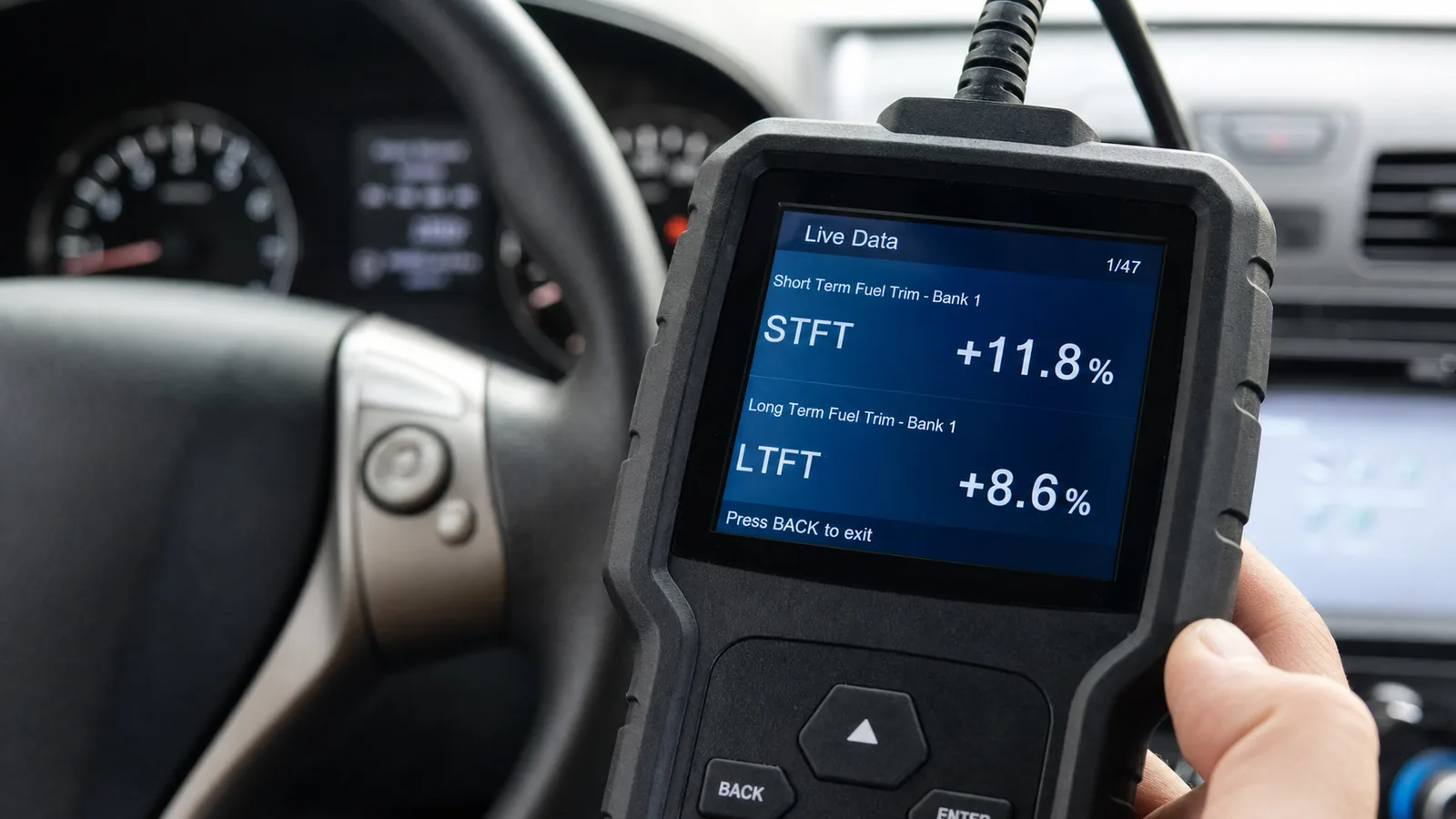
- Monitor STFT and LTFT at idle and at steady cruise. Normal LTFT is near the exact percentage varies (±the exact percentage varies). If LTFT is persistently above +the exact percentage varies, the ECU is adding fuel to correct a lean condition (likely vacuum leak, low fuel pressure). If LTFT is below -the exact percentage varies, it is pulling fuel (commonly from a MAF over-reporting or excessive fuel pressure).
- With the engine completely cold (overnight soak), compare the ECT sensor reading to ambient temperature via live data. A difference of more than a few degrees means the sensor is skewed and should be replaced.
- Check MAF sensor readings at hot idle against expected grams per second (typically near engine displacement in liters). A dirty MAF often under-reports airflow, causing positive fuel trims. Clean it with MAF cleaner; if trims don’t return to normal, suspect sensor failure.
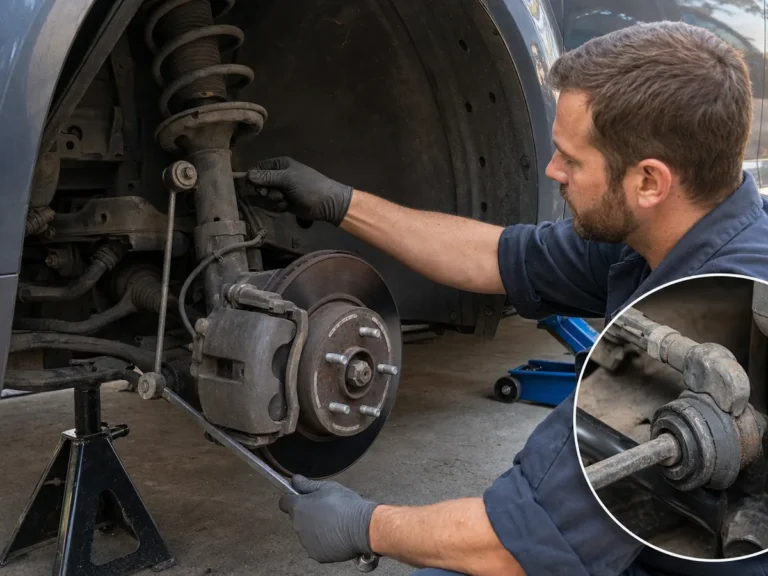
- If fuel trims and sensors look reasonable, raise the vehicle and spin each wheel by hand. Feel for brake drag, listen for bearing noise, and check for axle or driveline bind.
- Have the alignment checked if the vehicle pulls or tires show wear patterns. Toe misalignment acts like a constant brake, increasing rolling resistance.
- If all mechanical and sensor checks pass, evaluate driving habits, winter fuel blend, and external loads. Compare your MPG during steady highway driving under similar conditions to isolate behavioral factors.
Parts that may be involved
Trip computers often over- or underestimate fuel economy, so the first step is to confirm the drop is real. Fill the tank until the pump clicks off, reset the trip meter, and drive normally. At the next fill-up, divide the miles driven by the gallons added. Repeat this process over three consecutive tanks and average the results. If the three-tank average shows the same drop your trip computer reports, the problem is mechanical. If the hand-calculated number looks normal, the computer is misleading you—often due to a miscalibrated fuel-level sender or a software glitch. Once you’ve confirmed a genuine loss, move on to a thermal check for brake drag, a tire pressure and visual check, and a live-data scan for subtle sensor faults.
- Mass Air Flow (MAF) sensor – contamination or electrical drift alters the primary load signal; often affects LTFT strongly.
- Engine Coolant Temperature (ECT) sensor – a sensor that reads colder than reality keeps the engine in warm-up enrichment.
- Oxygen (O2) sensors – an aging upstream sensor may respond slowly, causing fuel trim oscillation that wastes fuel without setting a code.
- Brake calipers, pads, and slider hardware – any binding prevents free rotation and goes undetected by electronic systems.
- Wheel bearings – a failing bearing adds rolling resistance; may also cause noise but rarely triggers an ABS fault until severe.
- Tires – below-spec pressure, mismatched sizes, or high-rolling-resistance compounds all hurt economy.
- Thermostat – stuck open, causing the engine to run cooler than designed; the ECU may add fuel to compensate.
- Air filter – a heavily clogged filter reduces air intake, producing a richer mixture and lower MPG.
- Fuel pressure regulator – if pressure is too high, the injectors deliver more fuel than commanded; if too low, the ECU adds trim to compensate.
- Spark plugs – worn plugs can cause borderline misfires that don’t reach the code threshold yet waste fuel.
FAQ
What is a normal Long Term Fuel Trim (LTFT) range?
Normal LTFT typically stays between -the exact percentage varies and +the exact percentage varies on a fully warmed engine at idle and light cruise. Values persistently outside ±the exact percentage varies indicate a fueling correction that should be investigated. Readings near +the exact percentage varies suggest a significant lean condition (like a vacuum leak); near -the exact percentage varies suggest the ECU is pulling a lot of fuel, possibly from a stuck-open injector or MAF over-reporting.
Can a bad engine coolant temperature sensor cause poor fuel economy without turning on the check engine light?
Yes. If the ECT sensor fails in a way that still outputs a plausible but incorrect temperature—for example, always reading colder than actual—the ECU will enrich the fuel mixture as if the engine is still warming up, lowering MPG. To check, use a scanner to compare the sensor reading after an overnight soak to the ambient air temperature; a difference of more than a few degrees means the sensor is suspect and should be tested or replaced.
Should I clean or replace my MAF sensor?
Clean it first if it's dirty but not electrically failed. Use a dedicated MAF sensor cleaner spray and let it dry completely. Do not touch the delicate wires. If cleaning does not bring fuel trims back to normal or if the sensor has obvious physical damage, replacement is the next step. A faulty MAF that cannot be cleaned will usually cause persistent fuel trim errors and driveability problems.
How do I perform a coast-down test for brake drag?
Find a flat, straight, low-traffic road. Accelerate toonce road speed rises, then shift into neutral and let the vehicle coast without touching the brakes. Note the distance until it slows toonce road speed rises. A car with no drag will coast a long way—often well over half a mile. If it decelerates abruptly or pulls to one side, brake binding or alignment drag is likely. A quick hub temperature check right after driving provides a simple validation.
Can underinflated tires really hurt fuel economy that much?
Yes. Even being 5 psi below the recommended pressure increases rolling resistance enough to cause a noticeable MPG drop, especially in stop-and-go traffic. All four tires low can compound the effect. Check pressures cold at least monthly and set them to the door placard, not the maximum pressure on the tire sidewall.
Is it safe to keep driving with poor fuel economy?
Usually yes, if there are no other symptoms like brake overheating, fuel smells, or engine misfires. However, if the cause is brake drag, continued driving can lead to brake fade, fluid boil, or even fire. If a sensor is forcing a rich mixture, prolonged operation may harm the catalytic converter. So unless you have ruled out brake drag and confirmed the engine is running smoothly, have it inspected sooner rather than later.

Comments
Be the first to add a practical repair note or follow-up question.