
What the symptom usually means
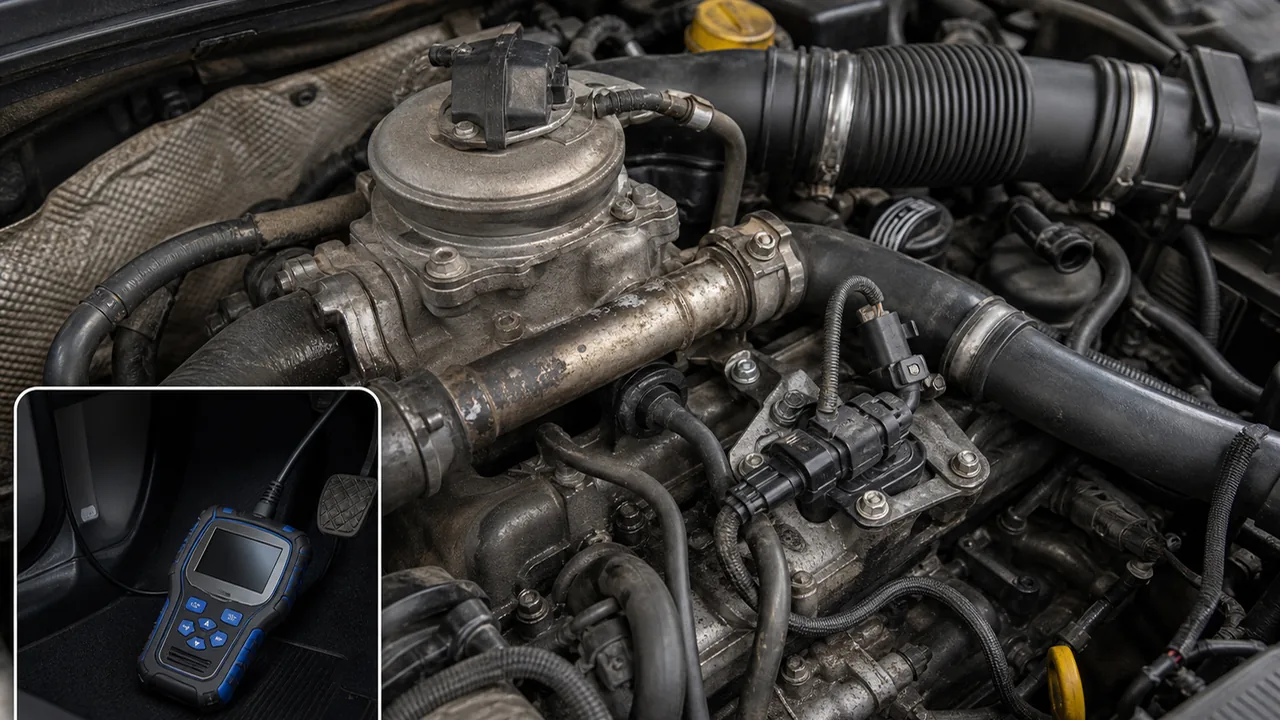
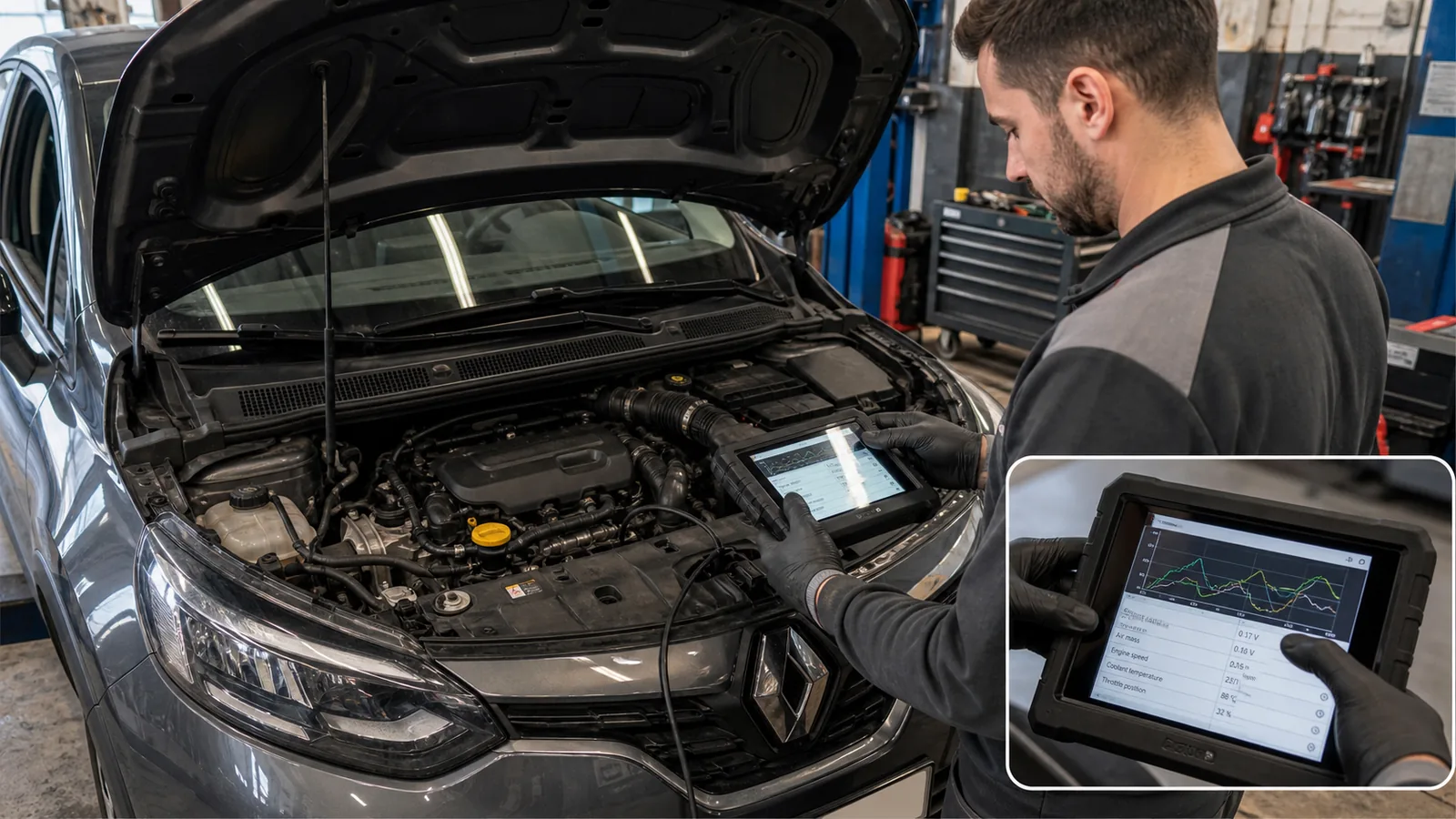
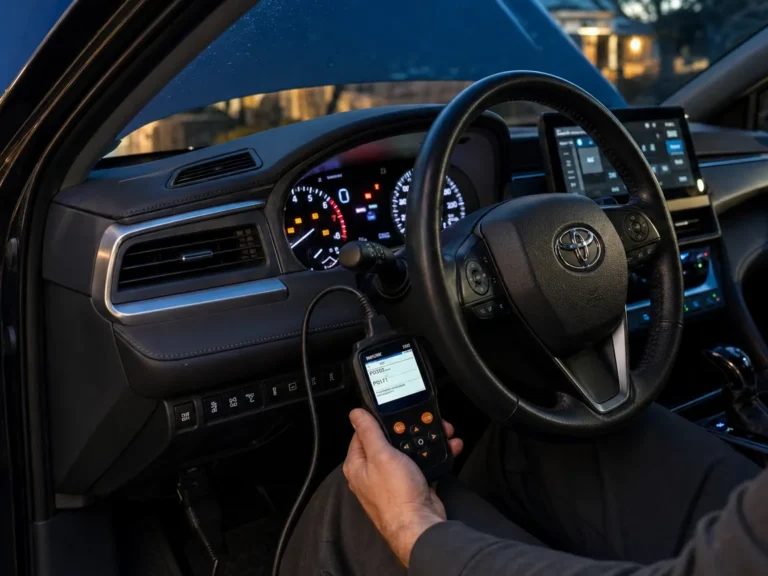
The short answer is to start with a Renault-capable diagnostic scanner and run a full OBD-II scan of the engine control module and related emissions systems before clearing anything or buying parts. Save all stored DTCs, pending DTCs, and freeze-frame data first, then review live data. That matters because the Renault Check Anti-Pollution System warning is broad: it can point to different faults that trigger Renault loss of power or limp mode, and scan data helps separate a real cause from expensive guesswork.
- Stop driving and seek immediate help if a red STOP light or engine failure hazard message appears.
- Stop driving if there is severe misfire, strong hesitation, or the engine feels unsafe to keep running.
- Stop driving if smoke becomes heavy or suddenly worsens.
- Stop driving if the engine is overheating or a no oil pressure warning appears.
- Seek prompt diagnosis if braking or steering warnings appear with the anti-pollution message.
- Arrange diagnostics soon if a no-restart countdown appears, especially on systems tied to emissions warnings.
- If none of those apply, drive gently only as needed to reach diagnostics and monitor for any change in power, warning lights, smoke, or fluid loss.
Common causes
With Renault loss of power and the Renault Check Anti-Pollution System warning, the ranking should come from code grouping, freeze-frame conditions, and live-data mismatch rather than from the warning text alone.
- DPF or regeneration fault is often high on the list for diesels when stored DTCs and pending DTCs cluster around soot loading, exhaust temperature, or regeneration interruption, especially if freeze-frame data shows the fault under load.
- EGR fault moves up when code families point to flow or position problems and live data shows commanded EGR behavior that does not match feedback, often with hesitation or rough low-speed response.
- Boost leak or turbo control fault becomes more likely when requested boost and actual boost do not track well, or when the engine control module records pressure-control or air-path plausibility faults during acceleration.
- MAF or MAP air-metering fault fits when airflow and pressure signals look implausible against engine load, with code families suggesting sensor rationality rather than a clearly failed mechanical part.
- Fuel or injector fault should be considered when combustion, rail-pressure, or balance-related faults appear together with weak pull, hard starting, or uneven running.
- SCR, AdBlue, or NOx faults matter on equipped diesels when emissions-system codes are paired with warnings or countdown behavior, while petrol models may instead show oxygen-sensor or catalyst-related code families.
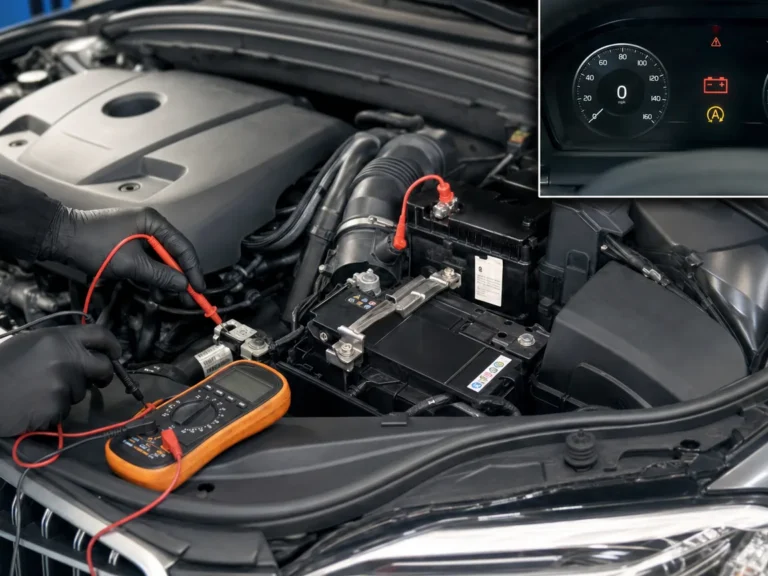
- Wiring, grounds, or battery-voltage issues stay in play when multiple unrelated modules log inconsistent faults or signal dropouts at the same event time.
Scan evidence points to a system to test next, not a guaranteed failed part. Confirm with visual checks, live data, and targeted follow-up tests before replacing components.
After the full scan, treat stored DTCs and pending DTCs as clues that need context. A generic P-code or a Renault-enhanced fault entry does not automatically mean one part has failed. It points to a circuit, a system, or a behavior the engine control module detected under certain conditions. That is why freeze-frame matters: it shows when the Renault Check Anti-Pollution System warning and Renault loss of power were recorded, which helps separate a repeatable fault from a secondary reaction.
- Useful code families can include DPF efficiency or loading, EGR flow, boost pressure control, MAF/MAP plausibility, injector or misfire faults, fuel pressure, SCR pressure or reductant quality on equipped diesels, NOx, oxygen or catalyst efficiency on petrol models, and exhaust temperature faults.
- Read those code families alongside live data, because limp mode may be triggered by an air, fuel, exhaust, or sensor mismatch rather than the named component itself.
- Do not clear codes too early. Clearing them can erase the freeze-frame conditions and fault history needed to confirm the real cause before parts are replaced.
If a code appears isolated but the live data does not support it, verify wiring, supply voltage, recent battery issues, and related system faults before calling the component bad.
Once the Renault-capable diagnostic scanner has captured stored DTCs, pending DTCs, and freeze-frame data, avoid turning a diagnosable fault into a bigger one. Do not force a DPF regeneration unless a technician has assessed the vehicle, confirmed the likely cause, and has safe conditions to do it. Do not delete, bypass, or remove emissions equipment. That can create new faults, legal problems, and misleading scan results.
Do not keep driving with severe warnings, and do not replace the DPF, EGR, injectors, turbo-related parts, NOx sensors, AdBlue components, or other sensors just because a forum thread named them. Owner reports can help describe symptoms, but they do not confirm the failed part on your Renault. Also, do not clear codes before saving the diagnostic evidence first.
- Stop driving and seek immediate help if a red STOP light or engine failure hazard message appears.
- Stop driving if heavy smoke increases or changes noticeably.
- Stop driving if the engine misfires badly, shakes hard, or struggles to respond.
- Stop driving if the temperature warning appears or the engine shows signs of overheating.
- Stop driving if a no oil pressure warning appears.
- Stop driving if limp mode becomes severe enough that the car cannot maintain safe traffic flow.
- If none of these are present, drive gently only as needed to reach diagnostics and monitor for any worsening warning lights or fluid loss.
After the owner checks and the do-not-do warnings, this is the point to book proper testing. A diagnostic appointment is the right next step if the Renault Check Anti-Pollution System warning comes with Renault loss of power, repeated warnings, DPF or SCR-related messages, a no-start countdown, or several unrelated faults at once. The goal is not to guess the part. It is to preserve evidence, confirm the failed system, and avoid replacing emissions, injector, sensor, turbo, or catalyst parts on suspicion alone.
- When you book, provide the model, engine and fuel type, the exact warning text, warning-light color, whether limp mode is present, and whether the power loss is constant or intermittent.
- Add the key context that helps reduce misdiagnosis: smoke, recent fuel fill or possible misfuel event, any AdBlue warning or refill event, recent battery issues, and clear photos of stored DTCs, pending DTCs, and the dashboard message.
- Ask for a full OBD-II scan with a Renault-capable diagnostic scanner, not just a basic code read. That gives access to Renault-enhanced faults, freeze-frame context, related module data, and guided tests that cheaper tools may miss.
- Use that scan result to group the fault correctly before any parts decision. This is how a shop separates DPF, EGR, boost, air-metering, fuel, SCR, or wiring problems instead of chasing symptoms.
- If the early scan and visual checks do not reveal an obvious cause, the next sensible confirmation step is controlled live-data review and guided system tests on the suspected branch.
Quick checks
Once the owner notes are saved, the technician should follow a strict scan-first process. The goal is to confirm which system is actually failing behind the Renault Check Anti-Pollution System warning and Renault loss of power, not to replace the first part named by a fault description.
- Run a full module scan with a Renault-capable diagnostic scanner, then save stored DTCs, pending DTCs, and freeze-frame data from the engine control module and related emissions systems.
- Group faults by system and timing. Separate DPF, EGR, boost, air-metering, fuel, and SCR or NOx clues instead of treating one code as proof of a bad component.
- Review live data under controlled conditions. Compare DPF differential pressure, EGR command versus feedback, boost requested versus actual, MAF and MAP behavior, fuel rail pressure, injector balance where applicable, SCR or AdBlue data, NOx data, and exhaust-temperature logic where supported.
- If the basic visual and scan-based checks are inconclusive, have a technician confirm fan-circuit power, command signals, and module operation with the correct wiring data.
- Use confirmatory tests only after the scan and visual checks point to a branch. That may include smoke or pressure testing, actuator tests, and service-information checks for known updates or related procedures.
- After repair, clear codes, repeat the relevant live-data check, complete a controlled road test, review readiness or monitor status where applicable, and recheck for returning faults. If the early checks pass but the warning remains, the next step is a deeper Renault-specific system test rather than parts guessing.
When it is urgent
Before deeper diagnosis, decide whether this is a stop-driving event or a drive-gently-to-diagnostics event. If the Renault Check Anti-Pollution System warning appears but the engine runs smoothly with only reduced power, drive gently only as needed to reach a safe place or a diagnostic appointment. Do not continue normal use, and do not attempt long drives or forced regeneration-style runs when symptoms are getting worse. If the warning stays on, repeats, or appears with limp mode, book diagnostics soon and keep your stored DTCs, pending DTCs, and freeze-frame data saved before anything is cleared.
- Stop driving and seek immediate help if a red STOP light, engine failure hazard message, or no oil pressure warning appears.
- Stop driving if braking or steering warnings appear at the same time, even if the engine still runs.
- Stop driving if the engine is shaking badly, misfiring severely, stalling, or barely responding to throttle input.
- Stop driving if smoke becomes heavy, unusually thick, or is paired with a strong burning smell.
- Stop driving if the engine shows overheating signs or you notice active fluid loss under the vehicle.
- Book diagnostics soon if the warning returns after restart, stays on with limp mode, or a no-restart countdown appears.
- Drive gently only to diagnostics if power is reduced but the car remains smooth, stable, and free of severe warnings.
Diagnostic order
The Renault Check Anti-Pollution System warning is a broad fault message, not a confirmed parts diagnosis. On some Renault models it appears with general emissions-system faults, while on others the warning context may point more toward particulate-filter, air-metering, fuel-delivery, or exhaust-aftertreatment issues. The dashboard wording tells you which system family needs attention, but it does not prove that the DPF, EGR system, AdBlue or SCR hardware, a NOx sensor, the catalyst, or one specific sensor is the root cause.
If Renault loss of power appears at the same time, the engine control module may be placing the vehicle in limp mode to protect the engine or limit emissions-related stress until the fault is identified. Diesel, petrol, hybrid, and SCR-equipped variants can lead to different first checks, so the warning text should be treated as a clue rather than a verdict. That is why the next step remains the same: use a Renault-capable diagnostic scanner, save stored DTCs and pending DTCs, keep the freeze-frame data, and review live data before clearing anything.
Treat the message as a scan-first warning, not proof that one part has failed.
After saving stored DTCs, pending DTCs, and freeze-frame data, the most useful owner job is to preserve context before anything changes. Write down the exact dashboard wording, note whether the Renault loss of power is constant or only appears when cold, hot, or under acceleration, and say if the car has entered limp mode. That detail helps a technician match the warning to the right system instead of chasing a single part too early.
- Record every warning light and any message shown with the Renault Check Anti-Pollution System warning.
- Note fuel type and any recent fuel fill, misfuel concern, AdBlue top-up, or countdown message on SCR-equipped diesels.
- Describe smoke color in simple terms, plus rough idle, misfire feel, hard starting, or unusual vibration.
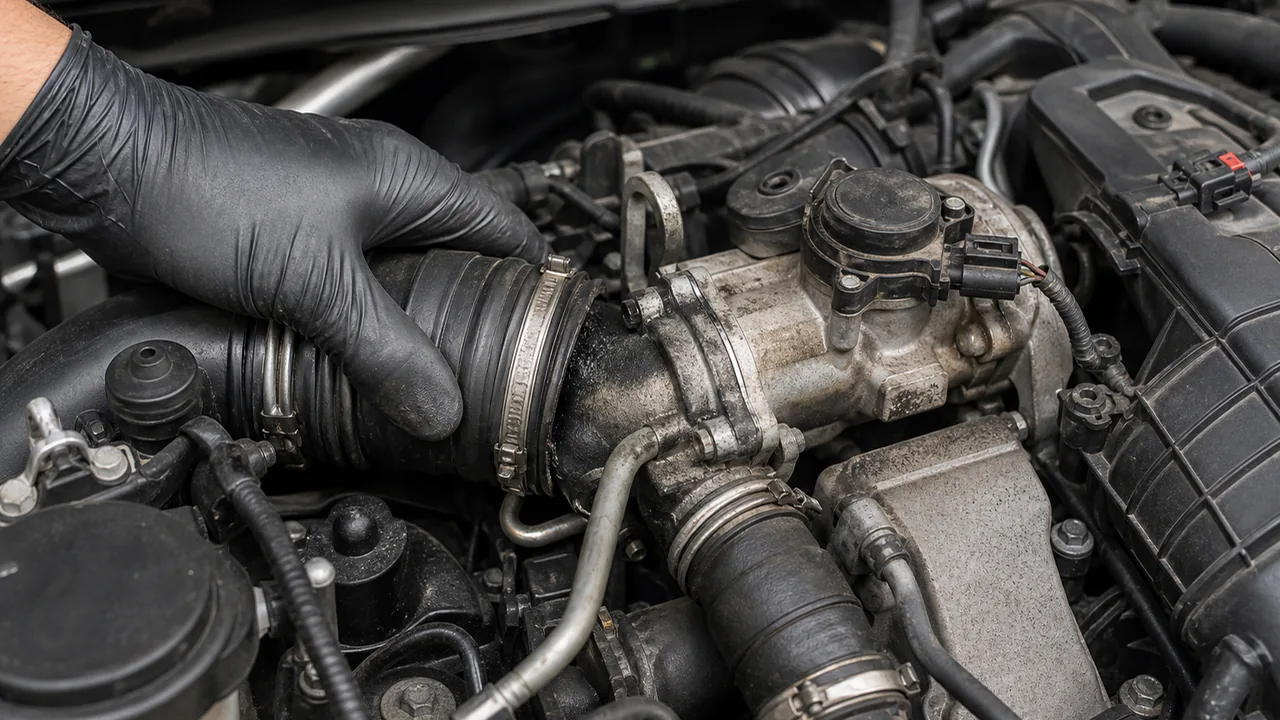
- Check for an obviously loose intake hose only if it is safely visible with the engine off; do not dismantle anything or touch hot components.
- Take clear photos of code screens, freeze-frame screens, and recent service records before clearing anything.
If the warning is repeated, the engine runs badly, or smoke is heavy, keep driving to a minimum and move to a Renault-capable diagnostic session rather than trying resets or additive-based fixes at home.
Parts that may be involved
Renault Check Anti-Pollution System with loss of power usually means the first step is a full-system Renault-capable diagnostic scan of the engine control module and related emissions systems, saving stored and pending DTCs, freeze-frame data, and live data for the DPF, EGR, boost, air metering, fuel or injection, and SCR or AdBlue where fitted before anything is cleared. This warning plus power loss often points to an emissions or air-fuel control fault family that can include DPF, EGR, boost, air-metering, fuel-delivery, or SCR-related problems. Treat loss of power or limp mode as a drivability fault, not just a message on the dash, and diagnose it promptly. Do not clear codes before saving them, because that can erase the evidence needed to confirm the cause. Stop driving and get immediate help if there is a red STOP light, severe misfire, heavy smoke, overheating, or a no-restart warning.
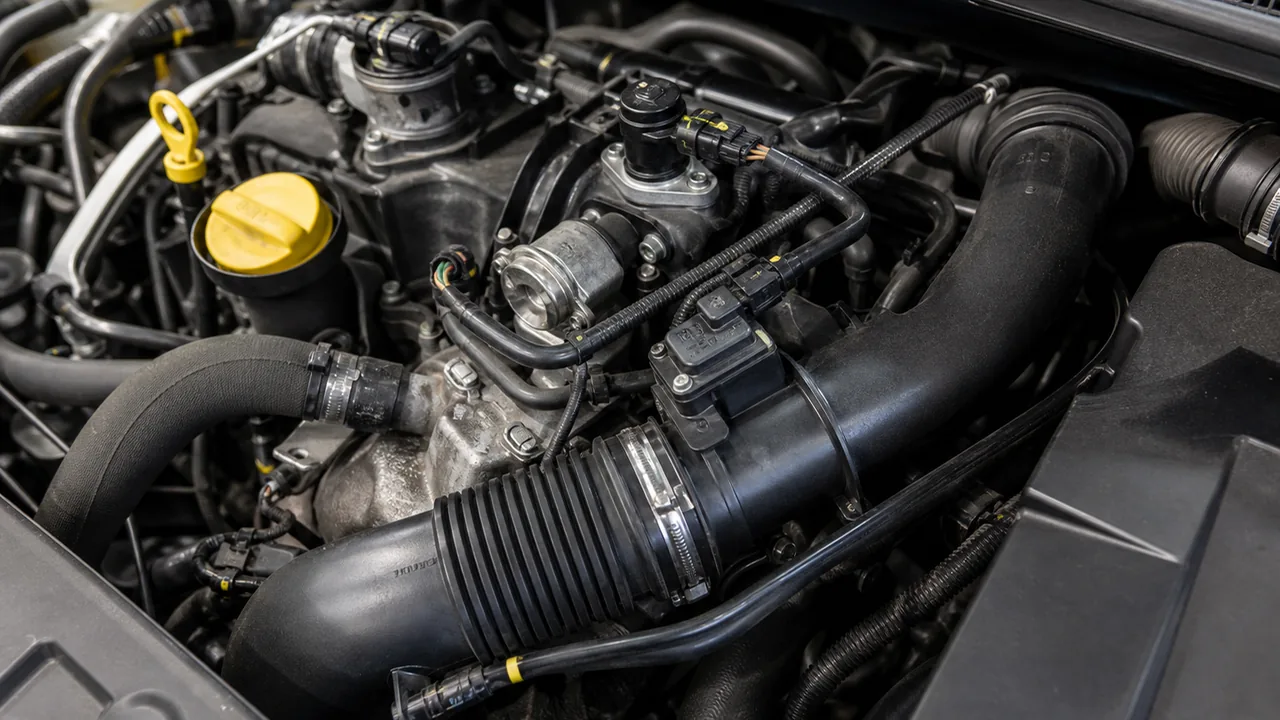
Scan the engine control module and related emissions systems first with a Renault-capable diagnostic scanner, save all stored DTCs, pending DTCs, historic codes, and freeze-frame data, then review live data before clearing anything or buying parts. Because Renault loss of power can mean limp mode tied to emissions or control faults, treat the warning seriously and avoid unnecessary driving if the engine is running poorly, smoking, overheating, or showing a STOP message.
- Run a full-system OBD-II scan, not just a quick generic engine-code read. Start with the engine control module, then check emissions and aftertreatment, injection, turbo or boost control, and SCR or AdBlue systems where fitted.
- Save the code set exactly as found. That includes stored DTCs, pending DTCs, history entries if the tool shows them, and the freeze-frame snapshot that shows operating conditions when the fault was logged.
- Review live data before any reset. Look for patterns across airflow, boost, fuel, exhaust aftertreatment, and related voltage or communication faults, because a low-voltage or network issue can confuse multiple modules at once.
- Use code grouping to guide the next step. A fault family pointing to DPF, EGR, boost control, air metering, injector control, or SCR is more useful than replacing common parts based on the dashboard message alone.
A basic generic scanner may read only part of the fault picture. Renault-enhanced codes and module data can be important for this warning, so a Renault-capable diagnostic scanner or professional scan is the safer starting point.
FAQ
The short answer stays the same: scan the engine control module and related emissions systems first with a Renault-capable diagnostic scanner, save stored DTCs, pending DTCs, and freeze-frame data, then review live data before clearing codes or buying parts.

Comments
Be the first to add a practical repair note or follow-up question.