
What the symptom usually means
Highway-speed brake shake happens because rotating parts are moving fast enough that small errors become obvious. When the brakes apply force, the pads squeeze the rotor, the hub carries the rotating assembly, and the steering and suspension transmit vibration into the cabin.
The shake does not prove the rotor is physically warped. More accurate possibilities include rotor runout, rotor thickness variation, uneven pad transfer, heat spotting, or a rotor that is not mounted squarely on the hub.
If the vibration appears only while braking, brake and hub checks move higher in the diagnostic order. If the vibration also happens while cruising, tires, wheels, bearings, and suspension need equal attention.
Common causes
- Rotor thickness variation or lateral runout: likely when the steering wheel shakes or the brake pedal pulses while braking from highway speed.
- Uneven pad deposits or heat spots: likely when vibration appeared after repeated hard braking, overheated brakes, or pads that were not bedded or seated evenly.
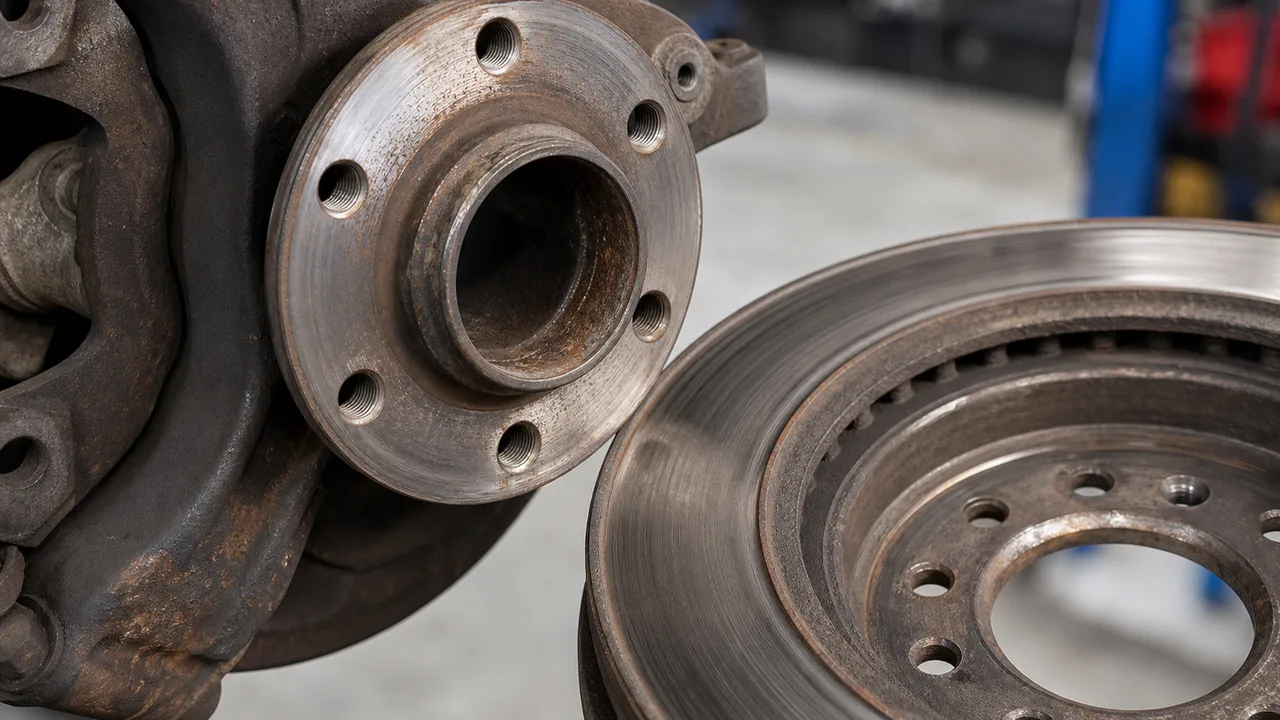
- Hub face rust or debris: likely when new rotors vibrate quickly, the symptom returned after brake service, or the vehicle operates in corrosive conditions.
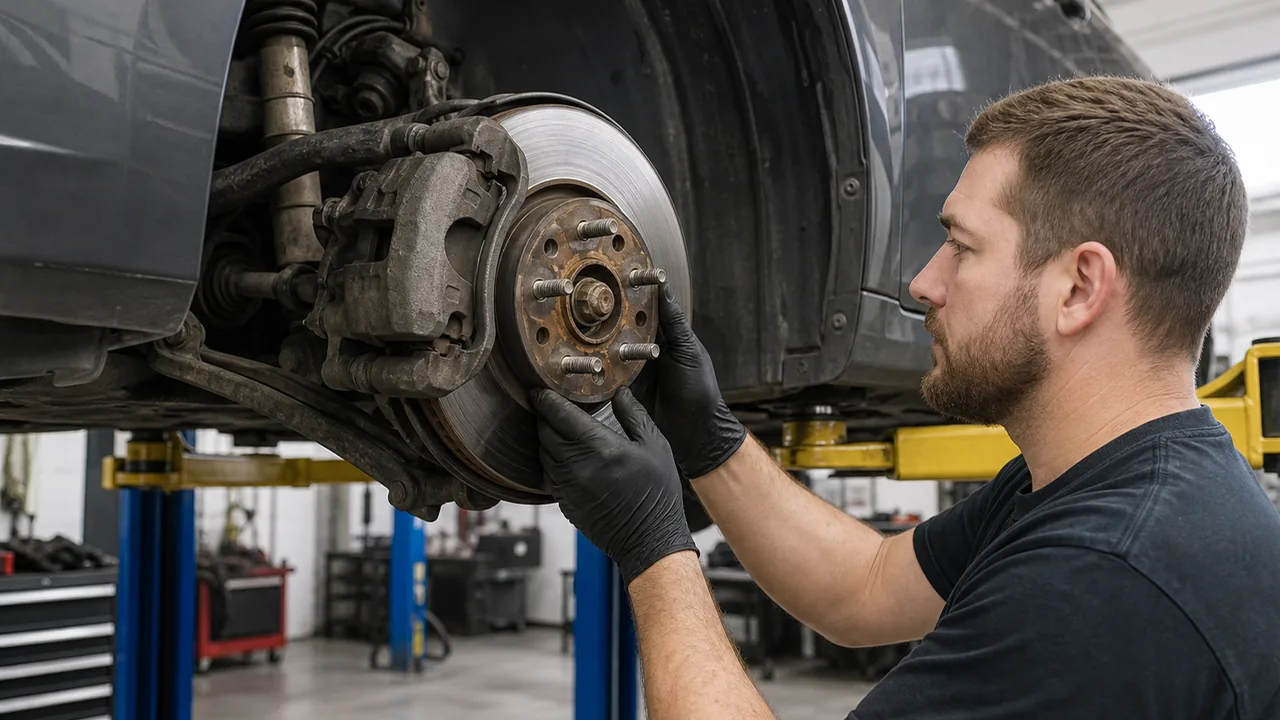
- Uneven wheel or rotor mounting: possible after tire rotation, wheel service, brake service, or incorrect tightening sequence; verify seating and use vehicle-specific torque information.
- Sticking caliper slides or hardware: possible when one brake runs hotter, pad wear is uneven, or vibration comes with pull or drag.
- Tire or wheel problem: likely when vibration is felt in the seat or body, appears without braking, or changes after tire rotation or wheel impact.
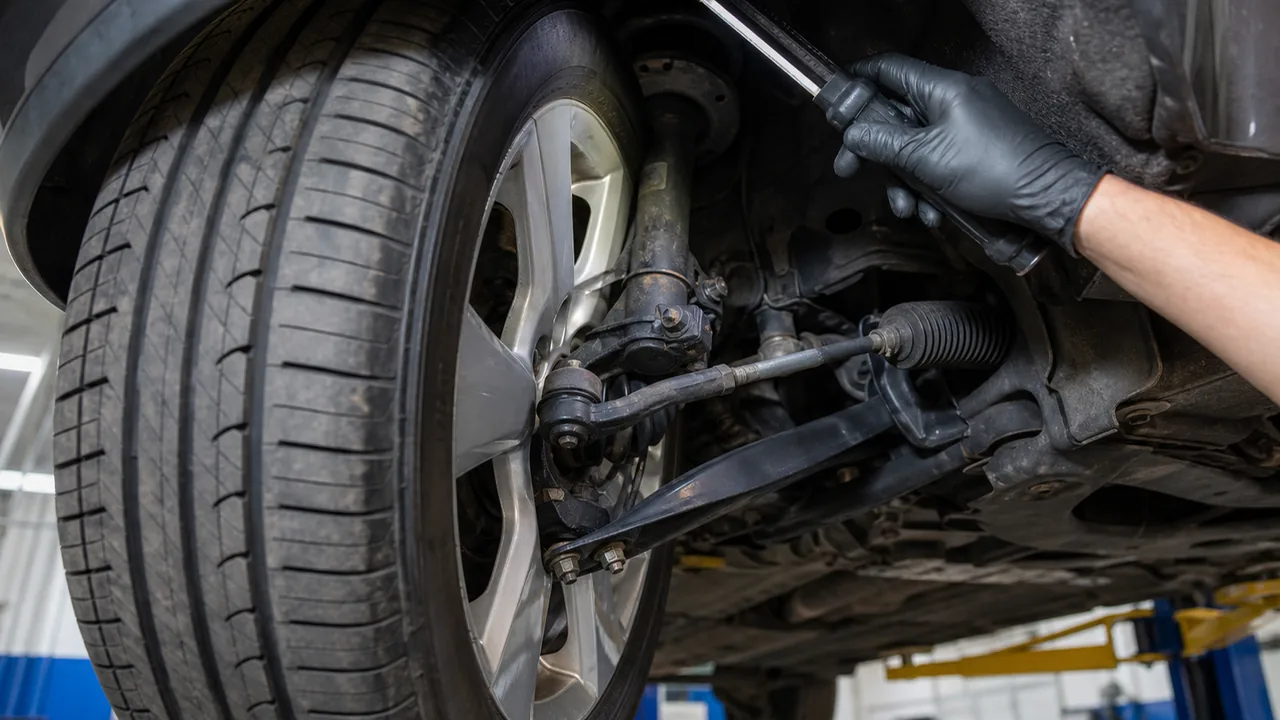
- Suspension or steering looseness: possible when braking causes shimmy, clunking, wandering, or uneven tire wear.
- Wheel bearing play or hub assembly issue: more likely with humming, growling, looseness, ABS or stability warnings, or vibration not limited to braking.
The recommended next check is not the same for every vehicle. A diagnosis-first approach prevents replacing rotors while leaving a rusty hub, sticky caliper, loose suspension joint, or damaged wheel in place.
Quick checks
- Note the speed range where the shake starts and whether it happens only during braking.
- Record whether the steering wheel shakes, the seat vibrates, or the brake pedal pulses.
- Look for visible tire bulges, uneven tread wear, missing wheel weights, or wheel damage from a safe standing position.
- Check whether ABS, brake, traction, or stability warning lights appear.
- Listen for grinding, scraping, humming, growling, clicking, or clunking.
- Remember any recent brake service, rotor replacement, tire rotation, wheel bearing work, or wheel removal.
- Avoid repeated highway test drives if the vibration is worsening or braking control feels different.
If the vehicle shakes even when cruising without braking, include tire balance, wheel damage, axle, bearing, and suspension checks early instead of treating the symptom as a brake-only issue.
When it is urgent
| Urgency level | What you may notice | Practical next step |
|---|---|---|
| Drive cautiously | Light vibration, no noise, normal pedal feel, no pull, no warning lights | Avoid high-speed braking and arrange inspection soon |
| Schedule inspection soon | Recurring steering shake, pedal pulsation, vibration after brake or tire work, mild pull, or uneven tire wear | Request brake, hub, wheel, tire, and front-end diagnosis |
| Stop driving and get help | Violent shake, grinding, changed pedal feel, longer stopping distance, strong pull, looseness, or warning lights | Do not continue highway driving until the vehicle is checked |
Brake vibration is not automatically an emergency, but it should not be ignored when it affects control. A diagnosis-first inspection is safer than repeatedly replacing rotors or continuing to drive while the symptom gets worse.
Diagnostic order
- Interview the driver and record speed, braking condition, steering shake, pedal pulsation, noises, warning lights, and recent service.
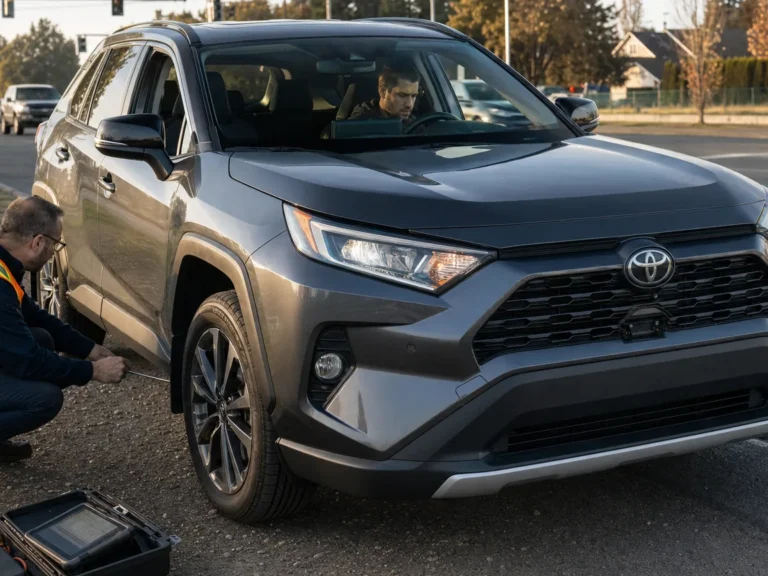
- Perform a careful road test only if the vehicle feels safe enough to drive; compare braking vibration with cruising vibration.
- Inspect tires and wheels for damage, uneven wear, separated tread signs, missing weights, bent wheels, and improper seating.
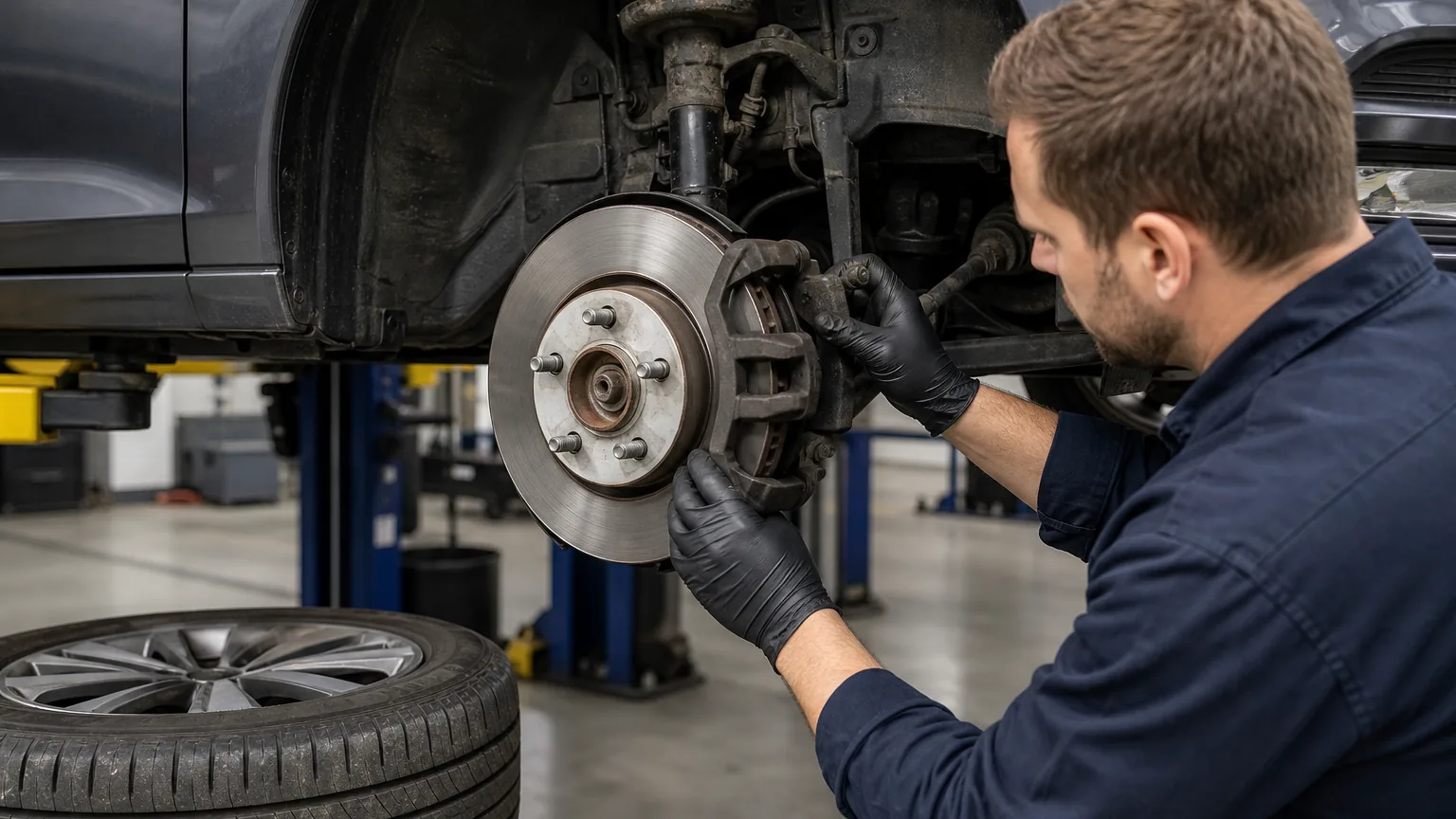
- Inspect brake pads, rotors, caliper slides, caliper brackets, pad hardware, and signs of uneven heat or drag.
- Check rotor runout and rotor thickness variation using suitable tools and vehicle-specific service information.
- Inspect hub faces for rust, scale, debris, and uneven rotor seating; clean and recheck when corrosion is present.
- Verify wheel and rotor mounting practices with the correct tightening sequence and vehicle-specific torque information.
- Check wheel bearing play, roughness, noise under load, hub movement, and wheel speed sensor concerns when symptoms support it.
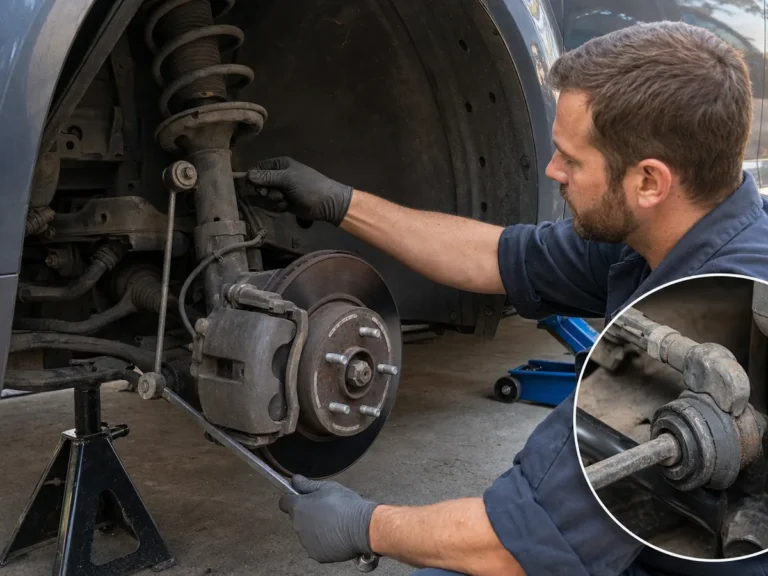
- Inspect steering and suspension joints, control arms, bushings, tie rods, ball joints, struts, and alignment-related tire wear.
- Scan for ABS, traction, stability, or wheel speed sensor codes if warning lights are present, while remembering that rotor or hub rust usually will not set a code.
Do not rely on one clue alone. A steering wheel shake may point toward front brakes, but a tire, wheel, bearing, hub, or front-end issue can still transmit through the steering.
Most rotor, hub rust, wheel mounting, pad deposit, tire, or suspension causes of highway-speed brake shake do not create diagnostic trouble codes.
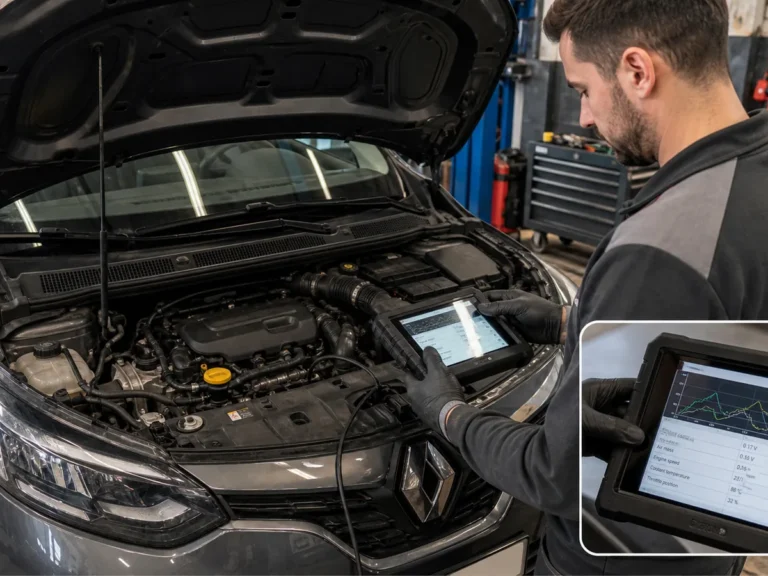
Scan data matters when ABS, traction control, stability control, or brake warning lights appear, or when the symptom includes bearing noise, wheel speed sensor concerns, or inconsistent electronic brake behavior.
Do not assume no codes means no problem. Brake vibration can be entirely mechanical and still affect control.
Parts that may be involved
- Rotor service or replacement: considered when rotor condition, runout, thickness variation, scoring, or heat damage is confirmed.
- Hub cleaning and mounting correction: considered when corrosion, debris, or uneven seating is found between the hub, rotor, and wheel.
- Caliper or hardware service: considered when slides stick, pads wear unevenly, brackets are corroded, or one brake shows drag.
- Tire and wheel correction: considered when vibration appears without braking, wheel damage is visible, balance is suspect, or tire wear is uneven.
- Wheel bearing service: considered when play, roughness, humming, hub movement, or wheel speed sensor concerns support it.
- Suspension or steering repair: considered when looseness, clunks, wandering, or worn joints allow braking force to shake the front end.
The practical next step is a brake vibration diagnosis or brake and front-end inspection that measures the rotor and hub, checks mounting surfaces, verifies wheel and tire condition, and inspects bearing and suspension movement before recommending parts.
Exact cost depends on vehicle design, parts quality, rotor condition, corrosion level, tire and wheel condition, and whether bearing or suspension work is needed.
A diagnosis-first path usually saves time because it answers whether the vibration is brake-only, whether rotor and hub measurements are acceptable, and whether steering, suspension, tire, wheel, bearing, caliper, or mounting issues are contributing.
Any exact pricing, warranty language, rotor resurfacing policy, or make-specific specification should be verified by the repair provider and vehicle service information.
FAQ
Is it safe to drive if my car shakes when braking at highway speeds?
Drive cautiously only if the shake is mild, the pedal feels normal, the car does not pull, there is no grinding, and no warning lights are on. Avoid unnecessary highway driving and arrange inspection soon. Stop driving and get help if braking control changes.
Can new rotors still cause vibration?
Yes. New rotors can vibrate if the hub face is rusty, debris is trapped behind the rotor, the rotor is not seated squarely, wheel mounting is uneven, caliper hardware sticks, or pad material transfers unevenly. The installation surface and hardware matter as much as the rotor.
How can I tell rotor vibration from wheel bearing vibration?
Rotor-related vibration is usually strongest while braking and may include pedal pulsation or steering wheel shake. Bearing issues are more suspicious when there is humming, growling, looseness, wheel play, ABS concerns, or vibration that is not limited to braking.
Can tire imbalance feel like brake vibration?
Yes. Tire or wheel imbalance usually shows up while cruising at certain speeds, but braking can make an existing vibration easier to notice. If the shake happens without touching the brake pedal, tire and wheel checks should move higher in the list.
Does brake pedal pulsation always mean warped rotors?
No. Pedal pulsation often points toward rotor thickness variation, runout, pad transfer, or mounting error, but the rotor may not be physically warped in the simple sense. Measurement is needed before choosing resurfacing, replacement, or hub correction.
Should I replace pads and rotors first?
Not blindly. If rotors, pads, or hardware are confirmed as the cause, replacement or service may be correct. But if hub rust, uneven mounting, a tire problem, bearing play, or suspension looseness is the trigger, replacing pads and rotors alone may not fix the shake.
Comments
Be the first to add a practical repair note or follow-up question.