
What the symptom usually means
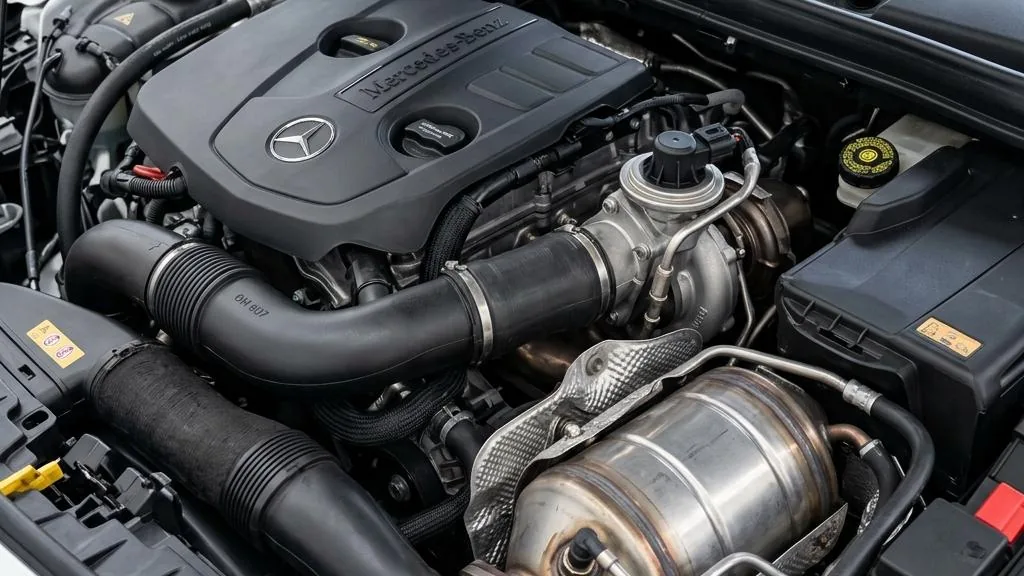
The 1.5L diesel engine in the CLA 180 D relies heavily on its emissions control systems to function correctly. When problems occur, it usually indicates that the normal self-cleaning processes have been interrupted. Specifically, the DPF cannot reach the necessary temperatures to burn off accumulated soot during short trips, leading to severe exhaust restrictions. Simultaneously, soot and oil vapors combine to clog the EGR valve, restricting airflow into the intake. These issues force the engine control unit to initiate a protective limp mode, reducing power to prevent turbocharger damage.
Identifying the exact symptoms is critical for diagnosing the underlying issue before component failure occurs.
- Check engine light remains constantly illuminated
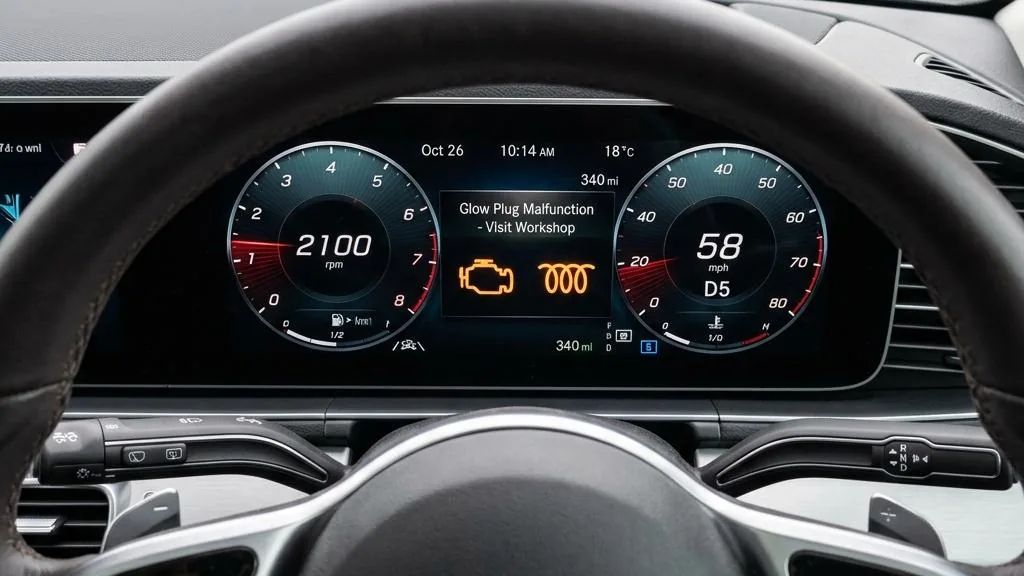
- Glow plug warning light flashes continuously while driving
- Sudden and severe loss of power as the vehicle enters limp mode
- Noticeable hesitation or stuttering during hard acceleration
- Rough engine idle, particularly immediately after a cold start
- Excessive black or gray exhaust smoke during engine load
Common causes
The root causes of these engine problems are typically related to driving habits and the normal degradation of emissions components.
- DPF blockage and regeneration failure triggered by frequent short-distance driving that prevents the exhaust from getting hot enough.
- EGR valve carbon buildup causing the internal flap to stick in an open or closed position.
- Fuel injector wear or seal leaks, which leads to poor fuel atomization and rough running.
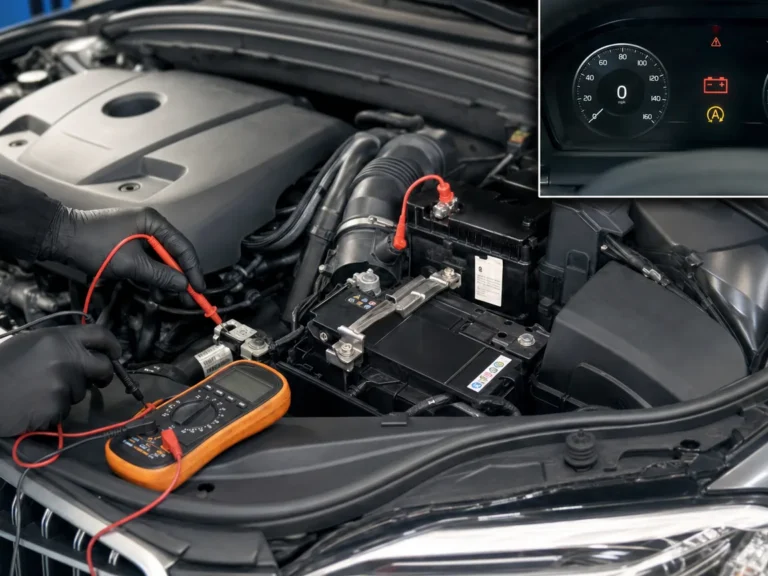
- Faulty mass airflow (MAF) or exhaust pressure sensors sending incorrect signals to the engine computer.
Quick checks
Before assuming a costly repair is necessary, perform these safe preliminary checks to narrow down the fault. Your priority is to gather diagnostic data directly from the vehicle's onboard computer.
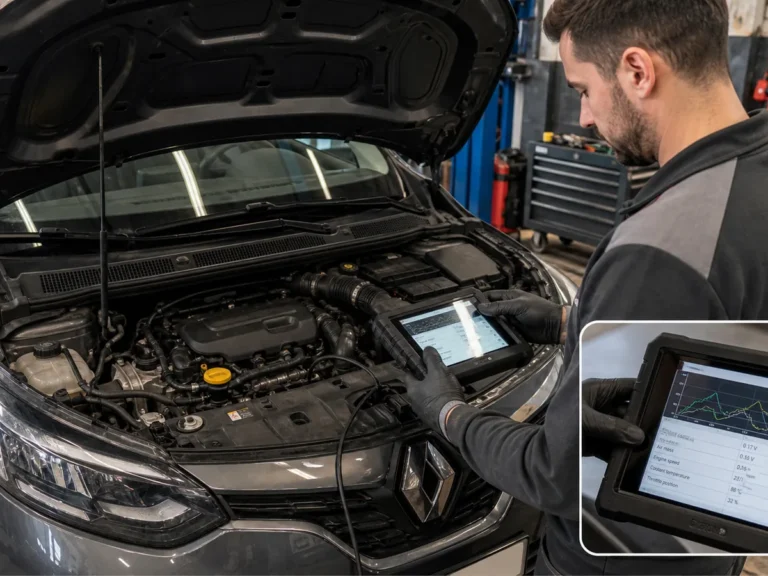
- Connect an OBD-II scanner to read and document all active and pending diagnostic trouble codes.
- Observe the dashboard for specific warnings, such as the DPF full message or flashing glow plug icon.
- Visually inspect the engine bay for obvious signs of fuel leaks or severe soot buildup around the exhaust manifold.
- Evaluate your driving routine to see if you have allowed enough continuous highway driving for a DPF regeneration cycle.
Diagnostic order
Follow a structured diagnostic path to isolate the exact cause and determine the appropriate repair procedure.
- Scan the engine control unit for fault codes to identify if the issue is related to the DPF, EGR, or fuel system.
- View live sensor data on your scan tool to check the DPF soot load percentage and verify if exhaust gas temperatures are within normal ranges.
- Remove the EGR valve carefully to physically inspect it for excessive carbon accumulation that might prevent normal operation.
- Perform a manual leak-off test on the fuel injectors to identify any units that are returning too much fuel.
- Once diagnosed, the typical repair path involves cleaning or replacing the EGR valve, forcing a DPF regeneration, or installing new fuel injectors.
Parts that may be involved
The CLA 180 D utilizes the OM607 and later OM608 1.5L diesel engine architecture. While generally dependable, this engine is exceptionally sensitive to delayed maintenance and poor driving conditions. Always check your owner's manual or consult a qualified specialist to confirm exact DPF soot load thresholds before attempting a forced static regeneration. Be aware that replacing specific fuel injectors may require coding the new components to the engine control unit using advanced diagnostic software.
If your CLA 180 D triggers limp mode, illuminates a flashing check engine light, or displays a flashing glow plug indicator, you must stop driving as soon as it is safe to do so. Continuing to drive under these conditions is highly dangerous for the engine. A severely restricted DPF creates immense exhaust backpressure that can quickly destroy the turbocharger seals. Prompt inspection and repair are necessary to prevent catastrophic internal engine damage and significantly higher repair costs.
FAQ
What are the signs of a failing DPF on a Mercedes CLA 180 D?
Common signs include an illuminated DPF or check engine warning light, severely reduced engine performance known as limp mode, and poor fuel economy as the engine repeatedly attempts to force a regeneration cycle.
Why does my Mercedes CLA 180 D hesitate during acceleration?
Hesitation is frequently caused by a stuck EGR valve, a clogged fuel filter, or failing fuel injectors that restrict the proper delivery of fuel and air to the combustion chamber.
What is the typical repair path for EGR valve issues on a CLA 180 D?
The standard repair involves removing the EGR valve to thoroughly clean out the carbon deposits. If the valve's electronic actuator has permanently failed, the entire unit must be replaced.

Comments
Be the first to add a practical repair note or follow-up question.