
Common causes
- Failed electric cooling fan motor – The fan motor seizes, burns out internally, or wears its brushes/commutator until it won’t spin. Without fan operation, heat builds up at idle because no forced air moves through the radiator. At highway speeds, ram airflow masks the problem completely.
- Blown fan fuse or bad relay – A fuse protects the fan circuit; if it blows, the fan receives no power regardless of engine temperature or A/C command. A relay can fail with welded contacts (always on) or open coils (never on), or it may click but not pass current. These electrical failures are common and inexpensive to test.
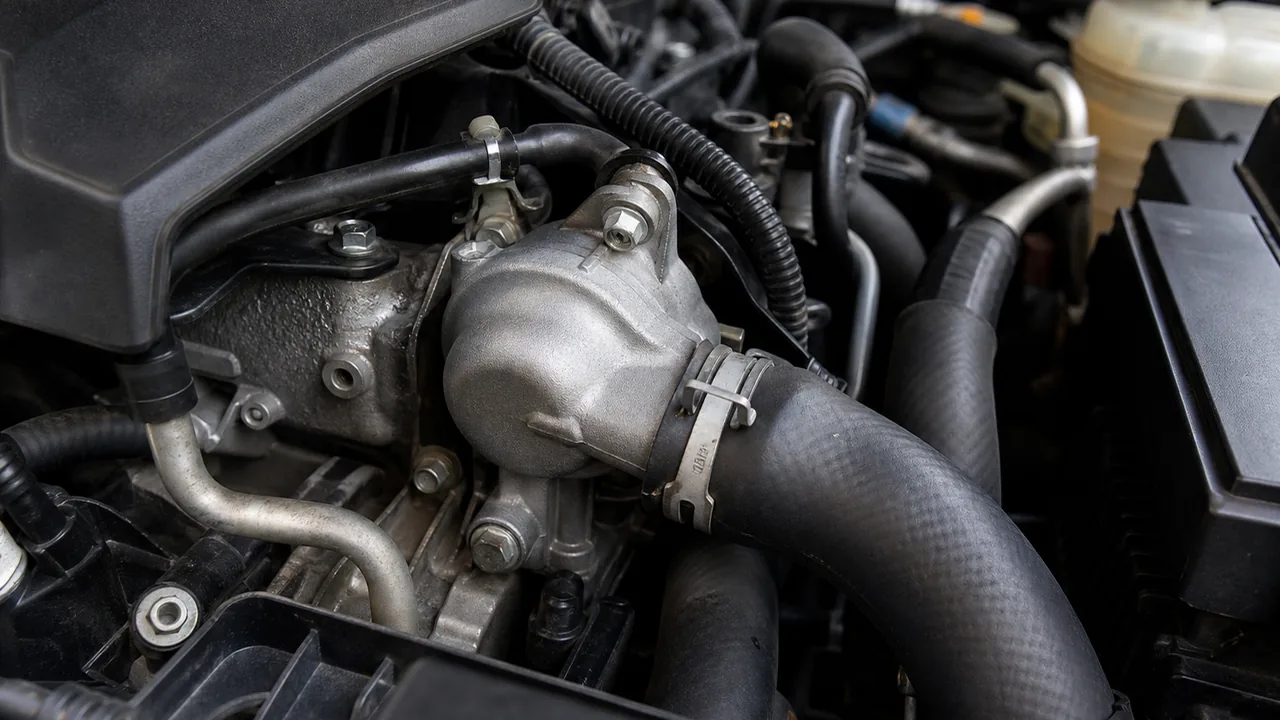
- Stuck or slow thermostat – A thermostat that sticks partially closed restricts coolant flow. At idle, the water pump spins slowly, so the restriction can cause hot spots; at higher engine speeds, flow increases enough to push past the obstruction and cool the engine. However, a fully stuck thermostat typically causes overheating at any speed.
- Faulty engine coolant temperature (ECT) sensor – If the ECT sensor sends a cooler-than-real reading to the ECU, the computer may never command the fan to turn on. The engine can overheat at idle while the ECU “thinks” everything is normal. A biased sensor can also prevent proper fuel and timing adjustments.
- Damaged fan control module (PWM module) – Many modern cars use a pulse-width-modulated fan module instead of a simple relay. If the module fails, the fan may not run, run at only one speed, or run continuously. These modules are susceptible to heat and moisture and often require a scan tool to diagnose.
- Clogged radiator fins or internal restriction – Debris packed between the A/C condenser and radiator restricts airflow even with a working fan. Internal sludge or scale from old coolant reduces heat transfer; at idle the marginal cooling becomes inadequate, but high-speed ram air can still force enough air through to lower the gauge.
- Water pump impeller wear – Though less likely with this symptom pattern, a severely eroded impeller may not circulate enough coolant at idle. At higher rpm it spins fast enough to move some coolant, masking the problem. This is more common in vehicles with plastic impellers.
Quick checks
- Check coolant reservoir level when the engine is completely cold. Top up to the cold full mark with the correct coolant mixture.
- Look for visible coolant leaks around hoses, radiator tanks, water pump weep hole, and the heater core connections. Dried coolant residue is white or greenish.
- Squeeze the upper radiator hose when the engine is warm and running – it should be firm with pressure. A collapsed hose may indicate a faulty radiator cap or a restriction.
- Inspect the radiator cap seal and pressure rating. A weak cap lowers the boiling point and can cause overheating even with a functional fan.
- Turn on the A/C at idle and confirm the radiator fan engages. On most vehicles, the ECU or a dedicated A/C circuit commands the fan to run with the compressor; if it doesn’t, the fan circuit is suspect.
- Check the condition of fan blades – cracks, missing chunks, or debris (plastic bags, leaves) can block rotation or cause imbalance.
- Listen for the cooling fan after shutting off a hot engine. Many cars run the fan for a few minutes to combat heat soak; its absence doesn’t guarantee failure but is worth noting.
When it is urgent
- Temperature gauge climbs into the red zone or the overheat warning light comes on – Do not continue driving; even a few minutes can warp cylinder heads or blow a head gasket.
- Steam or hot coolant spray from under the hood – Risk of severe burns. Let the engine cool for at least 20 minutes before opening the hood.
- Coolant level drops from full to empty in one short trip – This indicates a large leak; you may run dry and overheat catastrophically without warning.
- Sweet, syrupy smell of coolant inside the cabin – This points to a heater core leak that can suddenly dump all coolant. The mist can also fog windows and cause breathing irritation.
- Engine knocks, pings, or loses power while overheating – Detonation and pre-ignition threaten the pistons, rings, and bearings. Shut down immediately.
- Cooling fan never runs even after long idling in traffic with the A/C on – In stop-and-go driving, the engine will eventually overheat severely. If you must drive, keep moving as much as possible and monitor the gauge.
- Bubbles or exhaust smell in the coolant reservoir – This is a classic sign of a blown head gasket or cracked head. Continuing to drive will contaminate the oil and wreck the engine.
Diagnostic order
- Step 1: Confirm coolant level and system integrity – Top up to the cold full mark with the correct coolant type for your vehicle. While topping, look for signs of a head gasket leak – bubbles in the radiator or exhaust smell in the coolant.
- Step 2: Observe fan operation at hot idle with A/C on – Bring the engine to normal operating temperature while parked. Turn the A/C to max cold. On most cars, the engine ECU will automatically command the cooling fan(s) to run whenever the A/C compressor is engaged. If the fan does not spin under these conditions, the fan motor, relay, or fuse is suspect.
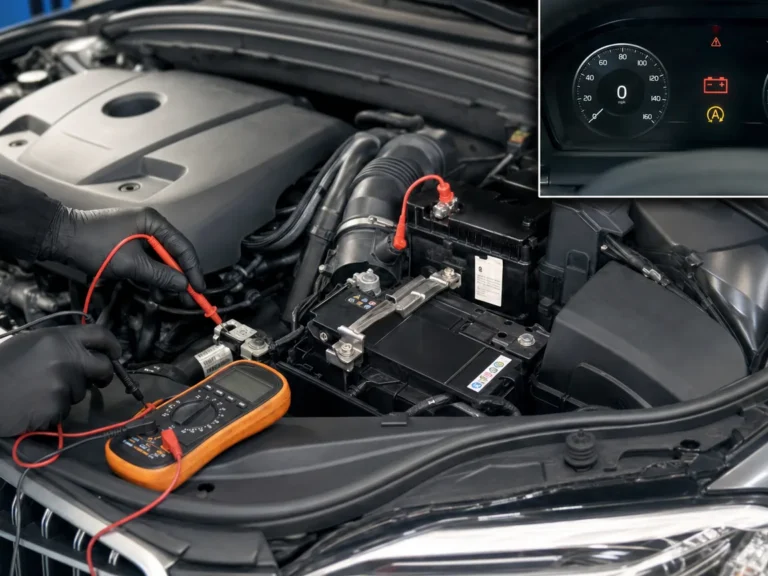
- Step 3: Check fan relay and fuses – Locate the fan relay in the power distribution box. Swap it with an identical relay (such as the horn relay) or test it with a multimeter. Inspect the fan fuse for continuity. A relay that clicks but doesn’t pass current can still be faulty – a common misstep is to assume a clicking relay is good.
- Step 4: Direct‑power the fan motor (jumper wire test) – Disconnect the battery negative terminal, then unplug the fan connector. Use a fused jumper wire to apply battery voltage and ground directly to the fan motor pins. If the fan spins, the motor is fine and the fault lies in the control side (relay, wiring, sensor, ECU). If it does not spin, the fan motor has failed. Always keep hands and tools away from the fan blades during this test.
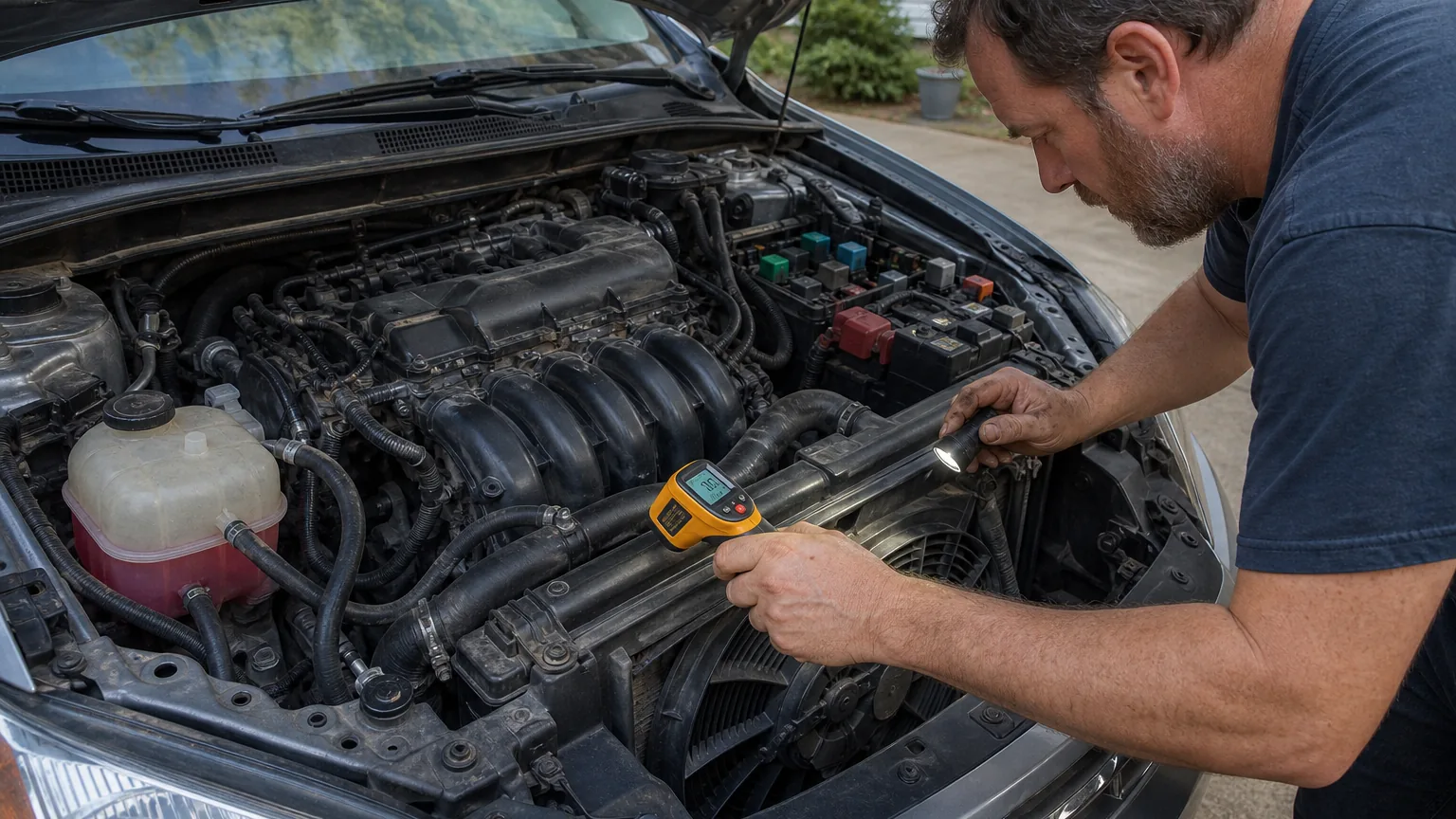
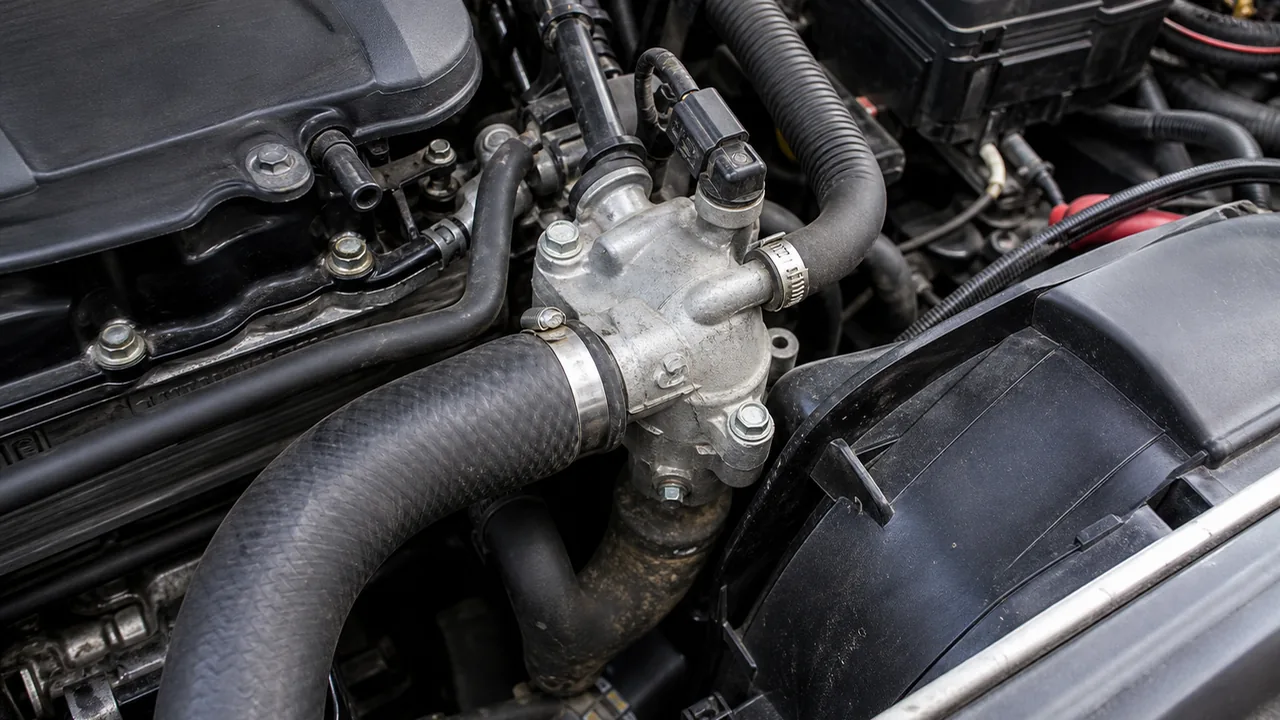
- Step 5: Test thermostat operation with a temperature drop check – Start the engine when cold and feel the upper radiator hose. It should remain cool until the thermostat opens. Once the engine warms, check that the hose becomes hot. Use an infrared thermometer to compare temperatures at the thermostat housing and radiator inlet. A thermostat that opens too late or only partially can mimic fan issues but rarely causes a clean cooldown at highway speed.
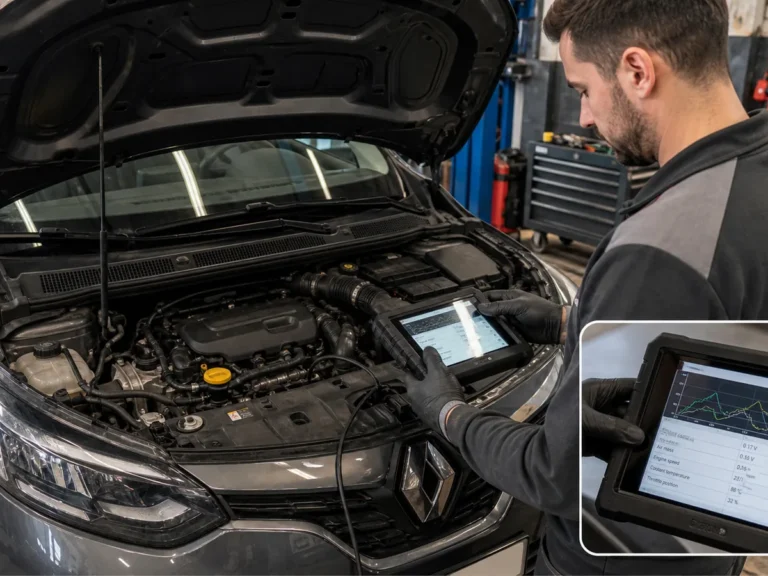
- Step 6: Scan for diagnostic trouble codes (DTCs) – Connect a scan tool capable of reading manufacturer‑specific powertrain codes. Look for codes related to the cooling fan control circuit (such as P0480, P0481), the engine coolant temperature sensor (P0117‑P0119), or the thermostat rationality. Even if the check engine light is off, pending codes can guide the diagnosis. A biased ECT sensor that reads cooler than actual can prevent the ECU from turning on the fan at the correct threshold.
Parts that may be involved
The engine temperature gauge climbing at a stoplight but dropping back to normal as you accelerate is more than a coincidence—it’s a telltale sign that your cooling fan or its control system isn’t working, and ram air is temporarily bailing you out. When your vehicle is stationary, no natural airflow passes through the radiator; the electric fan (or mechanical fan clutch) must pull heat away. If that fan has failed, heat soaks the engine until you move again and air rams through the grille, restoring cooling. This phenomenon often fools drivers into thinking the issue is intermittent, but in reality, it’s a consistent cooling fan deficiency that only becomes obvious at idle. Before you start swapping parts, the zero-cost first step is to check your coolant level. A low coolant level can mimic a failed fan because air pockets in the system cause hot spots and overheating at idle. Open the hood only once the engine has cooled, verify the coolant in the reservoir and radiator, and top off with the correct mixture if needed. Once you’ve confirmed the level is good, the next step is to narrow down whether the problem is the fan motor, relay, fuse, coolant temperature sensor, or thermostat.
- Radiator cooling fan assembly – The electric motor, fan blades, and shroud that pull air through the radiator. Bearings can seize, windings can short, or the connector can melt.
- Fan relay – An electromagnetic switch in the fuse box. Relays can fail intermittently, stick closed, or develop high internal resistance without apparent damage.
- Fan control module – On vehicles without a simple relay, a solid‑state module controls fan speed. It may fail due to heat, moisture, or internal electronic faults, often setting a trouble code.
- Engine coolant temperature sensor (ECT) – A thermistor that reports coolant temperature to the ECU. If its resistance drifts, it can lie to the computer and prevent fan activation.
- Coolant thermostat – A mechanical valve that opens at a set temperature to allow coolant flow. Wax‑element thermostats can become sluggish or stick in a partially open position.
- Radiator pressure cap – Maintains system pressure to raise the boiling point. A weak cap vents coolant prematurely, leading to low levels and air pockets.
- Cooling fan resistor – Used on some multi‑speed fan circuits to drop voltage for low speed. If it burns out, the fan may only work on high speed or not at all.
- Fuses and fusible links – Protect the fan circuit. A blown fuse is often a symptom of an overcurrent condition rather than just a random failure; look for a shorted motor or pinched wire.
- Wiring harness and connectors – Corroded, broken, or melted wires between the ECU, relay, and fan can create voltage drops or open circuits.
- Water pump – Rarely the sole cause of idle‑only overheating, but a badly worn impeller may fail to circulate adequate coolant at low rpm.
FAQ
Can I drive with my engine overheating at idle but cooling down on the highway?
It’s risky. While highway travel may keep the gauge normal thanks to ram air, any traffic jam, long stoplight, or drive‑thru queue can push temperatures into the red zone without warning. If you must drive a short distance to a repair shop, monitor the gauge constantly and shut off the engine at long stops. This is a band‑aid, not a solution.
Can a bad thermostat cause overheating only at idle?
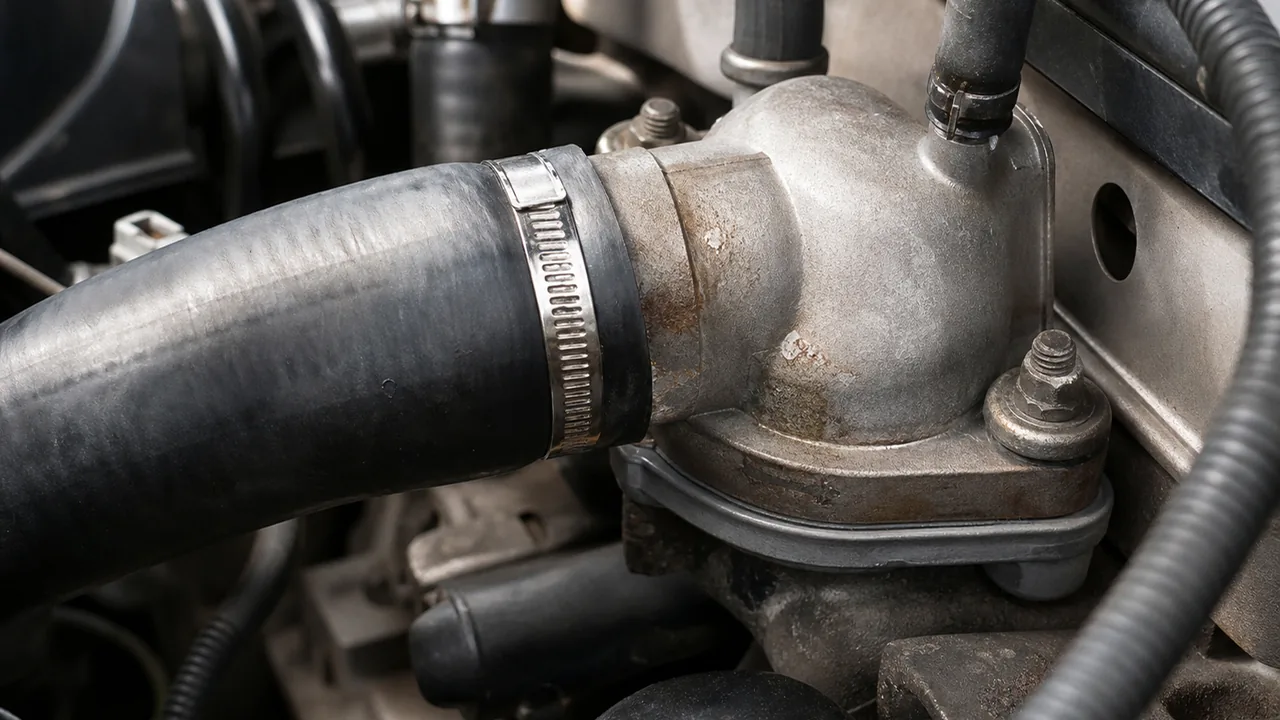
It can, though it’s less common than a fan problem. A thermostat that sticks partially closed restricts coolant flow; at low engine speeds the water pump may not force enough coolant through, causing hot spots. At higher speeds, increased flow often compensates. If you suspect the thermostat, perform the “upper hose touch test” or use an infrared thermometer to see if the radiator inlet and outlet temperatures differ significantly.
How much does it cost to replace a cooling fan assembly?
For a typical family sedan or SUV, an aftermarket fan assembly costs $80–$250. Labor at a shop adds $100–$300 depending on the vehicle, because the bumper cover, fan shroud, and sometimes radiator must be removed. A fan relay is much cheaper: $15–$40 for the part and minimal labor if you can access it. A thermostat replacement usually runs $150–$350 at a shop, including coolant.
Can low coolant cause the fan not to turn on?
Low coolant does not prevent the fan from running electrically, but it can cause the engine coolant temperature sensor to read incorrectly if it’s no longer submerged in coolant. That faulty reading might stop the ECU from commanding the fan. However, the core issue is coolant loss; topping off and finding the leak is the first priority.
Why does my car overheat with the AC on but not when the AC is off?
Air conditioning dumps extra heat into the condenser, which sits in front of the radiator, and adds load to the engine. Many vehicles automatically engage the cooling fan when the AC compressor runs. If the fan, relay, or module is weak, the added heat overwhelms the system at idle. Testing with AC on is a fast way to isolate a fan circuit fault.
Can a blown fuse really be the only reason the fan doesn’t work?
Yes, but it’s important to find why the fuse blew. A single blown fuse could be a one‑time event, but often it indicates a shorted fan motor, chafed wiring, or a stuck relay. Replace the fuse with the correct amperage and observe; if it blows again immediately, there’s a short circuit that needs to be repaired before replacing the fan motor.

Comments
Be the first to add a practical repair note or follow-up question.