
What the symptom usually means
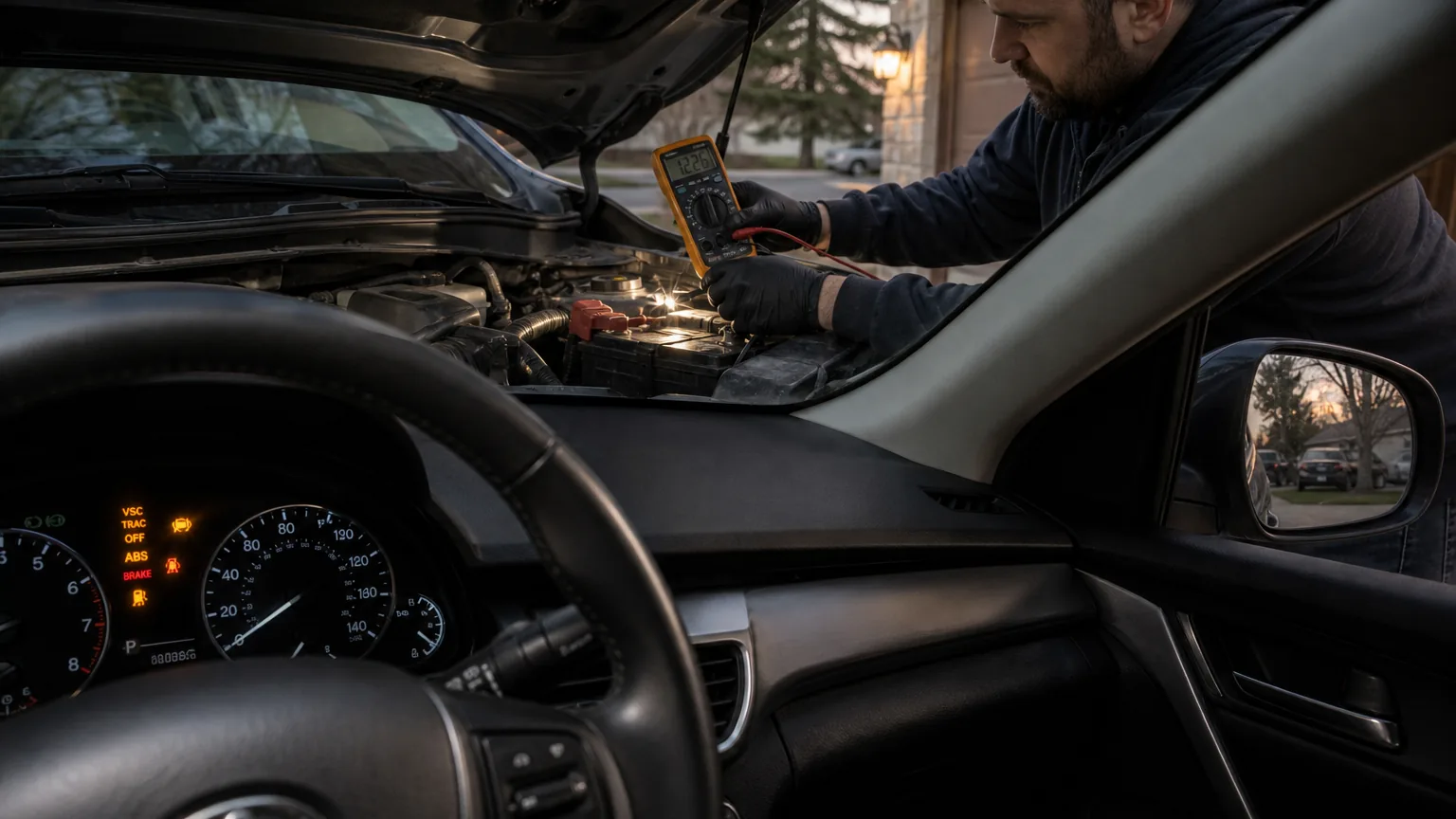
On most Toyotas, the VSC (Vehicle Stability Control) and TRAC (Traction Control) systems rely on a steady electrical supply from the battery and alternator. When that supply dips – even for a few seconds during a jump-start, after a dead battery is revived, or following an alternator repair – the control modules see a voltage that falls below their operational threshold. The result is almost always the same: the system logs historic low-voltage communication faults, illuminates the VSC OFF and TRAC OFF indicator lights, and temporarily disables stability assistance. This does not mean your ABS pump or VSC computer has failed. It is a protective response to an erratic power source. The lights commonly appear together for a few reasons: low voltage disrupts the CAN bus messages that the ABS/VSC module expects; the electric ABS pump can draw high current and is sensitive to voltage sag; and once one of the networked controllers records a loss-of-communication code, it commands the cluster to show VSC and TRAC faults as a precaution.
Common causes
- A battery that is weak, deeply discharged, or unable to hold a stable resting voltage after a jump-start.
- Loose, corroded, or poorly tightened battery terminal clamps that cause intermittent connection drops.
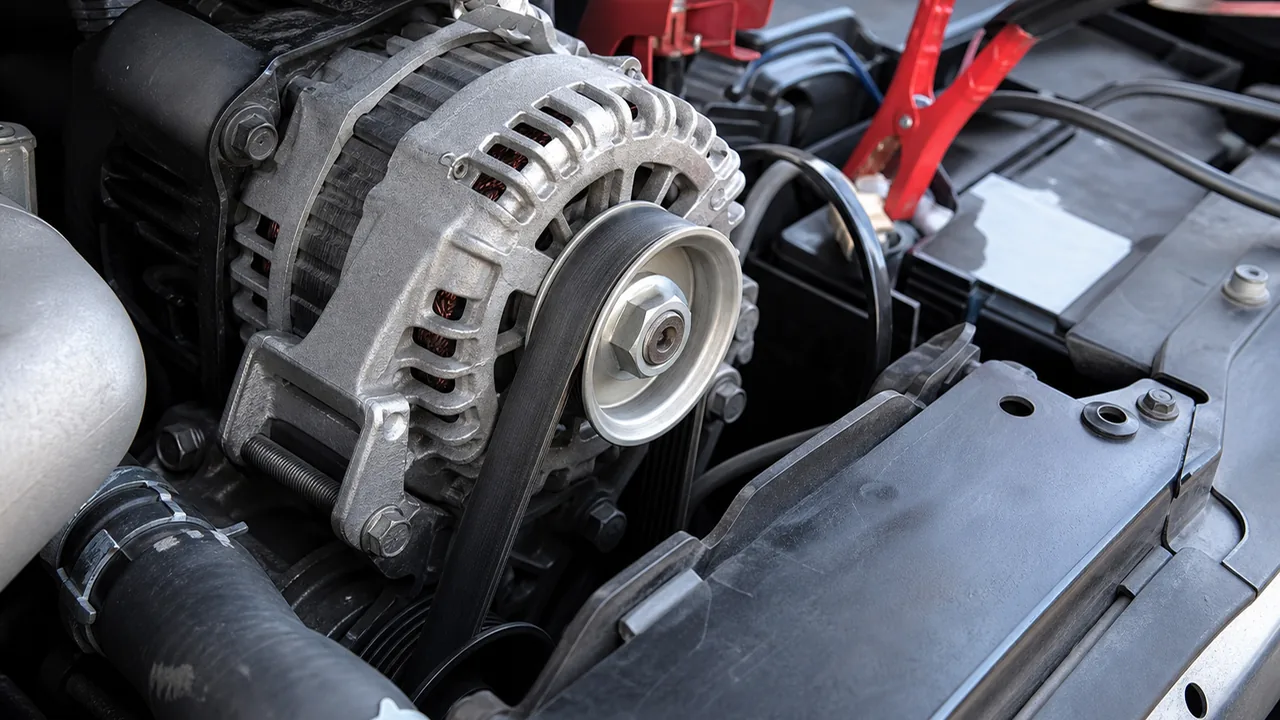
- Alternator output that is unstable – either a failing voltage regulator creating ripple or a worn alternator not keeping up at idle.
- A serpentine belt that is slipping, glazed, or incorrectly routed, reducing alternator speed.
- Recent electrical work (battery replacement, alternator swap) that briefly interrupted power to the ECM and ABS/VSC module, leaving historic codes until a clean drive cycle is completed.
Quick checks
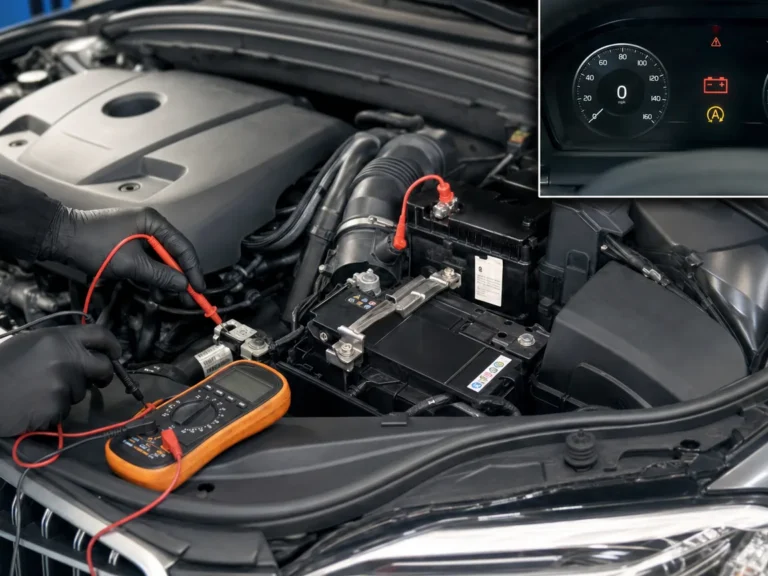
Before you schedule a full diagnostic, do a few eyes-only checks. These won’t cost anything and can pinpoint an obvious fault.
If you hear a whining noise from the alternator or smell sulfur from the battery, stop the engine immediately and have the vehicle towed – these are signs of an overcharging alternator or a dangerously overheated battery.
When it is urgent
Driving with VSC and TRAC deactivated is conditionally safe but must be tempered with common sense. Without stability control, your Toyota will not automatically brake individual wheels to prevent a skid, and throttle-cut traction control is unavailable. In dry weather, at moderate speeds and with gentle acceleration, the vehicle can be driven a short distance – to home or a repair shop – with little risk. The scenario changes sharply in rain, snow, or during emergency lane changes. If your battery case is swelling, hot, or hissing, do not drive; a battery explosion or acid leak is a real danger. Likewise, if the alternator warning light (a battery symbol) is flashing or the headlights are dimming, pull over immediately – a complete electrical failure could stall the engine without warning. If you have only the VSC and TRAC lights and the battery/alternator system is otherwise stable, you can drive gently, avoiding hard cornering and standing starts that would normally engage traction control.
Diagnostic order
Follow this sequence to identify the root cause and reset the system without unnecessary parts swapping.
Even after a successful drive-cycle reset, the historic DTCs may be stored as ‘permanent’ status. A professional scan tool can confirm they are not active faults.
Parts that may be involved
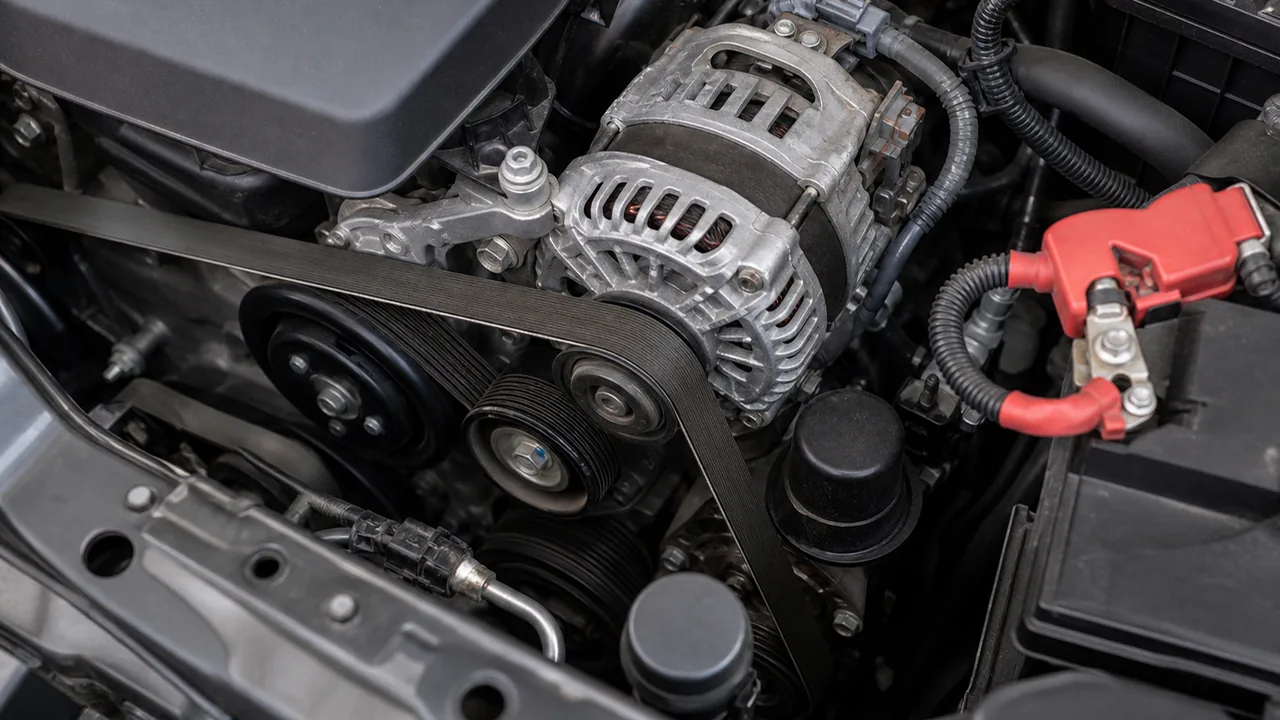
The parts that play a direct role are almost always limited to the charging system. The battery (weak cell or internal short) is the most common trigger, followed by a worn alternator that cannot maintain stable voltage under load. The serpentine belt, though simple, can cause the alternator to slip – especially if it is stretched or glazed. In very rare cases, a failing ABS actuator or a chafed CAN bus wire can also generate communication faults, but this is not the first assumption. Avoid replacing the ABS module or VSC computer based solely on stored low-voltage codes; those codes are often ‘historic’ and will be flagged any time battery power was disrupted. Start with the charging system, then diagnose further only if the lights persist after voltage stability is restored.
- Battery
- Alternator
- Serpentine belt and tensioner
- Battery terminals and ground connections
- ABS/VSC module (only after ruling out the above)
FAQ

Will the VSC and TRAC OFF lights go away by themselves after I install a new battery?
Often yes. After a stable battery is installed and the vehicle completes a short drive cycle (straight line once road speed rises for over 5 seconds), the steering-angle sensor re-learn usually extinguishes the lights. If they stay on, the zero-point calibration may need a Techstream reset.
Is it safe to drive with VSC and TRAC off?
It is conditionally safe in dry conditions at moderate speeds. However, electronic stability and traction control are inactive, so avoid sudden maneuvers, hard acceleration on wet or gravel surfaces, and emergency steering inputs. Treat the car as if you are driving an older vehicle without stability aids.
Can a loose gas cap cause the VSC and TRAC lights to come on?
No. A loose gas cap typically triggers a check engine light related to the evaporative emissions system (EVAP). It does not directly deactivate stability or traction control, although in some Toyota models an EVAP code can illuminate the check engine light alongside VSC if that combination is programmed. The root cause is still the cap, not a VSC fault.
Do I need a new ABS module?
Almost never for this symptom. Low‑voltage codes like C1201 or U0129 are routinely stored during a power loss event and do not indicate a failed ABS module. The ABS controller is simply reporting that it lost communication with the engine ECU. After voltage is restored and codes are cleared, the ABS module usually functions normally.
How much will it cost to diagnose and reset?
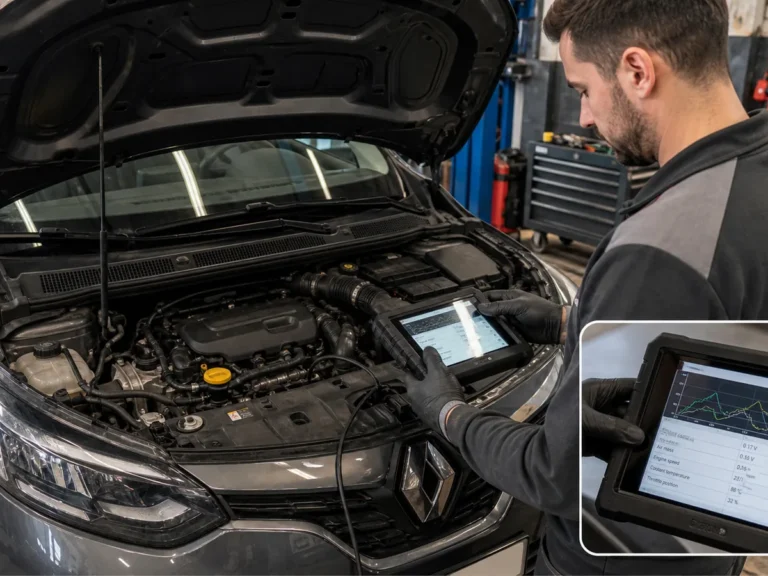
A basic electrical system diagnosis, including battery/alternator testing and a scan for DTCs, is relatively affordable at most independent Toyota specialists. The forced VSC reset using Techstream, when needed, is often billed as a short labor charge. Costs vary by region, so ask for a quote after the initial inspection.


Comments
Be the first to add a practical repair note or follow-up question.