
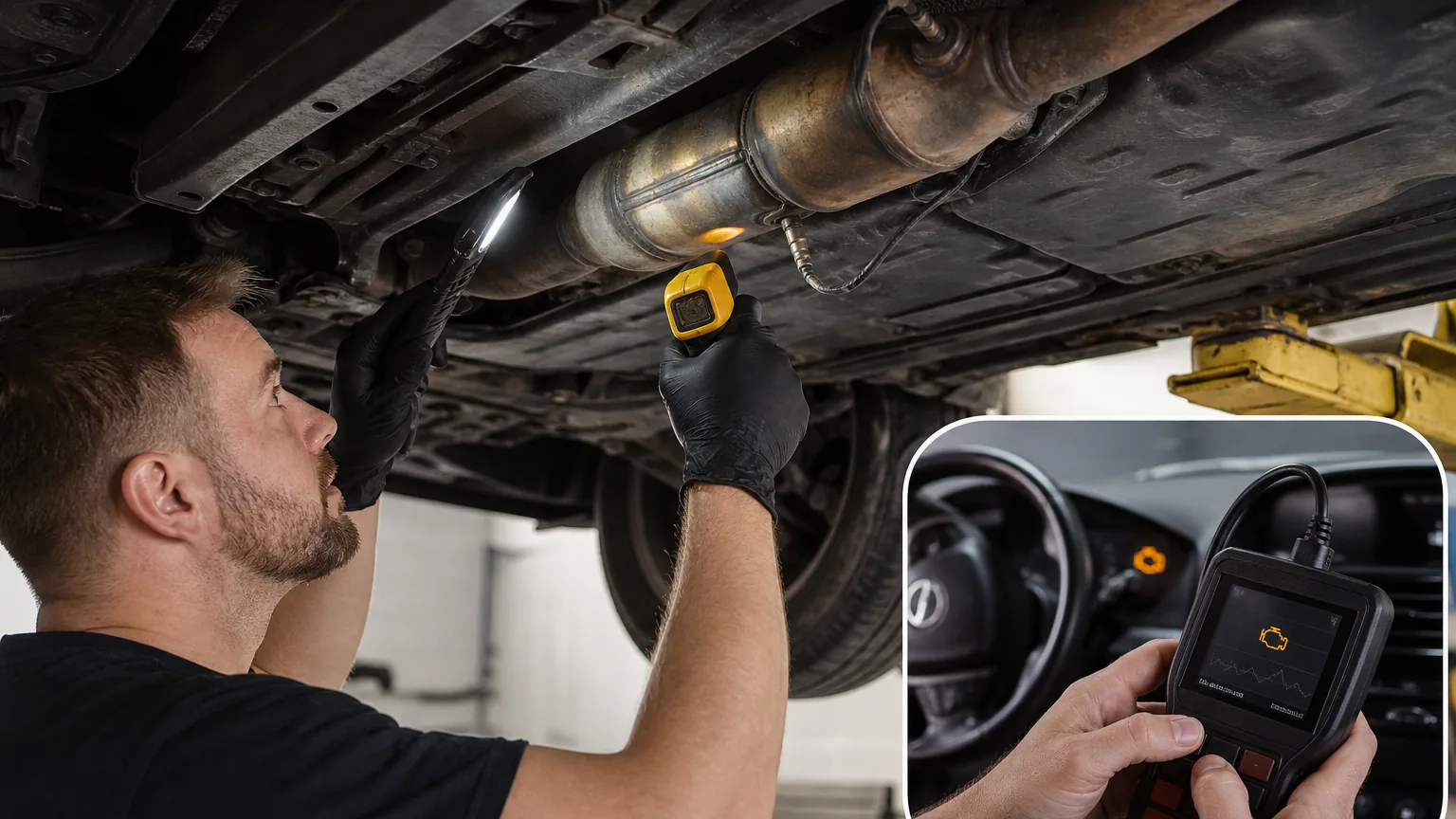
What the code means
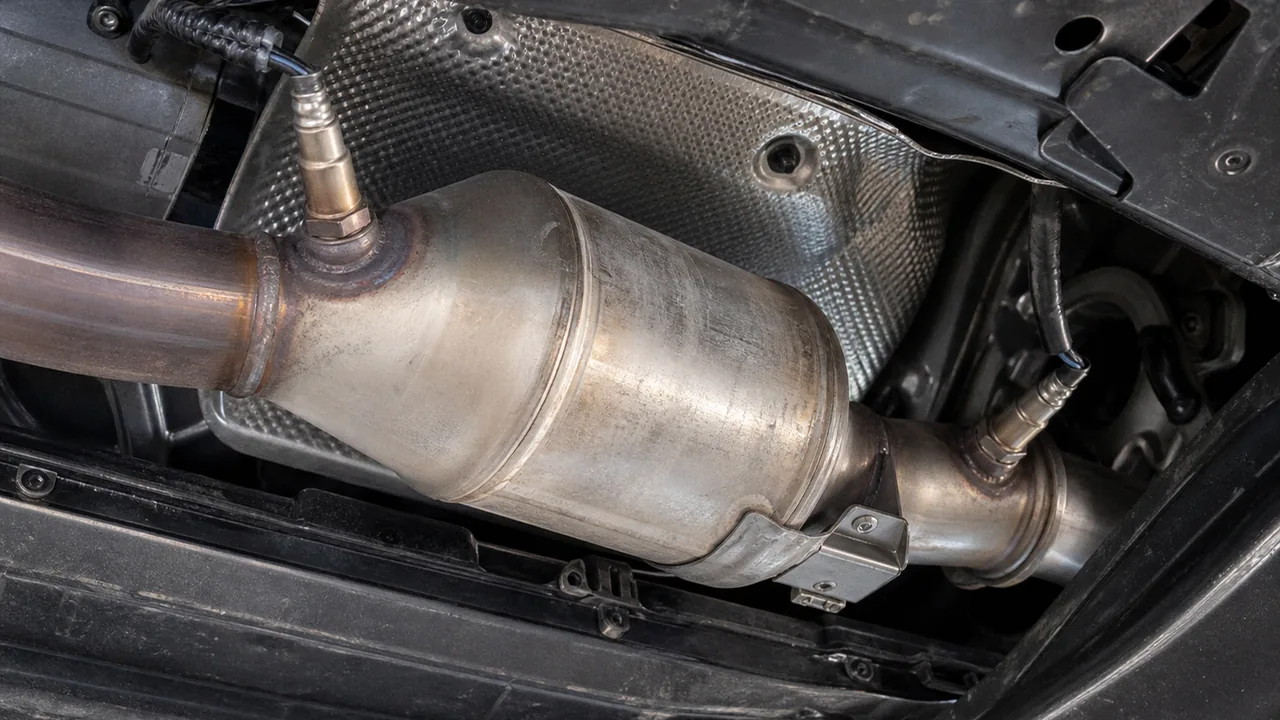
P0420 means the powertrain control module has judged catalyst system efficiency below threshold on Bank 1. Bank 1 is the side of the engine that contains cylinder 1 on engines with more than one bank; on many inline engines, there is only one bank.
The code does not prove the catalytic converter is bad by itself. The monitor is comparing exhaust oxygen behavior and catalyst performance, so exhaust leaks, sensor faults, fuel mixture problems, or prior misfires can all make the result look like a weak converter.
Symptoms
- Steady check engine light with no obvious drivability change
- Failed emissions test or incomplete readiness after clearing codes
- Poor fuel economy or fuel smell when mixture problems are present
- Rotten-egg or strong exhaust odor, especially with running issues
- Rattling from the converter area, which can suggest internal damage
- Reduced power, hesitation, or misfire symptoms that need urgent diagnosis
A normal-feeling vehicle can still fail emissions with P0420. A smooth idle does not prove the catalyst, oxygen sensors, fuel control, or exhaust sealing are healthy.
Main causes
- Exhaust leak ahead of or near the oxygen sensors, which can skew the oxygen reading and trigger a false efficiency result.
- Misfire or fuel mixture issue, including rich or lean operation that can overheat or contaminate the catalyst.
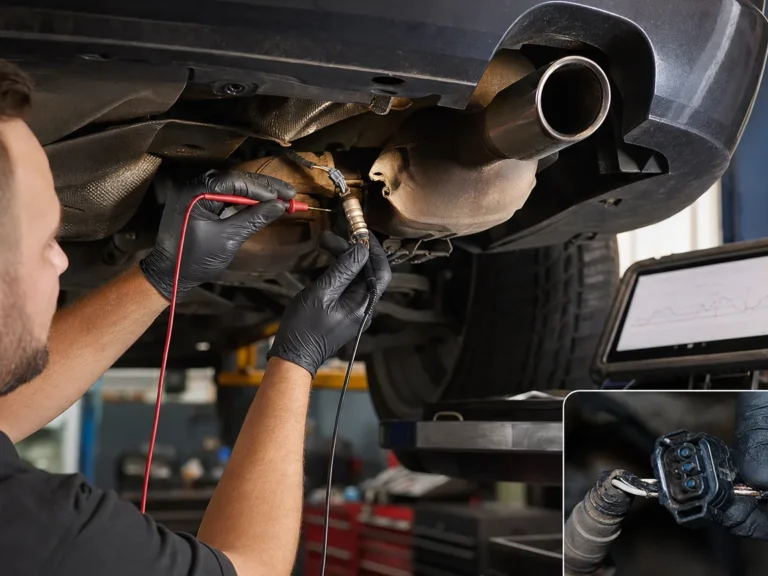
- Oxygen sensor data problem, sensor wiring issue, or slow response that makes the monitor compare bad information.
- Aging, contaminated, overheated, or physically damaged catalytic converter.
- Vehicle-specific software, calibration, service information, or monitor strategy issue that needs OEM guidance.
Do not replace the catalytic converter, oxygen sensors, or tune-up parts only because P0420 is stored. Confirm the failure path with scan data, inspection, and service information first.
What to check first
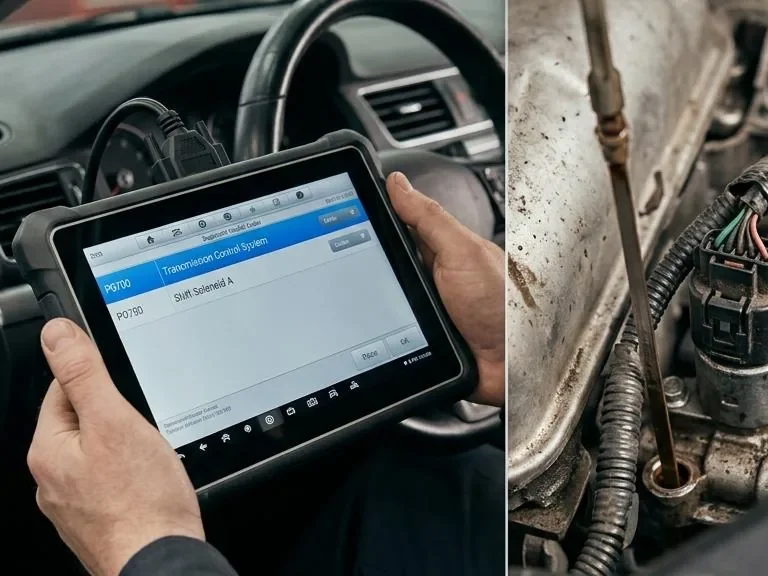
- Scan for related codes before clearing anything, especially misfire, oxygen sensor, fuel trim, or exhaust-related codes.
- Save or photograph freeze-frame data if your OBD-II scanner shows it.
- Note whether the light is steady or flashing and whether the vehicle has power loss, odor, noise, or overheating.
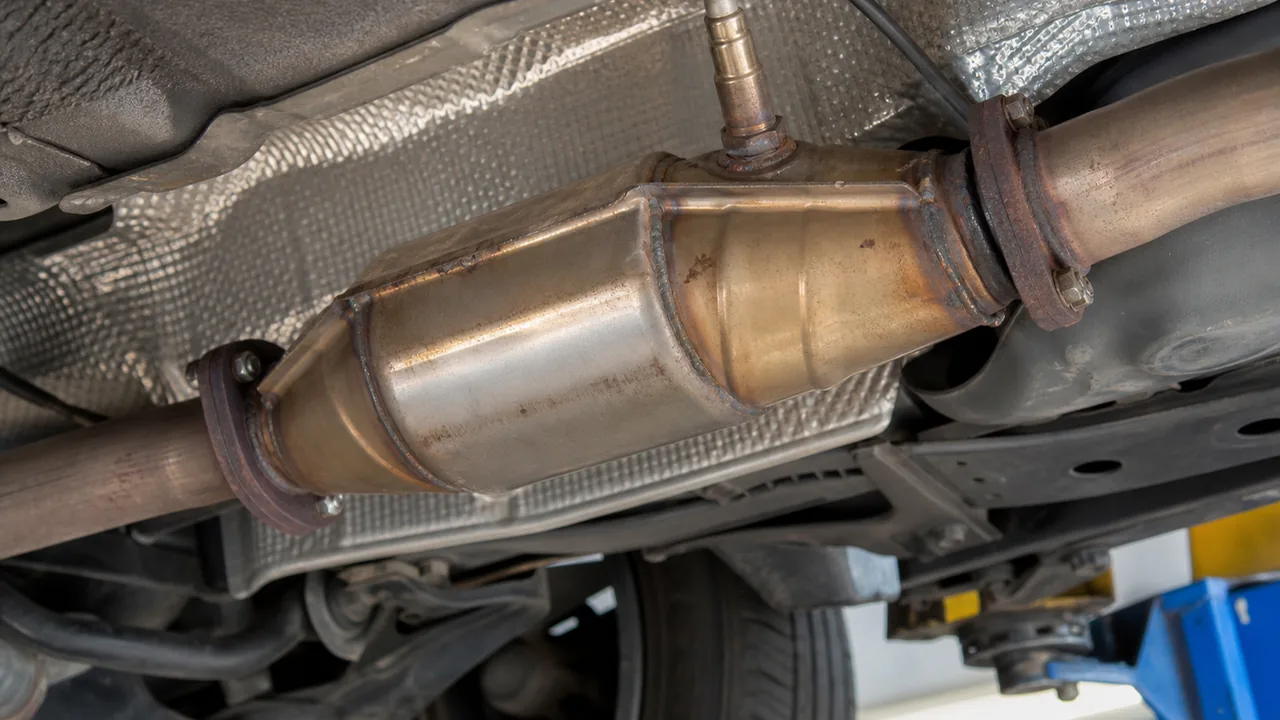
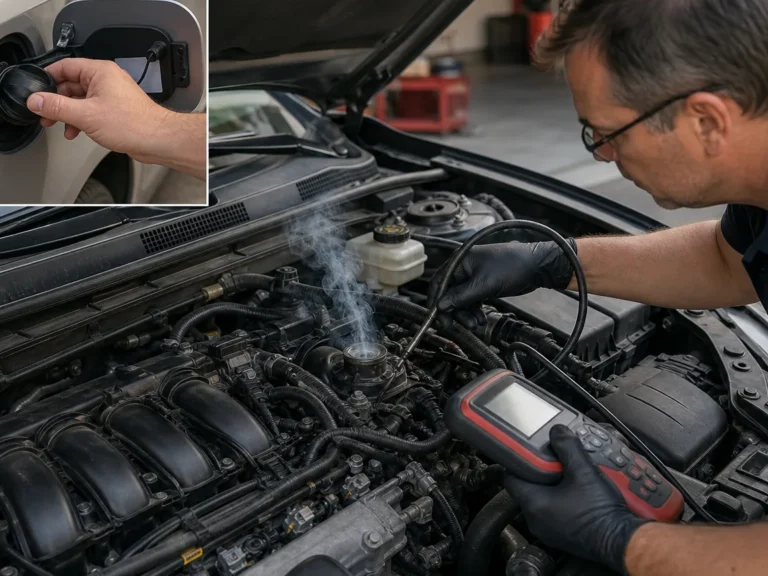
- Look for obvious exhaust damage, loose clamps, recent exhaust work, or ticking noises near the manifold or front pipe.
- Check whether spark plugs, ignition coils, oxygen sensors, or exhaust parts were recently replaced or disturbed.
- Stop driving and get help if the engine misfires, the light flashes, the vehicle loses power, or the exhaust smell is severe.
If the car runs normally, the best first action is to document the code and symptoms, then plan diagnosis. Clearing the code may temporarily turn off the light, but it also resets readiness monitors and can make emissions inspection harder.
Diagnostic order
- Review freeze-frame data, pending codes, permanent codes, and readiness status to see when the monitor failed.
- Check fuel trim readings and engine load conditions for signs of rich, lean, or unstable fuel control.
- Review misfire history and current misfire counters before any converter decision.
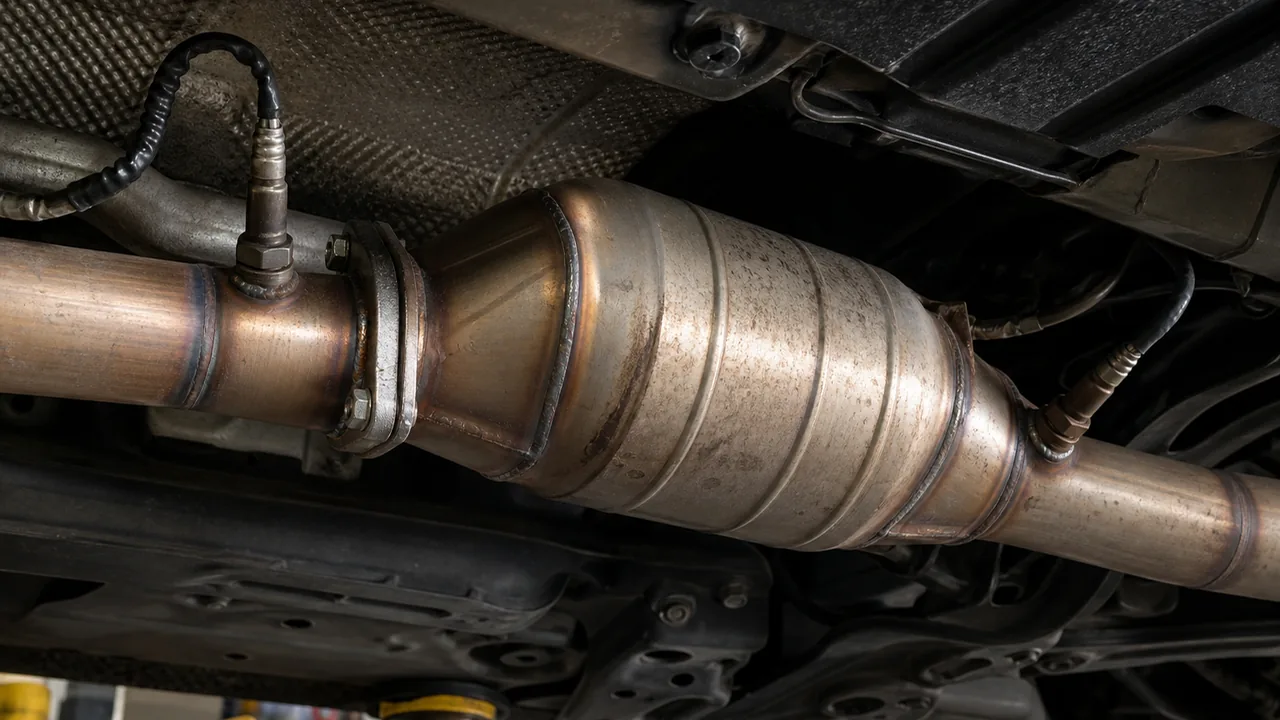
- Compare upstream and downstream oxygen sensor behavior using the service procedure for that vehicle.
- Test for exhaust leaks before and near the oxygen sensors and converter inlet.
- Use appropriate catalyst efficiency testing where service information calls for it, without applying universal pass-fail numbers.
- Check OEM service information for software updates, known diagnostic paths, or vehicle-specific monitor notes.
The order matters because a new converter can fail again if the engine is still misfiring, running too rich, running too lean, or leaking exhaust in a way that corrupts sensor data.
| Steady light, normal power, no odor or misfire | Short-term driving is usually possible while you arrange diagnosis. |
| Flashing check engine light or active misfire | Stop driving as soon as safely possible because catalyst damage risk rises. |
| Power loss, overheating, rattling converter, or strong exhaust smell | Avoid continued driving until the cause is inspected. |
| Emissions inspection is due | Do not clear the code as a fix; diagnose and complete readiness properly. |
The line is simple: a steady light with normal operation is a planning problem, while flashing light, misfire, overheating, strong odor, or power loss is an escalation problem.
- Do not buy a catalytic converter just because P0420 is the only stored code.
- Do not replace oxygen sensors without checking sensor data, wiring, exhaust leaks, and service information.
- Do not assume premium fuel or a bottle treatment will repair a catalyst efficiency failure.
- Do not remove, bypass, hollow out, or defeat emissions equipment.
- Do not clear the code before emissions testing and expect that to count as a repair.
If a converter is truly failed, it still needs a cause check. A converter damaged by misfire, contamination, or fuel control problems can be damaged again if the root issue remains.
A catalyst monitor needs the right operating conditions before it can report ready. If the code is cleared, the check engine light may disappear for a while, but the inspection system may still see incomplete readiness or a returning P0420.
An emissions-compliant repair means the cause is diagnosed, the correct part or system is repaired, readiness completes, and the code does not return. It does not mean bypassing the converter or using parts that do not match the vehicle's emissions requirements.
Can you keep driving?
A P0420 code usually means the catalyst on Bank 1 is not cleaning exhaust as effectively as the vehicle expects, and you can often drive short-term if the check engine light is steady and the car runs normally. The first check is whether the light is steady or flashing, because misfire, power loss, overheating, or a strong exhaust smell changes this from a cost-control problem into a safety and damage-risk problem.
- If the vehicle drives normally and the check engine light is steady, avoid heavy loads and plan diagnosis soon rather than guessing at parts.
- If fuel economy drops, exhaust noise appears, or the smell becomes strong, shorten driving and inspect the exhaust and engine performance first.
- Do not continue driving with a flashing check engine light, obvious misfire, loss of power, overheating, or a rattling converter.
What usually fixes it
- Repair exhaust leaks before condemning the catalyst monitor result.
- Fix misfires, rich operation, lean operation, or other engine performance faults before replacing the converter.
- Replace an oxygen sensor only when sensor data, wiring checks, or service information supports it.
- Replace the catalytic converter only after leaks, engine faults, and sensor data problems have been ruled out or corrected.
- Use year, make, model, engine, emissions certification, and Bank 1 location to choose compatible parts.
After repair, verify the fix by confirming the code stays cleared under normal operation, readiness monitors complete, and no related pending codes return. A cleared light alone is not proof if the catalyst monitor has not run yet.
FAQ
Can I drive with a P0420 code?
Yes, you can often drive short-term with a steady check engine light if the car runs normally. Do not continue driving if the light flashes, the engine misfires, power drops, the vehicle overheats, or the exhaust smells strong.
Does P0420 always mean the catalytic converter is bad?
No. P0420 can point to a weak converter, but exhaust leaks, fuel mixture issues, misfires, oxygen sensor data problems, and vehicle-specific software issues can also trigger it.
Can a bad oxygen sensor cause P0420?
Yes, an oxygen sensor or wiring problem can contribute to P0420, but the sensor should be tested before replacement. The code does not automatically prove the sensor is bad.
Will premium fuel fix a P0420 code?
Premium fuel is not a reliable fix for P0420 unless the vehicle specifically requires it and a fuel-related issue is confirmed. It will not repair a damaged converter or exhaust leak.
Can a catalytic converter cleaner fix P0420?
A cleaner should not be treated as a guaranteed repair. If the cause is a leak, misfire, sensor issue, contamination, or a worn catalyst, proper diagnosis and repair are still needed.
Can P0420 come back after clearing it?
Yes. Clearing the code only erases stored information. If the catalyst monitor runs again and sees the same problem, P0420 can return.
Does the car need a mechanic for P0420?
A basic scan and visual checks are owner-safe, but professional diagnosis is wise when the code repeats, emissions testing is due, symptoms are present, or converter replacement is being considered.
Comments
Be the first to add a practical repair note or follow-up question.