
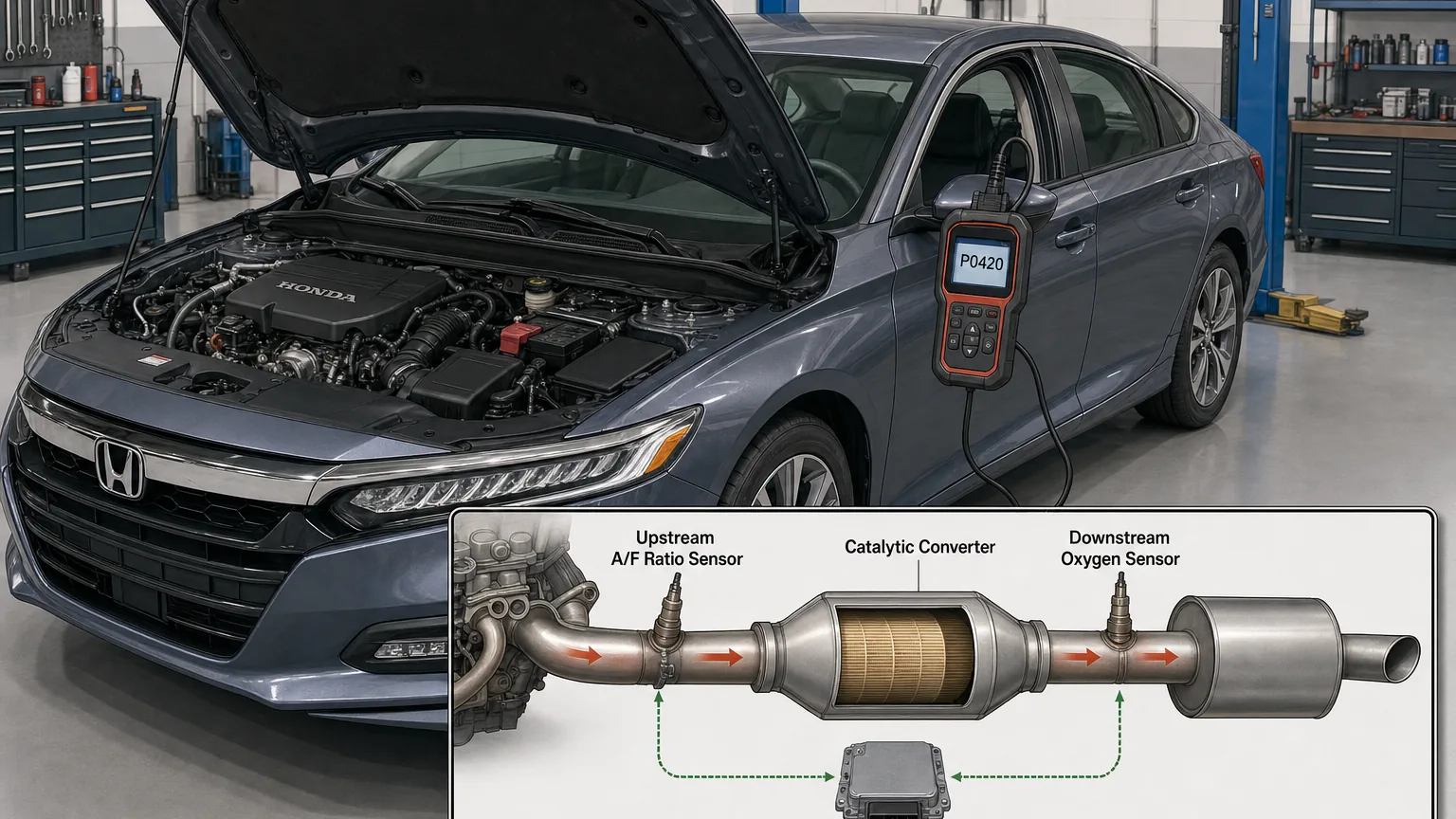
Main causes
- Exhaust leaks before the catalytic converter
- Fuel mixture issues (rich or lean)
- A genuinely failing catalytic converter
Diagnostic order
| 2006–2011 Civic EX/LX | A/F ratio sensor (wideband) | HO2S (conventional) | Upstream: 5-wire; Downstream: 4-wire |
| 2008–2012 Accord 4-cyl | A/F ratio sensor | HO2S | Verify with VIN; California emissions may differ |
| 2012–2016 CR-V | A/F ratio sensor | HO2S | Both sensors use different connectors; do not swap |
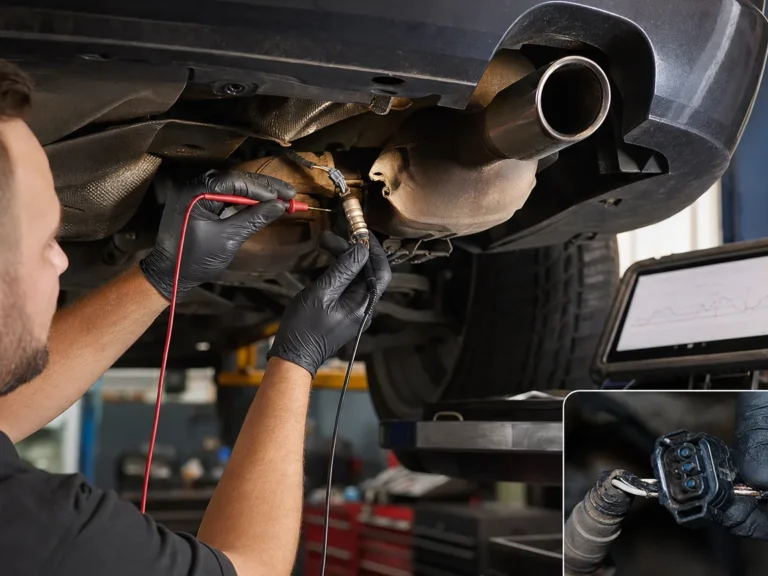
- Check the connector shape and wire count: upstream sensors often have 5 or 6 wires, downstream 4.
- Compare the installed sensor with the old unit and with an OEM parts catalog for your VIN.
- Inspect the sensor packaging—some universal sensors require wiring modifications that can cause signal issues.
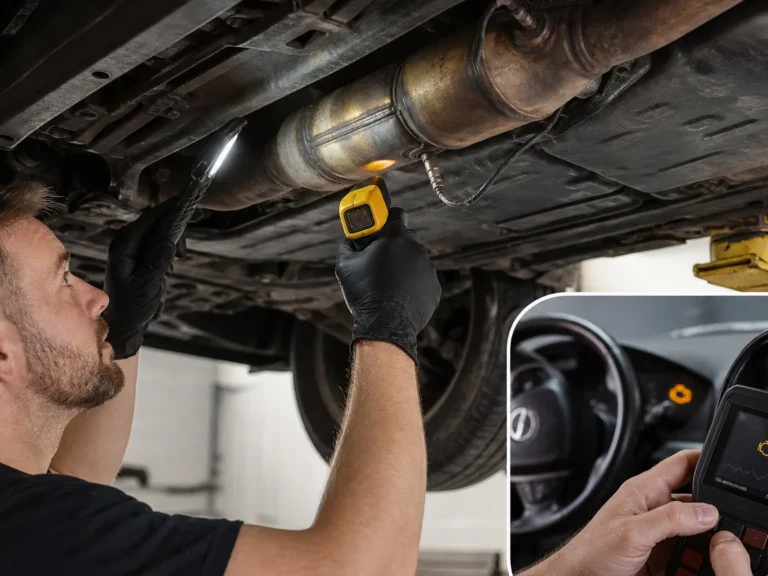
- Inspect the flex pipe for soot streaks, braid separation, or visible cracks—common on older Civics and CR-Vs.
- Check the donut gasket for black carbon traces or signs of blow‑by at the spring‑bolt connection.
- Look for hairline cracks on the exhaust manifold, especially near the flange.
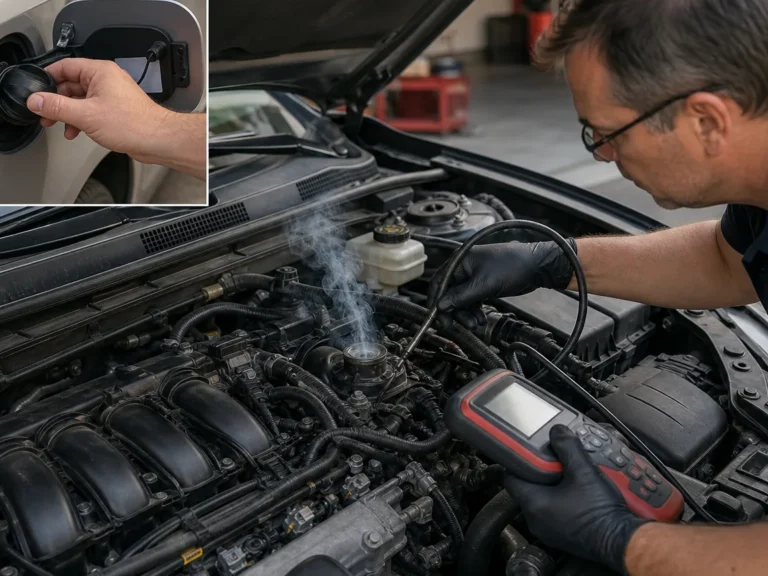
- Unmetered air leaks (cracked intake boot, loose vacuum hose, leaking intake manifold gasket)
- A dirty or failing mass airflow (MAF) sensor
- Leaking fuel injectors that cause cylinder‑specific rich spikes
- A weak fuel pump that creates a lean mixture under load
- Ignition misfires that dump raw fuel into the exhaust
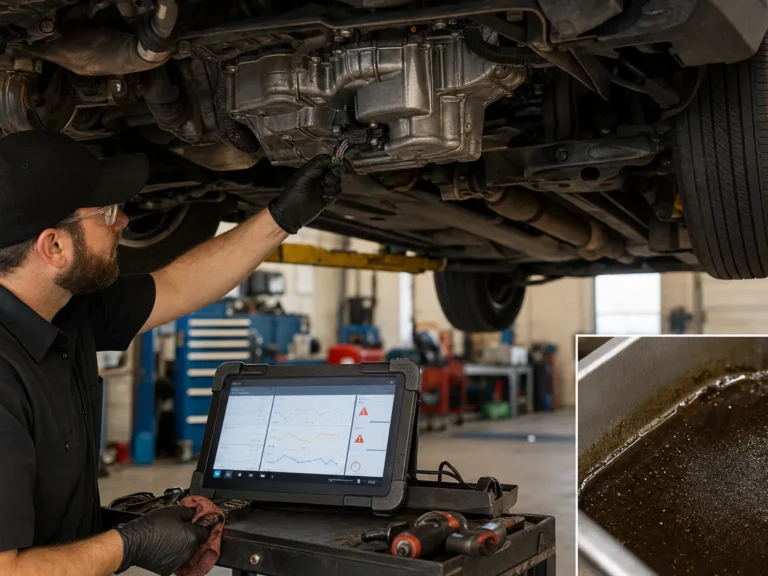
- Connect the scan tool and start the engine. Let it reach normal operating temperature—at least 180°F coolant temperature.
- Select the data PID list and graph the upstream A/F sensor or O2 sensor and the downstream HO2S voltage simultaneously.
- At idle, watch the upstream signal. It should switch rapidly (in the case of a conventional O2) or hold a steady lambda near 1.0 for a wideband A/F sensor.
- Observe the downstream signal. On a healthy system, the voltage should remain relatively stable, not mirroring the upstream switching. Small, slow fluctuations are normal; rapid swings that copy the upstream pattern suggest low catalyst efficiency.
- Perform a snap‑throttle test: quickly blip the throttle to approximately 2,500 rpm and release. Watch the downstream sensor for a momentary spike. A strong catalyst will dampen the spike; a weak catalyst will let the voltage jump sharply before settling.
- Drive the vehicle under moderate load while recording data. The downstream signal should stay flat during steady cruise. If it starts to oscillate when the engine is under mild load, the converter is likely failing.
- Do not screw a spark plug non‑fouler onto the downstream O2 sensor.
- Do not install aftermarket O2 sensor simulators or electronic emulators.
- Do not disable the check engine light or tamper with emissions readiness monitors.
- Address the root cause through proper diagnostics to keep the vehicle road‑legal and safe.
- Start the engine cold and let it idle for approximately 2 minutes with the A/C and defroster off. This allows the PCM to stabilize.
- Accelerate gently to 50–55 mph and hold that speed steady for 5 miles. Avoid using cruise control; maintain a light, consistent throttle.
- Allow the vehicle to decelerate slowly by lifting off the throttle without using the brake. Let the speed drop to about 30 mph.
- Repeat the 50–55 mph steady cruise for another 2 miles, then bring the vehicle to a stop and idle for 1 minute.
- Turn off the engine, wait 30 seconds, and restart. Use the scan tool to check readiness monitors: the catalyst monitor should show “complete.”
Comments
Be the first to add a practical repair note or follow-up question.