
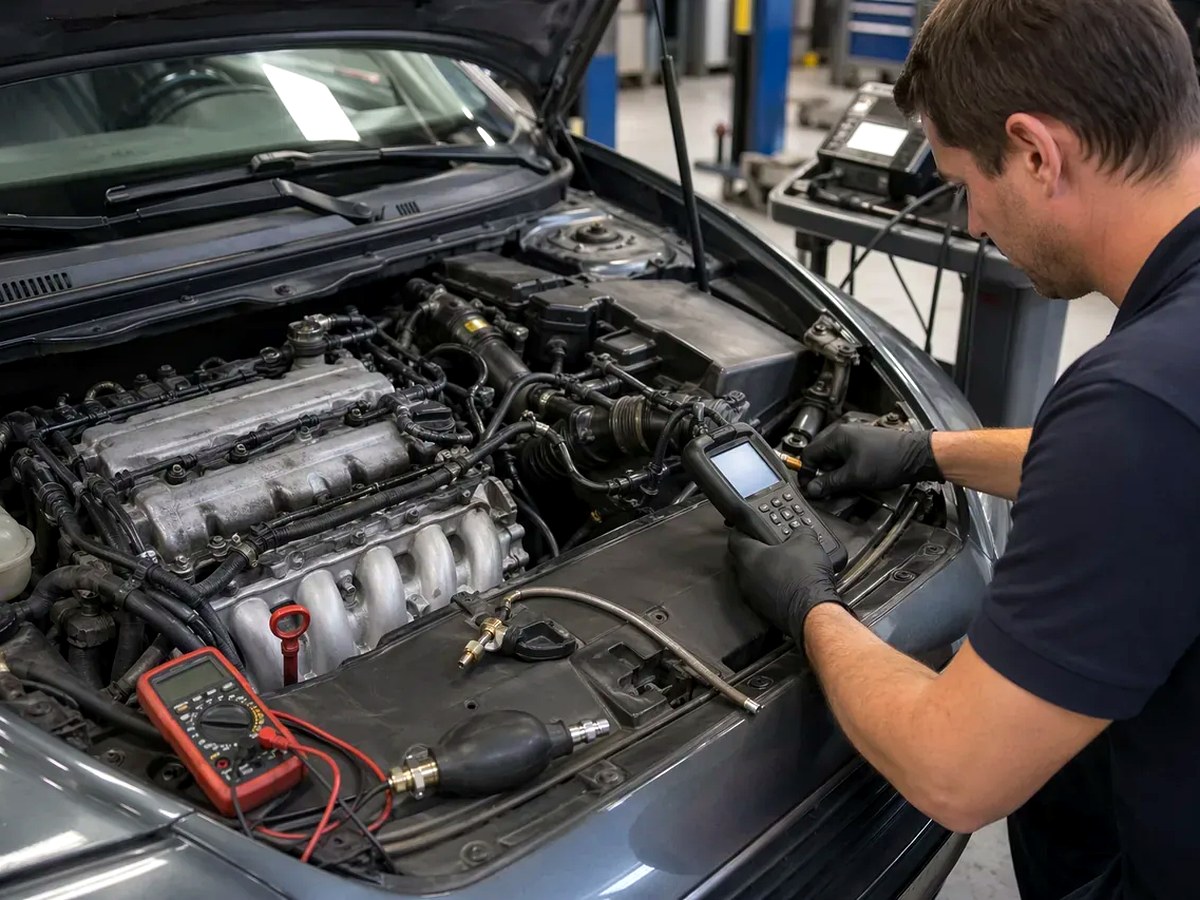
What the code means
A misfire happens when the air-fuel charge in a cylinder does not burn correctly or does not contribute expected power. The computer tracks crankshaft speed changes and other signals, then flags a cylinder-specific fault when the pattern points to one cylinder repeatedly falling behind.
P0303 usually means the fault path is local to cylinder 3, which is why plugs, coils, boots, injectors, compression, and wiring in that cylinder's circuit are often checked before broad system replacement.
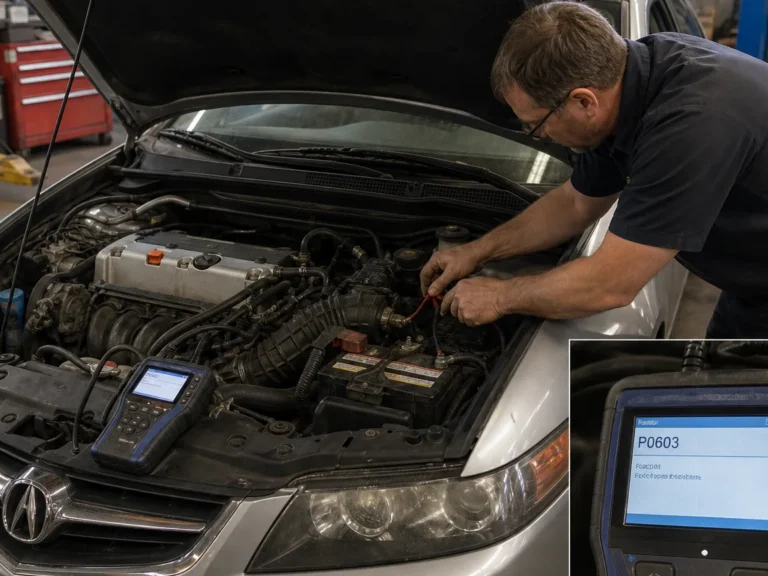
P0303 does not prove a bad spark plug, bad coil, bad injector, or bad engine control module by itself.
Symptoms
- Rough idle or engine shaking
- Hesitation or stumble on takeoff
- Loss of power under load
- Flashing check engine light during active misfire
- Raw-fuel smell from the exhaust area
- Hard starting or uneven cold start
| Symptom | What it can suggest | Urgency |
|---|---|---|
| Idle shake only | Plug, coil, injector balance, small air leak | Caution |
| Misfire under load | Weak ignition output, fuel delivery issue, compression problem | Warning |
| Flashing CEL with severe shaking | Active catalyst-damaging misfire | Critical |
| Fuel smell and poor running | Unburned fuel reaching exhaust | Warning |
Main causes
Ignition-related causes
- Worn, fouled, or incorrectly gapped spark plug
- Weak ignition coil, coil boot, or secondary leakage
- Damaged plug wire on older ignition layouts
- Oil or moisture contamination in the plug well
Fuel delivery causes
- Restricted or failing fuel injector on cylinder 3
- Poor injector electrical connection
- Fuel quality issue affecting combustion stability
Air leak and intake causes
- Intake leak near the affected runner
- Vacuum leak that leans out one cylinder more than others
- Carbon or airflow imbalance on some engine designs
Mechanical engine causes
- Low compression from valve, ring, or head gasket problems
- Cam timing or valvetrain fault affecting one cylinder
- Burned valve or sealing loss
Wiring, sensor, and control issues
- Damaged coil or injector harness
- Poor ground or terminal fit
- Less commonly, a control-side fault after basic circuits are verified
A common misdiagnosis mistake is replacing the coil, plug, injector, or sensor before confirming the code pattern, freeze-frame clues, and the actual test result on that cylinder.
What to check first
- Verify which cylinder is number 3 on the exact engine
- Read any companion codes and freeze-frame data if available
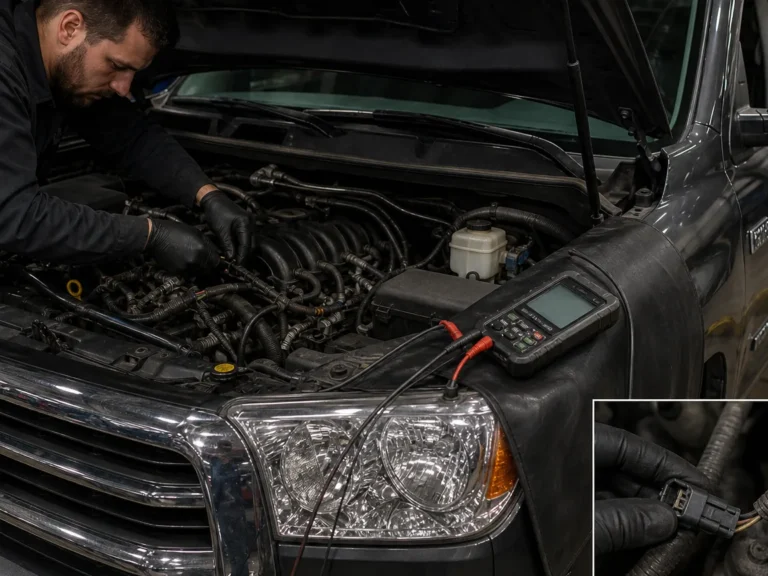
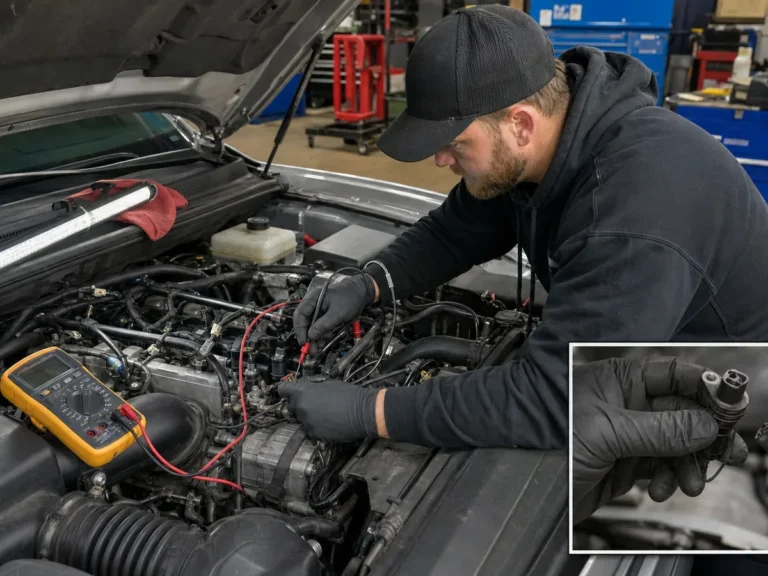
- Inspect coil, boot, wire, and connector condition at cylinder 3
- Look for oil, moisture, cracked insulation, or loose terminals
- Check whether the misfire changes with idle, load, or temperature
- If appropriate, compare plug condition with another cylinder
Do not remove ignition or fuel components on a hot engine if access is poor or the procedure is unclear. Some engines need careful handling to avoid connector, thread, or sealing damage.
Diagnostic order
- Confirm P0303 and note any related fuel trim, injector, or crankshaft correlation codes.
- Review freeze-frame data to see when the misfire was detected.
- Verify cylinder 3 location on the exact engine family.
- Inspect and, where appropriate, swap ignition components to see whether the misfire follows the part.
- Evaluate injector command, connector condition, and cylinder contribution.
- Check for runner-specific air leaks or intake sealing issues.
- If the misfire remains, test compression and mechanical integrity before considering control-module faults.
PCM replacement belongs at the end of the tree, not the beginning. Power, ground, wiring, and component inputs should be verified first.
A steady check engine light with a light stumble may allow a cautious trip to a nearby diagnosis point, but only if the vehicle is otherwise controllable and the misfire is not worsening. Keep load low and avoid hard acceleration.
- Stop driving if the CEL is flashing
- Stop driving if the engine shakes heavily or stalls
- Stop driving if power loss makes merging or climbing unsafe
- Use extra caution if fuel smell is strong or the exhaust note is sharply uneven
What usually fixes it
- Replace worn or fouled spark plugs if inspection confirms plug-related failure
- Replace a weak coil, boot, or wire if the misfire follows that component
- Service or replace an injector only after flow or control evidence supports it
- Repair intake leaks or sealing faults if lean conditions are localized
- Address compression or valvetrain faults if mechanical tests show sealing loss
Post-repair verification matters. The engine should idle evenly, accelerate cleanly, and return without the same cylinder-specific misfire after a proper road test and code check.
FAQ
What is the difference between P0303 and P0300?
P0303 points to misfire activity in cylinder 3 specifically. P0300 is a random or multiple misfire code, which means the misfire pattern is spread across cylinders or not isolated to one cylinder.
Does P0303 always mean the ignition coil is bad?
No. A bad coil is common on some engines, but P0303 can also come from a spark plug, injector fault, intake leak, low compression, wiring issue, or another cylinder-specific problem.
Can a bad spark plug cause P0303?
Yes. A worn, fouled, cracked, or incorrectly gapped plug can cause a cylinder 3 misfire, especially if the misfire is isolated and improves after confirmed ignition repair.
Should I replace parts before diagnosing?
Usually no. Simple inspections and evidence-based swap or test steps are better than guessing, especially because cylinder numbering, engine layout, and root cause vary by vehicle.
Comments
Be the first to add a practical repair note or follow-up question.