
What the code means
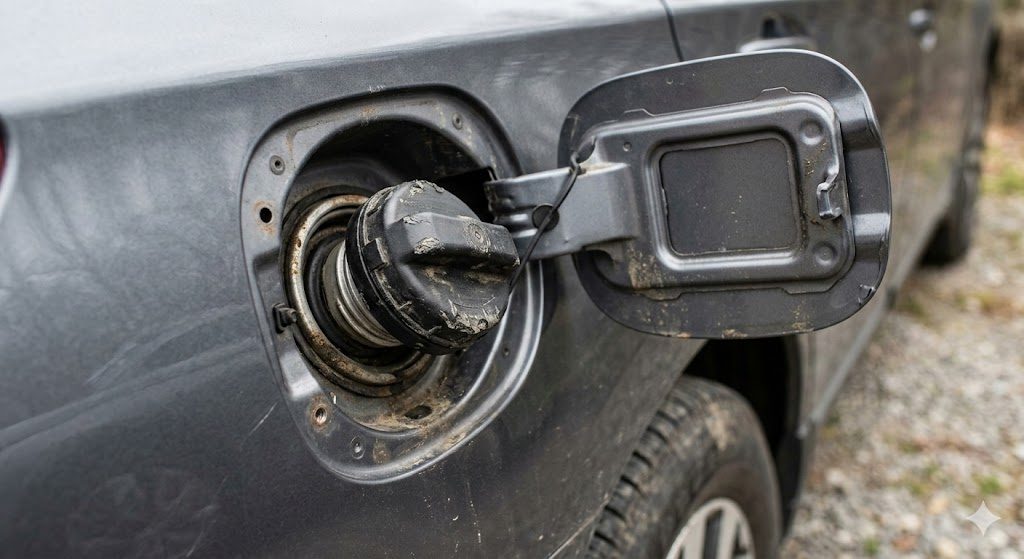
P0440 generally points to a fault in the evaporative emission control system, which is the closed system that stores and manages fuel vapors instead of letting them escape into the atmosphere. The code often appears when the control module cannot confirm expected EVAP behavior during a self-test.
In plain English, the car is saying something in the vapor-sealing, vapor-routing, or EVAP-monitoring side of the fuel system does not look right. That can be a leak, a valve that does not open or close when commanded, a sensor signal that does not make sense, or wiring that prevents the system from being tested properly.
P0440 does not by itself prove the size of the leak or identify one exact component. Vehicle-specific service information is still needed for final confirmation.
Symptoms
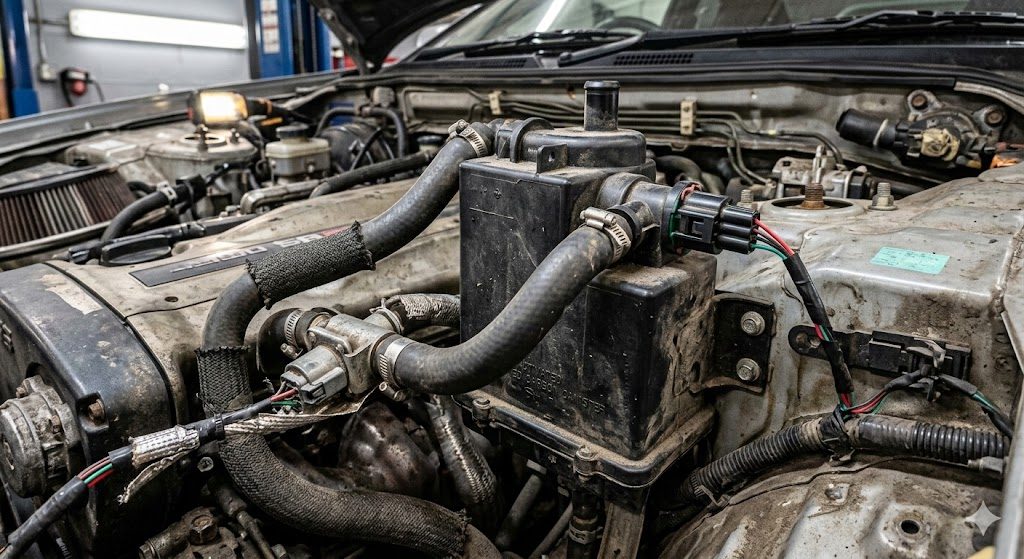
Many vehicles with P0440 drive normally, so the check engine light may be the only obvious symptom. That is one reason owners sometimes overreact and replace parts too early, even though the code often needs a methodical leak-and-control diagnosis instead of guesswork.
- Check engine light on with few or no drivability symptoms
- Fuel smell near the rear of the vehicle, filler area, or after parking
- Failed or incomplete emissions readiness in inspection-related contexts
- Occasional hard-to-repeat idle change if a purge fault is involved, though not every vehicle shows this
- Additional EVAP-related codes stored with P0440, which often narrow the direction
A strong fuel smell, wetness near the filler area, or repeated difficulty after refueling deserves closer inspection even if the car otherwise seems to run normally.
Main causes
The most common causes of P0440 are not equal in probability, and the code should not be treated as proof of a bad canister or valve. In many cases, the fault is a sealing issue first, a control issue second, and a deeper component or wiring fault after that.
- Loose, damaged, or weak-sealing gas cap or filler-neck sealing problem: common because it directly affects system sealing
- Purge valve or vent valve fault: can prevent the monitor from creating or controlling the expected vapor flow
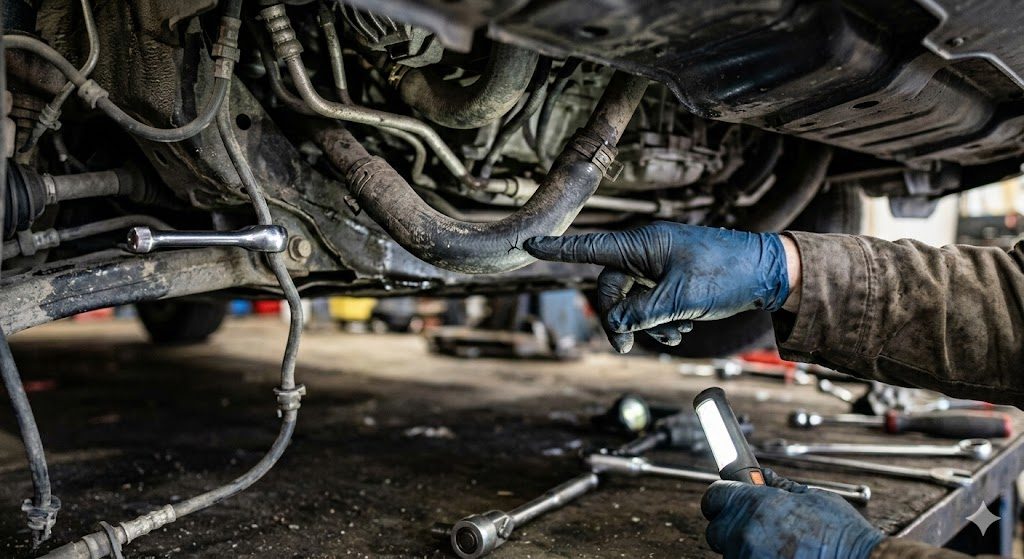
- Cracked hose, split line, damaged canister connection, or seal leak: common on aging vehicles or after underbody exposure
- Tank pressure sensor or wiring issue: the system may be behaving normally, but the reported pressure change is unreliable
- Intermittent vehicle-specific monitor logic or harness issue: less common, but worth considering when basics test good
| Rank | Cause | Why it often fits P0440 |
|---|---|---|
| 1 | Gas cap or filler-neck seal issue | Simple sealing faults can trigger a general EVAP malfunction without a more specific leak-size code |
| 2 | Purge or vent control fault | The monitor may fail because vapor routing or system sealing cannot be commanded correctly |
| 3 | Hose, canister, or seal leak | Aged rubber, damaged lines, or canister-area leaks are common real-world findings |
| 4 | Pressure sensor or wiring fault | Incorrect feedback can mimic an EVAP fault even when the hardware mostly seals |
| 5 | Intermittent logic or harness fault | Used when obvious leaks and control faults have been ruled out |
What to check first
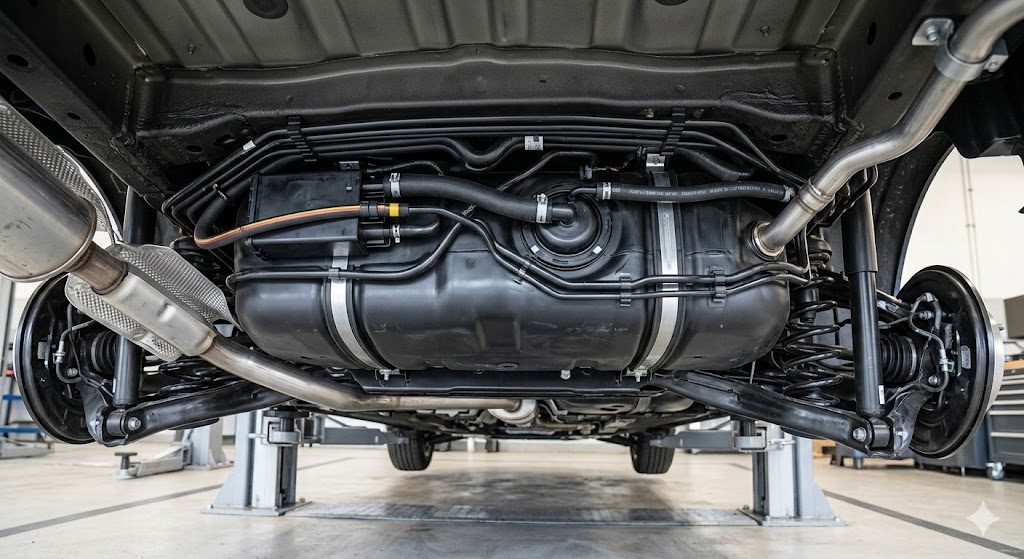
Before any parts replacement, start with the simplest safe checks. Tighten and reseat the gas cap, inspect the cap seal for cuts or flattening, and look closely at the filler-neck lip for rust, dirt, or damage that could prevent sealing. If the code appeared soon after refueling, that timing matters.
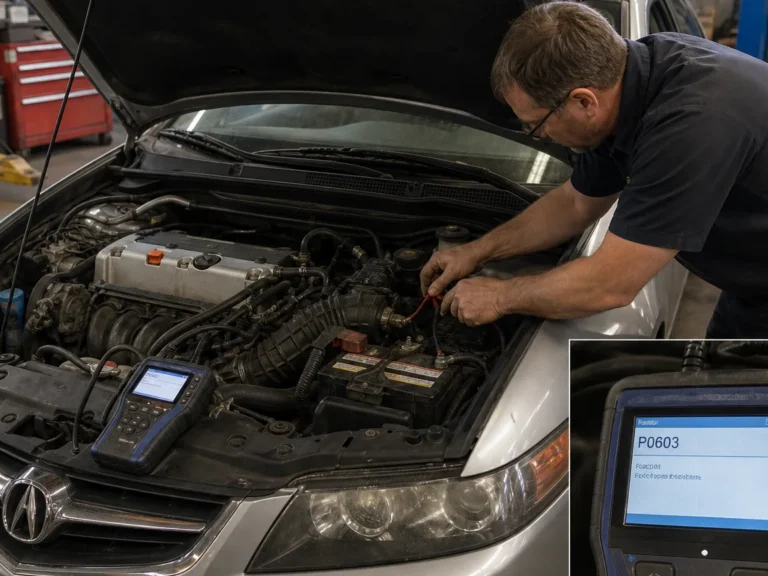
- Read all stored and pending codes if a scanner is available, and save freeze-frame data
- Reseat the gas cap and inspect its seal and locking action
- Look for obvious disconnected, split, or oil-soaked EVAP hoses around accessible areas
- Check for fuel odor near the filler area, tank area, or charcoal canister location
- Clear the code only after recording data, then see whether it returns under normal use
Do not blow compressed air into EVAP lines or bypass valves casually. EVAP components and test logic vary by vehicle, and rough testing can create more confusion than clarity.
Diagnostic order
A technician usually diagnoses P0440 by confirming code context first, then testing the EVAP system in a logical sequence instead of jumping to component replacement. The goal is to separate sealing faults, control faults, feedback faults, and wiring faults without over-interpreting one symptom.
- Confirm stored, pending, and history codes, then review freeze-frame and monitor status
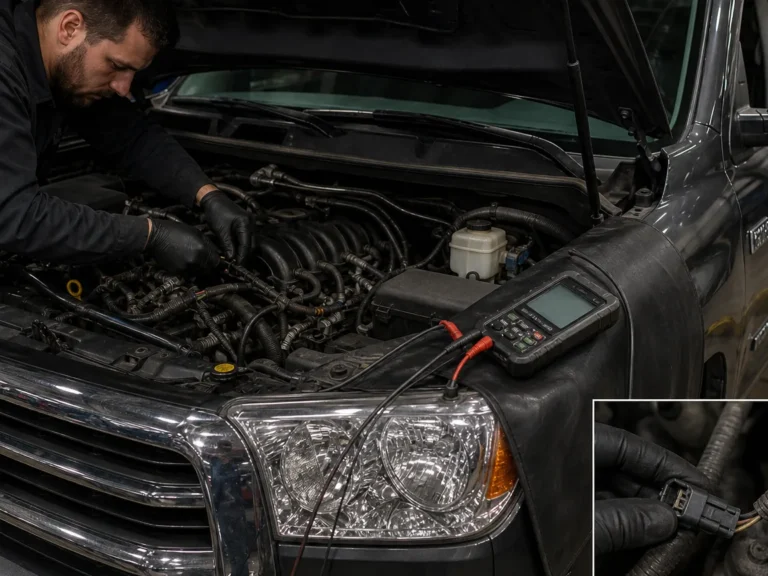
- Perform a visual inspection of hoses, cap fit, filler area, canister area, and connectors
- Command purge and vent operation with a capable scan tool where supported
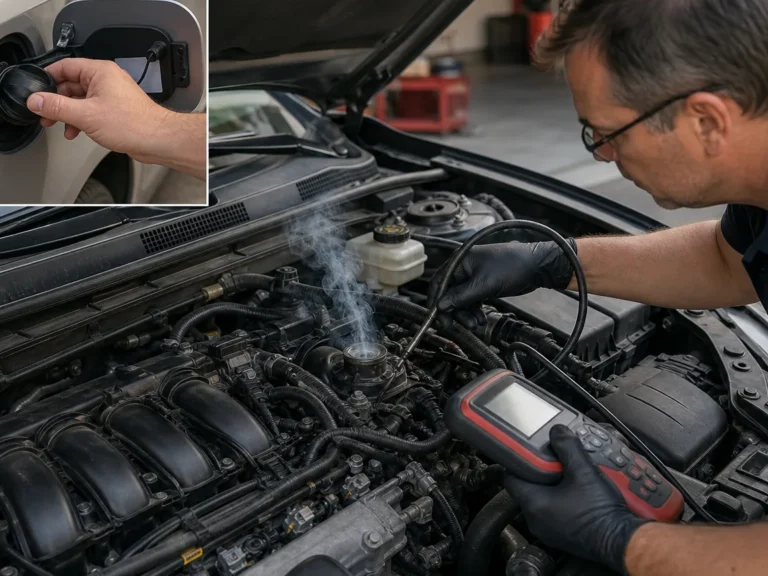
- Use a smoke test or other approved leak-check method to identify escaping vapor paths
- Review tank pressure sensor behavior and compare it with commanded system changes
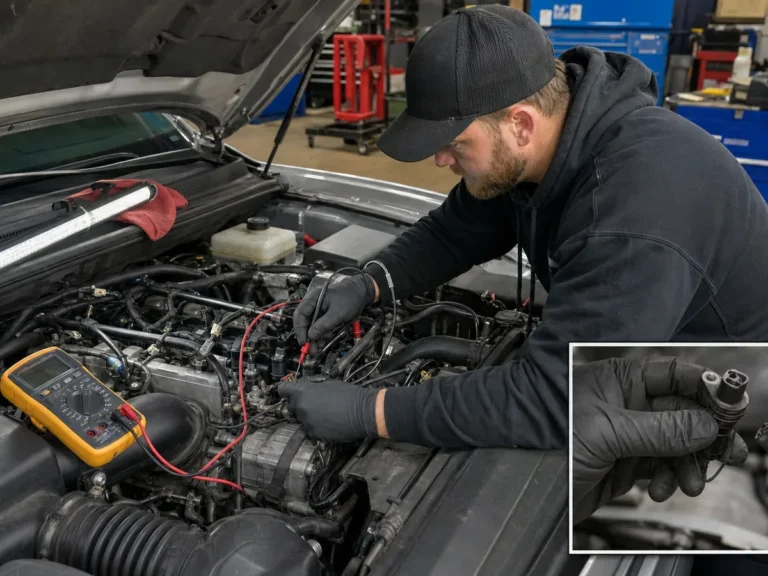
- Inspect related wiring, grounds, and connectors if mechanical faults are not confirmed
This is also where P0440 differs from leak-specific EVAP codes such as P0442 or P0455. P0442 often points toward a small leak direction, P0455 often points toward a large leak direction, while P0440 can remain broader and may include control or feedback faults that are not just a simple leak.
P0440 is often still driveable because many vehicles run normally with an EVAP fault. The code usually relates to fuel-vapor containment rather than a direct engine-damage event. Even so, it should not be treated as harmless if there is a fuel smell, repeated return after simple checks, or other active codes that change the risk picture.
- Usually reasonable for short-term driving if the vehicle runs normally and there is no strong fuel odor
- Less comfortable to delay if you smell fuel, have refueling issues, or see multiple related EVAP codes
- More urgent if another fault affects engine running, if the MIL is flashing, or if local emissions inspection readiness matters soon
Do not ignore a strong raw-fuel smell. That can point to a sealing or vapor-control issue that deserves prompt inspection even if drivability still seems normal.
What usually fixes it
The fix for P0440 depends on what testing proves, not what owners hope is cheapest. In some cases the repair is as simple as correcting a cap or seal issue. In others, the real solution is repairing a leaking line, replacing a confirmed purge or vent component, correcting a wiring fault, or addressing a pressure-sensor problem.
- Reseating or replacing a confirmed bad gas cap or correcting a filler-neck sealing issue
- Repairing or replacing a damaged EVAP hose, line, or seal found during inspection or smoke testing
- Replacing a purge valve or vent valve only after command and function testing supports the failure
- Repairing wiring, poor connector contact, or sensor faults when scan data and circuit checks point there
- Completing a proper drive cycle after repair so the monitor can retest successfully
Common misdiagnosis traps include replacing the charcoal canister without proof, assuming every P0440 is a cap issue, or ignoring sensor and wiring faults after a smoke test shows no leak.
FAQ
Does P0440 always mean a loose gas cap?
No. A loose or weak-sealing gas cap is one common cause, but P0440 can also point to hose leaks, purge or vent control faults, pressure-sensor issues, or related wiring problems.
Can P0440 cause rough running?
It often does not cause obvious drivability symptoms by itself. If rough running is present, a purge-related fault or another code may be involved and should be checked together.
How is P0440 different from P0442 or P0455?
P0440 is a broader EVAP system fault. P0442 usually trends toward a small-leak direction, while P0455 usually trends toward a large-leak direction, though final diagnosis is still vehicle-specific.
When should I stop DIY diagnosis?
If the code returns after cap and visible hose checks, if there is fuel odor, or if scan-tool and smoke-test access is needed, a technician-level diagnosis is usually the more efficient next step.
Comments
Be the first to add a practical repair note or follow-up question.