
Common failure signs
The quickest diagnosis starts with the pattern of the stop, not the part list. A consistent low-speed nudge with no other symptom is lower concern than a sharp grab, clunk, vibration, warning, or change in brake response.
Technician diagnosis should first reproduce the reported stop behavior under controlled conditions, then separate control behavior from mechanical movement. A road test without scan review or an inspection without symptom reproduction can miss the actual fault path.
A mild, unchanged final-stop jerk can often be documented while arranging routine follow-up, but any loss of braking confidence changes the decision. Treat braking, steering, tire, wheel, and suspension symptoms as safety-related until inspected.
Before replacing it
A Tesla alert or stored DTC can indicate that the vehicle detected a system condition related to braking, stability control, sensors, or vehicle control, but it does not automatically identify the failed part visible to the owner. The alert text and service data should guide the next inspection step.
No visible warning also does not prove the jerk is normal. Mechanical brake issues, tire defects, wheel damage, bushing movement, or intermittent low-speed behavior may not always present as a driver-facing alert. That is why repeatability, physical inspection, and a controlled road test matter.
Inspection steps
A Tesla Model 3 Highland jerk right before coming to a stop usually points to the low-speed transition between regenerative braking and friction braking, but it can also indicate a brake, wheel and tire, suspension, chassis, or software-related issue. The fastest triage step is to note whether the jerk is mild, consistent, and only present at the final stop, or whether it is harsh, noisy, alert-backed, pedal-related, one-sided, or getting worse.
Do not assume one stop event proves a failed part. The useful first split is normal-feeling brake blending versus a repeatable abnormal symptom. If the car stops straight, the brake pedal feels normal, no alerts appear, and the behavior is unchanged, document the pattern and monitor it. If braking confidence changes, the car pulls, shudders, clunks, grabs hard, shows warnings, or the symptom appears after a tire, brake, suspension, or software change, arrange service.
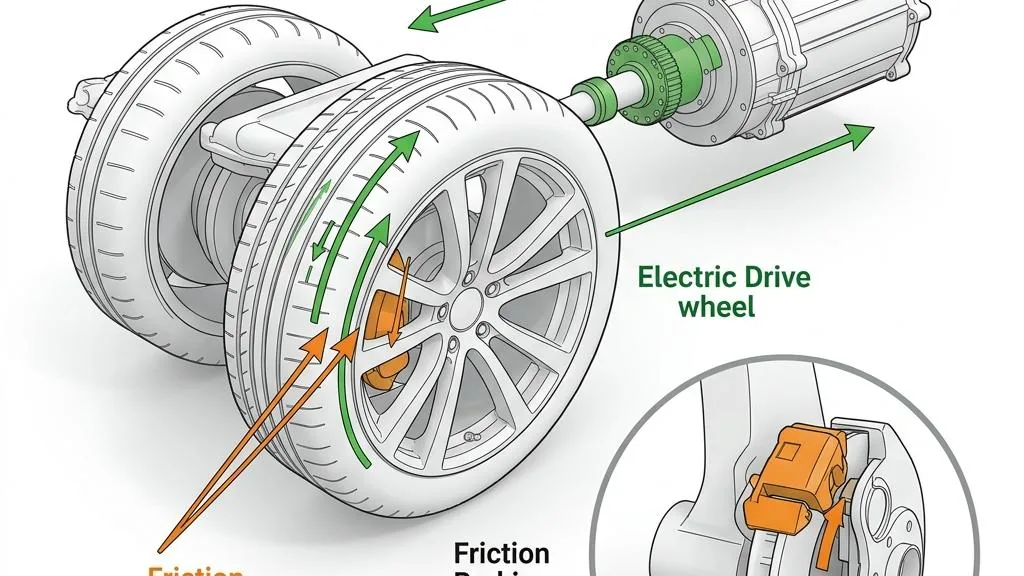
A normal Tesla Model 3 Highland stop can include a subtle change in feel as regenerative braking reduces and the friction brakes finish the stop. Regenerative braking uses the drive unit to slow the car and recover energy, while the friction brake system still has to provide stable stopping when regen is limited, reduced, or no longer enough at very low speed.
That transition should feel controlled. A faint final nudge, a small change in deceleration, or a slightly different stop feel after a software update or driving context change may not prove a defect by itself. The key question is whether the stop remains straight, predictable, quiet, and free of alerts.
The behavior is less likely to be normal when it feels like a hard grab, a delayed catch, a forward lurch, a repeated shudder, or a chassis knock. The same is true if the brake pedal feels different, the car pulls, a wheel area makes noise, or the symptom appears after tire service, impact damage, brake work, or a suspension event.
The most likely cause family is brake blending or calibration when the jerk happens only in the last moment of a smooth stop and there are no alerts, noises, or directional changes. That does not make every jerk normal; it only means the low-speed control handoff is the first place to separate normal feel from fault behavior.
Forum descriptions can help capture the owner symptom wording, but they do not confirm the cause. A confirmed diagnosis needs repeatability, alert or DTC review, and physical inspection when mechanical signs are present.
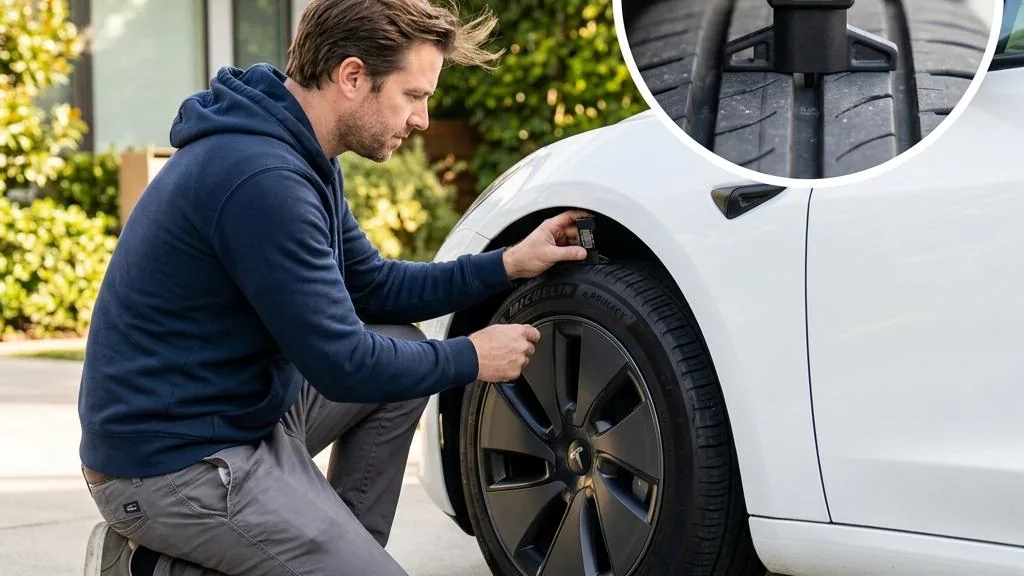
Owner checks should confirm the symptom pattern without creating risk. The goal is not to prove a failed part at home; it is to collect enough clean observations for a useful service decision.
The diagnostic order should keep the vehicle safe first and prevent parts guessing. Start with the symptom pattern, then branch toward control behavior, brake hardware, tires, suspension, or software context.
A single branch can overlap another. For example, a wheel or tire problem can feel like brake shudder, and a suspension bushing can feel like a brake lurch. Confirmation matters more than the first label.
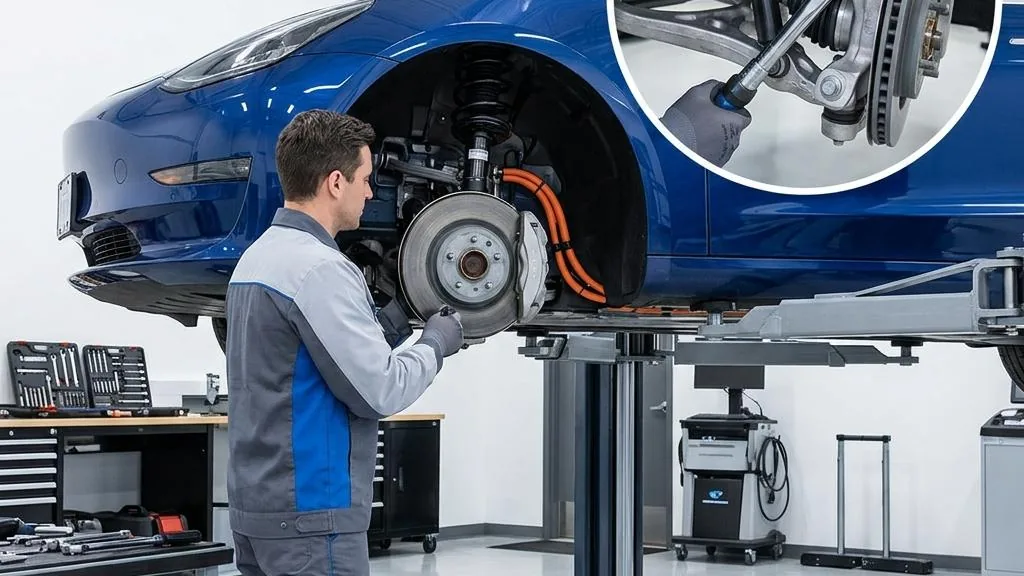
The correct repair path starts with a confirmed fault, not a guessed part. A Tesla service center or qualified EV-aware technician may inspect brake hardware, wheel and tire condition, suspension components, alerts, diagnostic data, and software context before deciding whether the behavior is normal, adjustable, update-related, or repairable.
For the owner, the best service request is specific: describe the exact speed window, whether the brake pedal is involved, whether the car pulls or clunks, whether any alert appeared, what changed recently, and whether the symptom is repeatable. That information helps the technician reproduce the issue instead of treating the complaint as a vague brake feel concern.
Is a Tesla Model 3 Highland jerk right before stopping always a defect?
No. A mild and consistent jerk right before stopping can be related to regenerative-to-friction brake blending, but harsh, noisy, one-sided, alert-backed, or worsening behavior should be inspected.
Should I keep driving if the car jerks only at the final stop?
If the stop is straight, predictable, quiet, and warning-free, document the pattern and monitor it briefly. If braking confidence changes or the symptom worsens, book service.
Can tires cause a jerk right before coming to a stop?
Yes. Tire pressure differences, damage, uneven wear, wheel damage, or tire uniformity problems can create a low-speed disturbance that feels like a brake jerk.
Can a software update cause a different stopping feel?
A software update or control change can affect brake feel, but it should not be used to dismiss unsafe symptoms. Record the update timing and have the vehicle inspected if the behavior is harsh or repeatable.
What should I tell Tesla service about the symptom?
Give the exact stop pattern, whether the brake pedal is used, whether the car pulls, clunks, shudders, or shows alerts, and whether the issue began after tires, wheels, software, road impact, or service work.
Comments
Be the first to add a practical repair note or follow-up question.