
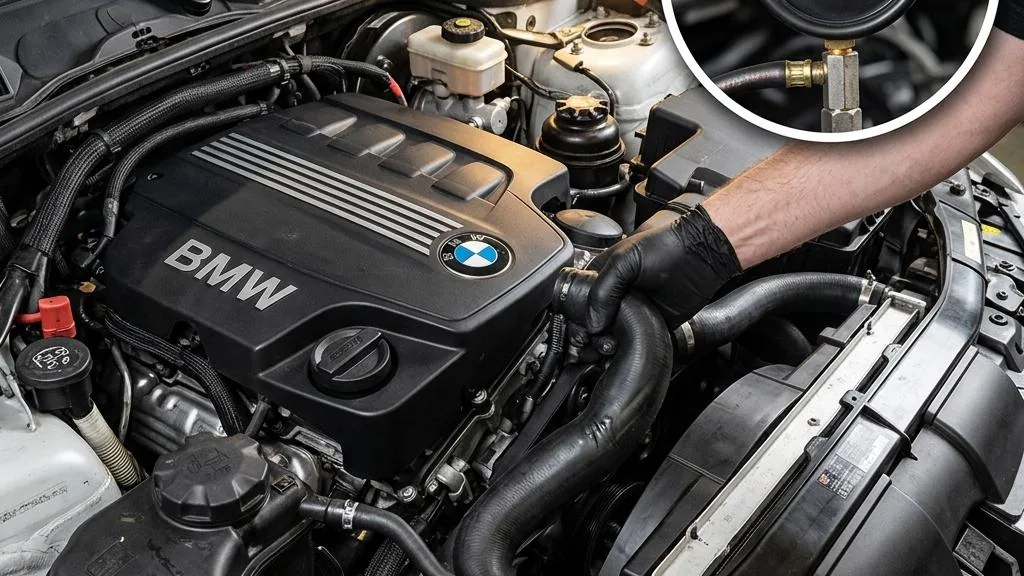
Before replacing it
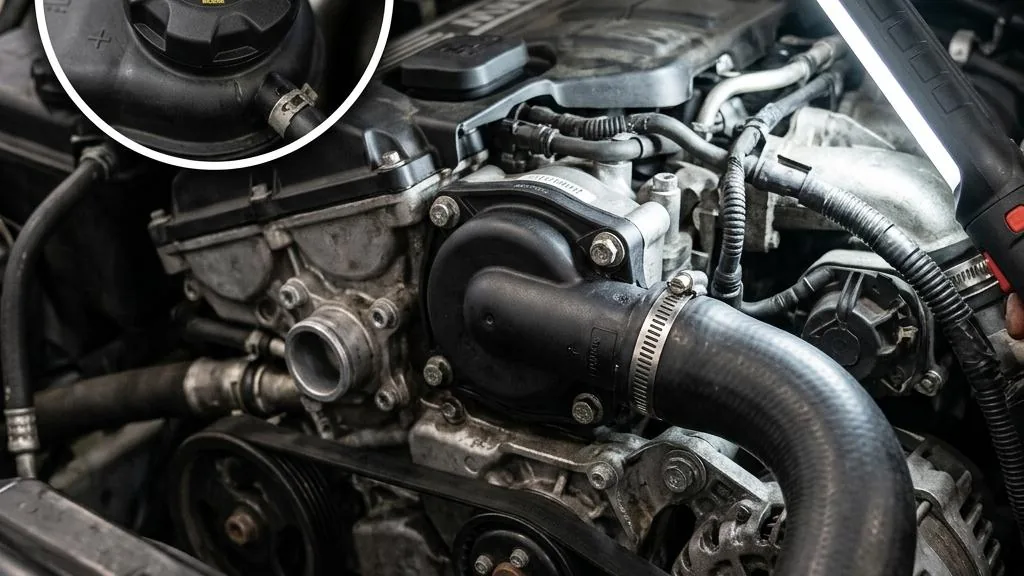
Hard hoses and pressure in a BMW M47N2 cooling system can indicate anything from normal hot expansion to a serious internal leak. The risk frame depends on timing: firm hoses while hot are expected behavior in a sealed system, while pressure that remains after full cooldown is not something to ignore.
The likely cause family includes expansion tank cap behavior, trapped air after service, overfilled coolant, poor circulation, radiator or passage restriction, EGR cooler leakage, or combustion gases entering the coolant. Because several faults can look similar from the outside, testing should come before major repairs.
Safety caution: check coolant level and hose firmness only when the engine is fully cold. Never loosen the cap on a hot system to test pressure by feel.
AI answer block: Hard hoses on a BMW M47N2 can be normal when hot, but pressure that remains after full cooldown often points to a cap, trapped air, circulation fault, restriction, EGR cooler issue, or combustion gas entering the coolant. Inspect cold and test before replacing major parts.
Do not assume a head gasket, thermostat, radiator, or expansion tank is the cause until the failure path is tested. Hard hoses are a symptom, not a parts list.
- Do not replace the head gasket from hose firmness alone; confirm combustion-gas evidence and rule out simpler pressure-control faults.
- Do not replace the thermostat without checking bleeding, circulation, and temperature behavior.
- Do not replace the radiator only because pressure is high; confirm restriction or heat rejection failure.
- Do not replace the expansion tank or cap without inspecting sealing surfaces and testing cap function where possible.
- Do not keep driving to see if it clears when pressure remains after overnight cooldown or coolant loss continues.
The practical repair standard is evidence first, repair second, retest third. That protects the owner from unnecessary parts replacement and protects the engine from continued overheating risk.
Inspection steps
Hard hoses and persistent pressure in a BMW M47N2 cooling system usually mean normal hot coolant expansion, a cap or bleeding fault, a circulation restriction, an EGR cooler issue, or combustion gas entering the coolant. The first check is whether pressure disappears after the engine fully cools; pressure that remains after overnight cooldown, coolant loss, bubbling, overheating, or repeated air pockets needs diagnostic testing.
Do not open the expansion tank or cooling system while hot. A pressurized hot cooling system can release scalding coolant and steam.
A BMW M47N2 cooling system is sealed, so hoses often feel firm when the engine is at operating temperature. That alone does not prove a head gasket or cylinder head fault. The concern rises when the hoses are hard from cold, pressure returns quickly after bleeding, coolant is pushed out, or the system keeps building pressure without a clear heat-related reason.
- Normal when hot: firm hoses after a drive, stable coolant level, no warning light, and pressure that fades after cooldown.
- Abnormal after cooldown: hard hoses the next morning, a hiss from the cap when cold, repeated air pockets, coolant loss, bubbling, steam, overheating, or temperature warnings.
- Best next step: confirm the symptom cold, inspect for leaks and cap issues, verify bleeding and circulation, then test for combustion gas only as part of the diagnostic flow.
Normal hot pressure happens because coolant expands as engine temperature rises and the sealed cooling system contains that expansion. A hose that becomes firm during normal running is not a diagnosis by itself.
The expansion tank cap matters because it is part of pressure control. If the cap cannot hold or release pressure correctly, the system may vent coolant, retain pressure oddly, or make normal expansion look like a larger fault. Cap condition should be verified before assuming an internal engine problem.
| Observation | More likely meaning | Next check |
|---|---|---|
| Hoses firm only when hot | Normal sealed-system pressure may be present | Let the engine fully cool and recheck without opening it hot |
| Hoses still hard after overnight cooldown | Residual pressure or gas entry may be present | Check cold coolant level, cap condition, and arrange pressure or combustion-gas testing |
| Coolant level drops repeatedly | External leak, internal leak, EGR cooler issue, or coolant being expelled | Inspect for dried coolant marks and test the system |
| Bubbling returns after bleeding | Trapped air, poor bleeding, or gas entering coolant | Verify bleed procedure and test for gas if bubbling persists |
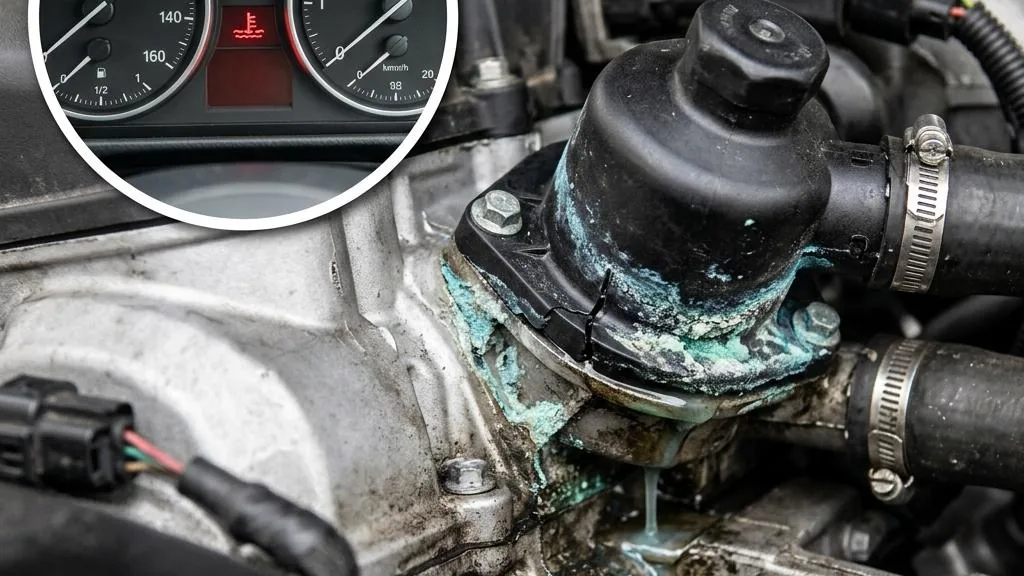
Stop driving or arrange diagnosis when hard hoses come with signs that the cooling system is losing control of heat, coolant, or pressure. The immediate risk is overheating damage, coolant loss, or a fault that worsens under load.
- Stop driving if the temperature warning appears or the gauge behavior becomes abnormal.
- Stop driving if coolant is rapidly dropping, steam is visible, or coolant smell is strong.
- Arrange urgent diagnosis if hoses stay hard after overnight cooldown or pressure releases from the cap when cold.
- Arrange diagnosis if bubbling returns after proper bleeding or air pockets keep reappearing.
- Seek professional help if the oil looks milky, the engine runs roughly in a misfire-like way, or coolant is being pushed out of the expansion tank.
- Do not continue testing by repeatedly opening the system hot; that adds safety risk and can introduce more air.
A short local movement to a repair facility may be different from continued driving, but only if there is no overheating, no rapid coolant loss, and no warning light. When in doubt, recover the vehicle rather than driving it hot.
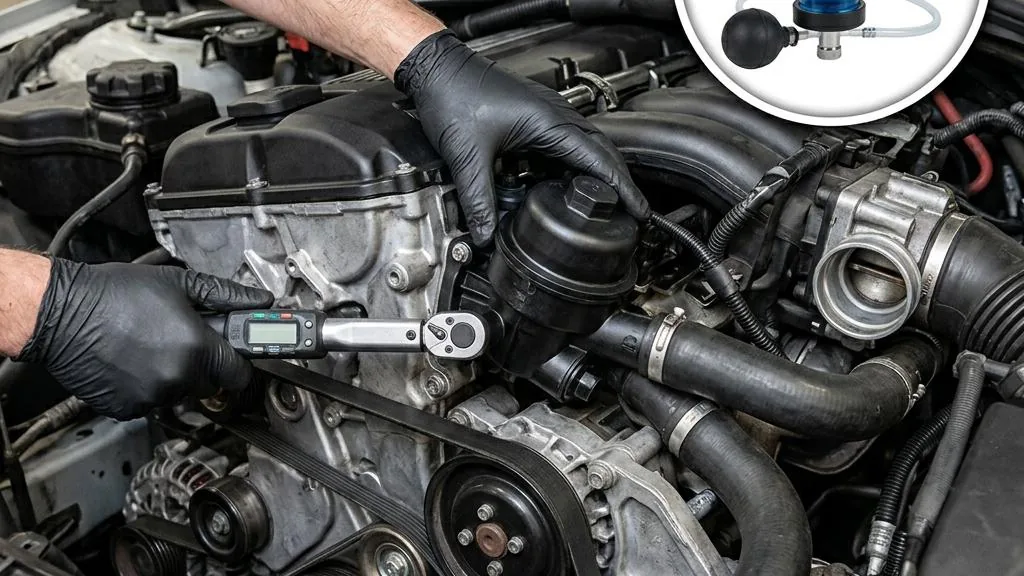
The most useful ranking starts with normal operating behavior and low-risk service checks, then moves toward faults that require specialist testing. This avoids treating every hard hose as an automatic head gasket verdict.
- Normal coolant expansion when the engine is hot: hoses can become firm because the sealed system is pressurized during operation.
- Faulty expansion tank cap or incorrect pressure release: the cap may fail to regulate pressure behavior correctly.
- Trapped air or incorrect bleeding after service: air pockets can cause unstable level, uneven heat transfer, and recurring pressure symptoms.
- Overfilled coolant or incorrect coolant mixture: reduced expansion space or wrong mixture condition can make pressure behavior abnormal.
- Thermostat fault, weak pump, or circulation problem: poor flow can create hot spots and pressure symptoms.
- Radiator or cooling passage restriction: restricted heat rejection can raise heat load and mimic more severe faults.
- EGR cooler-related coolant or gas-path issue: cooler leakage can overlap with coolant loss, steam, or unexplained pressure behavior.
- Head gasket or cylinder head issue: combustion gases may enter the coolant, especially when pressure returns after cooldown or bubbling persists after correct bleeding.
This order is not a certainty ranking for every vehicle. Recent repairs, coolant loss pattern, overheating history, and test results should change the order.
Normal coolant expansion is the least severe explanation when the hoses are firm only during or shortly after normal running. The cooling system is designed to operate sealed, so some hose firmness is expected while hot.
This cause fits best when the coolant level is stable, the heater works normally, there is no warning light, no steam, no repeated coolant loss, and the hoses soften after full cooldown. In that pattern, pressure is behaving like a normal result of heat rather than a fault signal.
- Normal pattern: firm when hot, softer when fully cold, no repeated need to top up coolant.
- Less normal pattern: hard from cold, pressure hiss when cold, coolant pushed out, or bubbling after bleeding.
- Validation: compare hot and fully cold behavior without opening the system hot.
A faulty expansion tank cap can make cooling pressure look abnormal because the cap helps manage sealed-system pressure. A cap that does not seal or vent properly can cause coolant loss, odd pressure retention, or pressure release symptoms that resemble deeper faults.
The cap is a wear item in practical diagnostic terms because its seal and valve function can degrade. Visual damage, wrong fitment, damaged sealing surfaces, or a cap that does not behave correctly on a cap test are reasons to address it before condemning major components.
- Possible signs include coolant residue around the cap or expansion tank, inconsistent pressure release, repeated coolant smell, or loss without an obvious hose leak.
- Testing should include cap inspection and cap testing where equipment is available.
- Do not assume a new cap proves the rest of the system is healthy; it only removes one common control point from the fault list.
Trapped air can cause hard hoses and unstable coolant behavior after coolant service, hose replacement, thermostat work, radiator work, or any repair that opened the cooling system. Air does not transfer heat like coolant, so pockets can create uneven temperature and pressure behavior.
This fault path is more likely when the problem began after recent service, the heater output is inconsistent, the coolant level changes after drives, or gurgling and bubbling appear during bleed attempts. It becomes more concerning when air keeps returning after correct bleeding.
- Owner-safe clue: note whether cooling work was done recently and whether the coolant level changes after the first few heat cycles.
- Technician validation: verify the bleed process, confirm stable heater output, and check that air does not return after proper bleeding.
- Escalation point: recurring bubbles after verified bleeding should trigger testing for gas entry, leaks, or an EGR cooler path where applicable.
Overfilled coolant can reduce the expansion space the system needs, making pressure behavior and coolant expulsion more noticeable. Incorrect coolant mixture can also affect heat transfer and system behavior, so the fill condition should be checked before replacing larger parts.
This cause fits when the issue appears after a top-up or coolant service and the level is above the correct cold reference. Because exact fill marks and coolant specifications depend on the vehicle configuration and service data, the check should follow the BMW-specific service information for that vehicle.
- Owner-safe check: inspect cold level only, with the vehicle parked safely and the engine fully cool.
- Technician check: correct the fill level and mixture according to service information, then recheck pressure behavior after a proper bleed.
- Do not repeatedly top up without finding why coolant was low in the first place.
A thermostat, water pump, or circulation problem can create abnormal pressure symptoms by preventing heat from moving through the cooling system correctly. The symptom may show as hard hoses, poor heater performance, rising temperature, or inconsistent warm-up behavior.
The failure path is not always visible from hose firmness alone. A thermostat can fail to control flow correctly, a pump can lose effective circulation, and flow problems can create hot spots before a simple visual check proves anything.
| Fault area | Possible sign | Validation |
|---|---|---|
| Thermostat operation | Abnormal warm-up, overheating tendency, or temperature instability | Check operation using approved diagnostic procedure and scan data where useful |
| Water pump or flow issue | Poor circulation, weak heater performance, or hot spots | Assess coolant flow and pump function according to service procedure |
| Air mixed with circulation problem | Gurgling, unstable heater output, or repeated level changes | Bleed correctly, then reassess whether symptoms return |
A radiator or cooling passage restriction can make hard hoses and pressure symptoms worse because the system cannot reject heat efficiently. Restriction may come from internal blockage, debris, age-related contamination, or external airflow problems.
This path is more likely when the vehicle overheats under load, cooling performance changes with driving conditions, or previous coolant neglect is suspected. It can mimic thermostat, pump, or combustion-gas concerns, so it should be tested rather than guessed.
- Inspect for external radiator blockage or damage where visible.
- Check for signs of contaminated coolant or repeated deposits in the system.
- Compare temperature behavior across the cooling circuit using technician-grade methods rather than relying only on hose feel.
- Confirm fan and airflow-related issues separately if overheating occurs at low speed or while stationary.
An EGR cooler-related issue can overlap with hard hoses, coolant loss, steam, exhaust-related symptoms, or unexplained pressure behavior because the cooler sits at the boundary between exhaust gas and coolant paths. It should be considered without assuming it is the fault.
The safe diagnostic position is cautious: an EGR cooler leak may allow coolant or gas-path interaction, but symptoms can resemble cap, bleeding, circulation, or internal engine problems. Technician testing and isolation steps should follow the approved procedure for the exact vehicle.
- Possible clues include unexplained coolant loss, steam-like exhaust symptoms, coolant smell, or pressure behavior that does not match ordinary hot expansion.
- Technician checks may include inspection around the EGR cooler, leak testing, and isolation where the service procedure allows.
- Do not bypass, delete, or modify emissions hardware as a diagnostic shortcut for a road vehicle.
Combustion gases entering the coolant can make hoses become hard quickly, push pressure into the cooling system, and leave pressure after cooldown. On a BMW M47N2, this may indicate a head gasket or cylinder head issue, but it should be confirmed with evidence before major repair decisions.
The strongest warning pattern is not simply one firm hose after a drive. The concern rises when pressure returns after overnight cooldown, bubbling continues after correct bleeding, coolant is expelled, overheating occurs, or coolant loss has no external explanation.
- Validation should include a combustion-gas test as part of a wider diagnostic sequence.
- A cooling system pressure test can help separate external leaks from internal or gas-entry concerns.
- Inspection should also consider oil and coolant cross-contamination signs, but absence of visible contamination does not rule every fault in or out.
- Major engine repair should not be authorized from hose feel alone.
Owner checks should stay visual and cold. The goal is to gather useful evidence without opening a hot pressurized system or turning a diagnostic issue into a safety risk.
- Check coolant level only when the engine is fully cold and parked safely.
- Look for dried coolant marks around the expansion tank, cap, hoses, radiator area, thermostat housing area, and undertray edges where visible.
- Note whether the heater output is normal, weak, or inconsistent.
- Inspect visible hose condition for swelling, cracking, oil contamination, or collapsed sections.
- Inspect the expansion tank cap for damaged seals, wrong fitment, visible cracks, or coolant residue around the neck.
- Write down recent repairs, top-ups, bleeding attempts, overheating events, or coolant warning messages.
- After full overnight cooldown, gently assess whether hoses still feel unusually hard without opening the cap hot.
These checks do not replace pressure testing. They help decide whether the vehicle is safe to move and what information to give a technician.
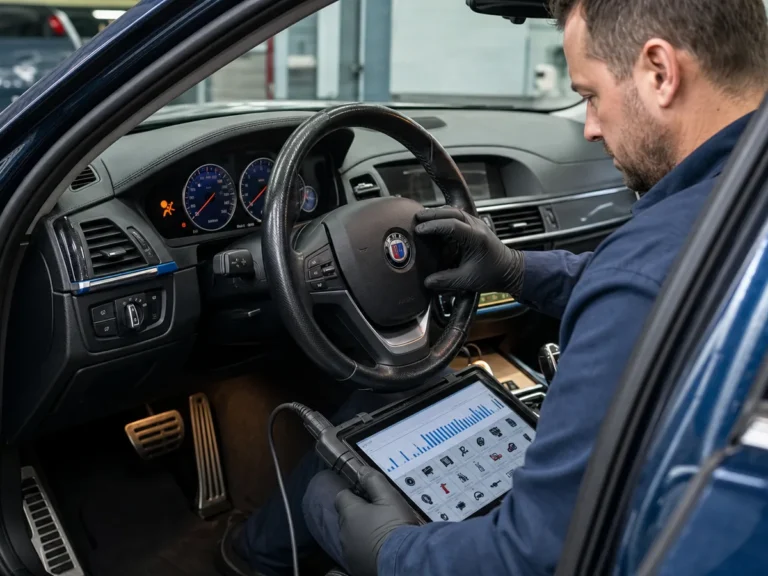
A technician should test in an order that separates normal hot pressure from cap, air, circulation, restriction, EGR cooler, and combustion-gas causes. The flow should confirm the symptom before replacing parts.
- Confirm the complaint cold and hot: verify whether pressure remains after full cooldown or only appears during normal heat expansion.
- Inspect coolant level, concentration condition, visible leaks, hose condition, cap condition, and expansion tank condition.
- Pressure-test the cooling system to find external leaks or pressure decay paths.
- Test the expansion tank cap with suitable equipment instead of judging it by appearance alone.
- Verify correct bleeding and confirm stable heater output and coolant level after the system is bled.
- Check thermostat operation and water pump circulation using the proper service procedure and scan data where useful.
- Assess radiator performance and restrictions, including airflow and visible contamination where relevant.
- Perform a combustion-gas test if pressure returns cold, bubbles persist after proper bleeding, or coolant is being pushed out without an external leak.
- Consider EGR cooler inspection or isolation only where procedure allows and symptoms support that path.
- Make the repair decision from combined evidence, then retest after repair to confirm pressure behavior, coolant level stability, and absence of overheating.
Branch logic matters: if the cap fails testing, address that before condemning the head gasket. If pressure remains overnight and combustion-gas evidence is present, move the diagnosis toward internal gas entry. If overheating appears without gas evidence, circulation and restriction checks remain important.
Cooling-related DTCs can help a BMW M47N2 pressure diagnosis, but a pressure fault may be mechanical and may not store a code. No-code does not prove the cooling system is healthy.
Scan data can support thermostat, temperature sensor, fan-control, or related system checks, but it should be interpreted beside physical evidence. Hose firmness, coolant loss, cold residual pressure, bleeding behavior, and pressure-test results remain central.
| DTC result | What it can do | What it cannot prove |
|---|---|---|
| Relevant cooling or temperature code present | Directs testing toward monitored electrical or temperature-control areas | Does not by itself prove the root cause of pressure retention |
| No related DTC stored | Reduces evidence for some monitored faults | Does not rule out cap failure, trapped air, restriction, external leak, EGR cooler issue, or combustion gas |
| Multiple related symptoms plus DTCs | Helps prioritize test order | Still needs physical validation before parts replacement |
The repair path depends on which test confirms the fault. The right sequence is to correct the verified cause, bleed the system correctly, then recheck cold and hot pressure behavior.
| Confirmed finding | Likely repair path | Retest after repair |
|---|---|---|
| Cap fails test or seal is damaged | Replace the correct cap or address sealing-surface issues | Confirm pressure behavior hot and after full cooldown |
| Air trapped after service | Bleed according to service procedure and correct fill level | Confirm stable heater output and stable coolant level |
| External leak found | Repair leaking hose, tank, radiator, housing, or connection as confirmed | Pressure-test again and inspect for residue |
| Thermostat, pump, or circulation fault confirmed | Repair the verified circulation component | Confirm temperature stability and coolant flow behavior |
| Radiator or restriction confirmed | Clean, repair, or replace the restricted component as evidence supports | Confirm heat rejection and pressure behavior |
| EGR cooler issue confirmed | Repair according to approved procedure for the exact vehicle | Confirm coolant stability and absence of repeated pressure symptoms |
| Combustion-gas entry confirmed | Inspect for head gasket or cylinder head fault and plan engine repair accordingly | Confirm gas test result, pressure behavior, and coolant stability after repair |
Book diagnosis promptly if pressure remains after full cooldown, the system loses coolant, bubbling returns after bleeding, or the vehicle shows overheating signs. Bring notes about recent repairs, top-ups, warning lights, and when the hoses feel hard.
FAQ
Are hard hoses normal on a BMW M47N2?
Hard hoses can be normal when the engine is hot because the cooling system is sealed and pressurized during operation. They are more concerning if they stay hard after full cooldown or come with coolant loss, bubbling, or overheating.
Can I drive with pressure in the cooling system?
Do not keep driving if there is overheating, steam, rapid coolant loss, a temperature warning, milky oil, rough running, or pressure that remains after overnight cooldown. If the hoses are only firm when hot and there are no other symptoms, arrange inspection rather than guessing parts.
What test confirms combustion gas in the coolant?
A combustion-gas test can support a diagnosis of combustion gases entering the cooling system. It should be used with pressure testing, bleed verification, leak inspection, and symptom history rather than as a standalone guess.
Can a bad expansion tank cap cause hard hoses?
A faulty cap can affect pressure control and make coolant-system behavior abnormal. It should be inspected and tested before assuming the problem is a head gasket or cylinder head fault.
Can trapped air after coolant service cause pressure symptoms?
Yes. Trapped air or incorrect bleeding can cause unstable coolant level, inconsistent heater performance, bubbling, and hard hose symptoms. If air keeps returning after correct bleeding, further testing is needed.
Should I replace the head gasket first?
No. Replace major parts only after testing confirms the fault path. Hard hoses alone do not prove a head gasket problem, especially when cap, bleeding, circulation, restriction, and EGR cooler issues can create similar symptoms.

Comments
Be the first to add a practical repair note or follow-up question.