
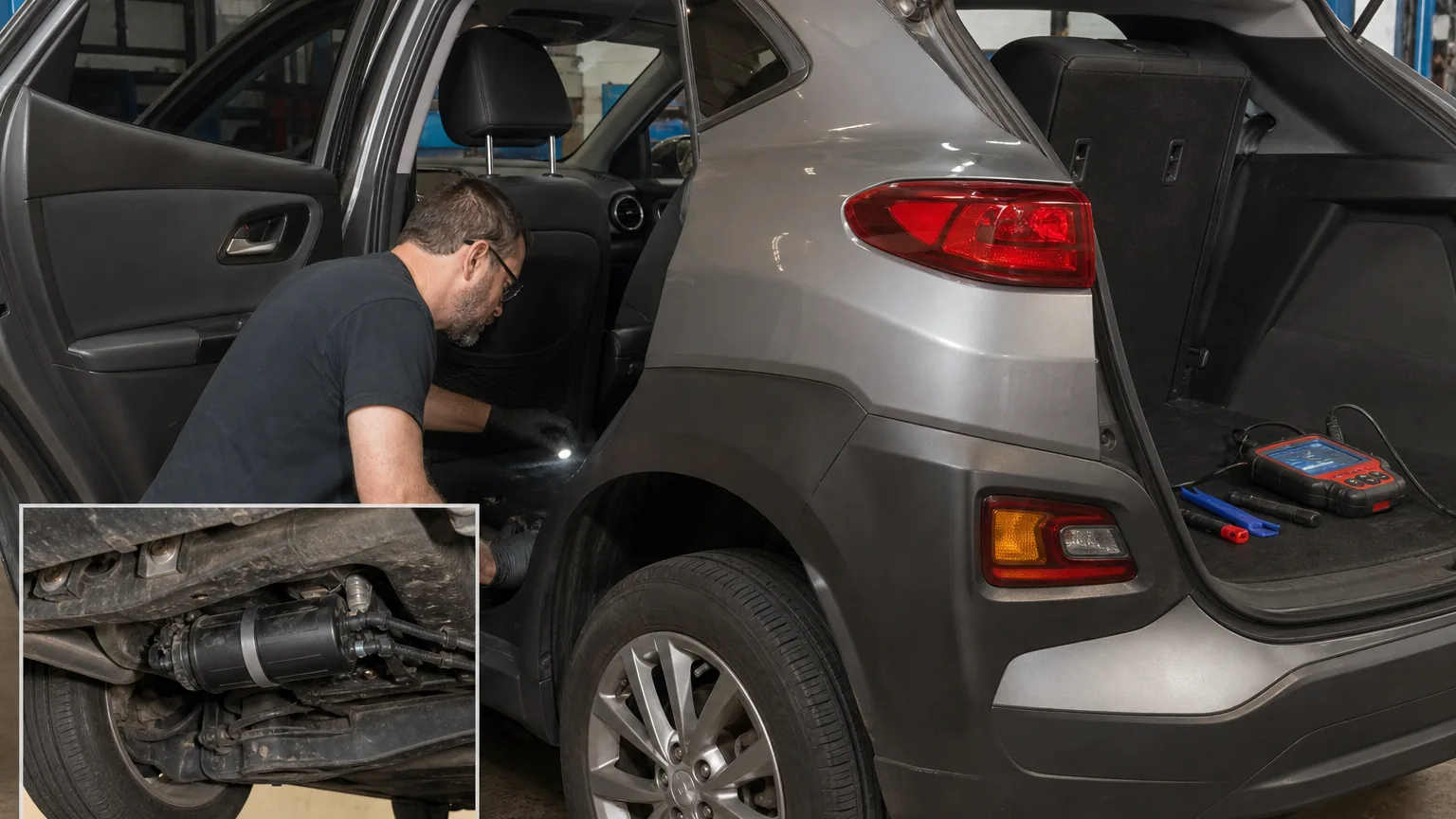
What this part does
The EVAP system stores fuel vapor instead of letting it vent freely to the atmosphere. A charcoal canister captures vapor from the tank, a purge valve meters vapor toward the engine when commanded, and a vent valve or fresh-air path allows controlled breathing during testing, refueling, and normal vapor movement.
- The vent filter helps keep dirt and road debris out of the fresh-air side of the EVAP system.
- The vent valve controls when the fresh-air path is open or closed for system checks.
- The charcoal canister stores vapor and can be affected by liquid fuel contamination or internal restriction.
- The purge side affects how vapor is drawn into the intake when the engine control module commands it.
Because these parts work together, a symptom near the fuel tank or an EVAP code does not automatically identify the filter. The diagnostic job is to decide whether the fault is an airflow restriction, a leak, an electrical command issue, a stuck valve, or a canister problem.
Common failure signs
The most useful symptom clue is whether the issue behaves like a blocked vent, a vapor leak, or a purge-control fault. Hard refueling can point toward a restricted vent path, while fuel odor often pushes the diagnosis toward leaks, damaged hoses, loose connections, or canister saturation.
- Fuel nozzle repeatedly shuts off before the tank is full.
- Fuel odor appears near the rear of the vehicle or after refueling.
- The check engine light returns after codes are cleared.
- The EVAP monitor will not complete before an inspection.
- The vehicle fails emissions readiness even though drivability feels normal.
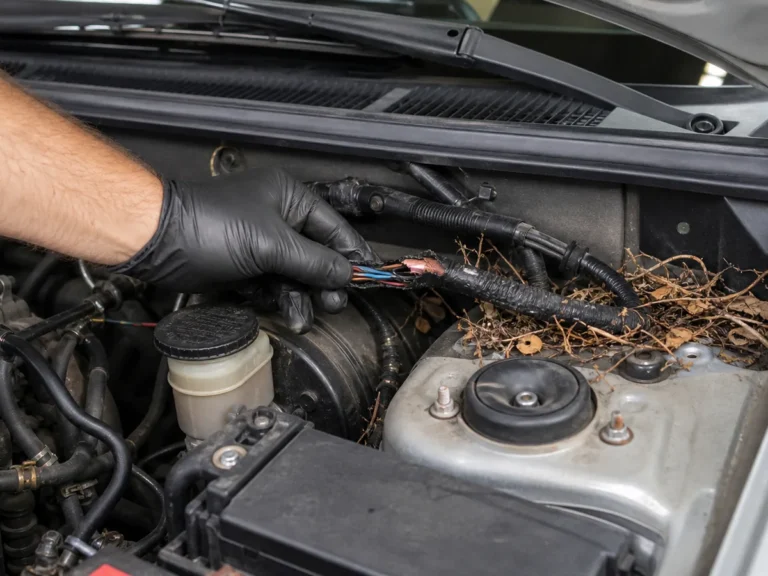
- Visible vapor hoses, brackets, or canister-area parts show road-debris or rodent damage.
Fuel odor should be treated more seriously than a stored code alone. Avoid ignition sources, do not smoke near the vehicle, and do not open fuel-vapor lines without the proper procedure.
Before replacing it
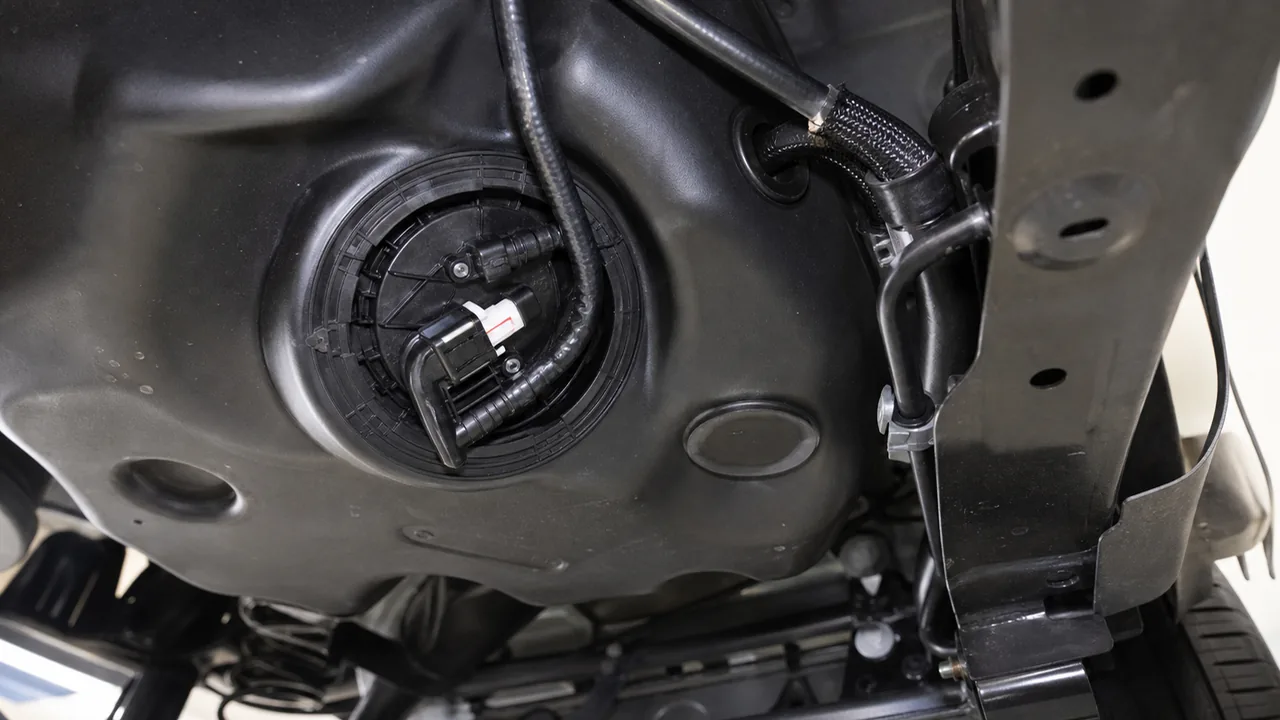
The ranked checks start with simple sealing and damage items because they are common, visible, and safer for owners to inspect. The filter moves higher on the list when symptoms suggest restricted venting, especially hard refueling or a vent-control fault that survives basic leak checks.
- Confirm the exact stored and pending EVAP codes before clearing anything.
- Inspect the fuel cap for seal damage, looseness, cross-threading, or contamination.
- Check visible vapor hoses and rear underbody routing for cracks, disconnection, rub-through, rodent damage, or road-impact damage.
- Review recent refueling behavior, especially repeated topping off after the nozzle clicks off.
- Check whether the check engine light or EVAP monitor problem returns after a proper drive cycle.
- Verify the OEM component name and access path before ordering or removing the vent filter.
- Most likely if hard refueling is present: vent path restriction, blocked filter, kinked hose, stuck vent valve, or canister restriction.
- Most likely if fuel odor is present: vapor leak, loose connection, damaged hose, canister damage, or fuel-cap sealing issue.
- Most likely if purge-related codes are present: purge valve behavior, control circuit, pressure response, or intake-side vapor control.
Inspection steps
Some EVAP vent filters are only accessible after rear-seat trim removal, but the 2021 Hyundai Kona EVAP vent filter rear-seat question usually points to a VIN-specific OEM procedure check before any interior trim is removed. The first check is whether Hyundai service data identifies cabin access, fuel-pump access, or underbody fuel-tank-area access for that exact vehicle.
Rear-seat access on many cars is associated with the fuel pump or fuel sender, while EVAP canister, vent valve, and vent filter work may be near the fuel tank, filler-neck area, or canister assembly. Those are related fuel-system zones, but they are not the same service operation.
- If the OEM procedure shows underbody or fuel-tank-area access, the rear seat is not the normal access point for that operation.
- If the OEM procedure includes rear-seat or interior trim removal, follow that sequence instead of forcing underbody access.
- If the only source is a forum post, parts diagram, or shop comment, treat the access path as unconfirmed until service data is checked.
A vent filter should not be treated as the guaranteed fix for an EVAP code. EVAP faults can also come from leaks, stuck valves, damaged hoses, wiring faults, an overfilled or saturated canister, or a loose fuel cap.
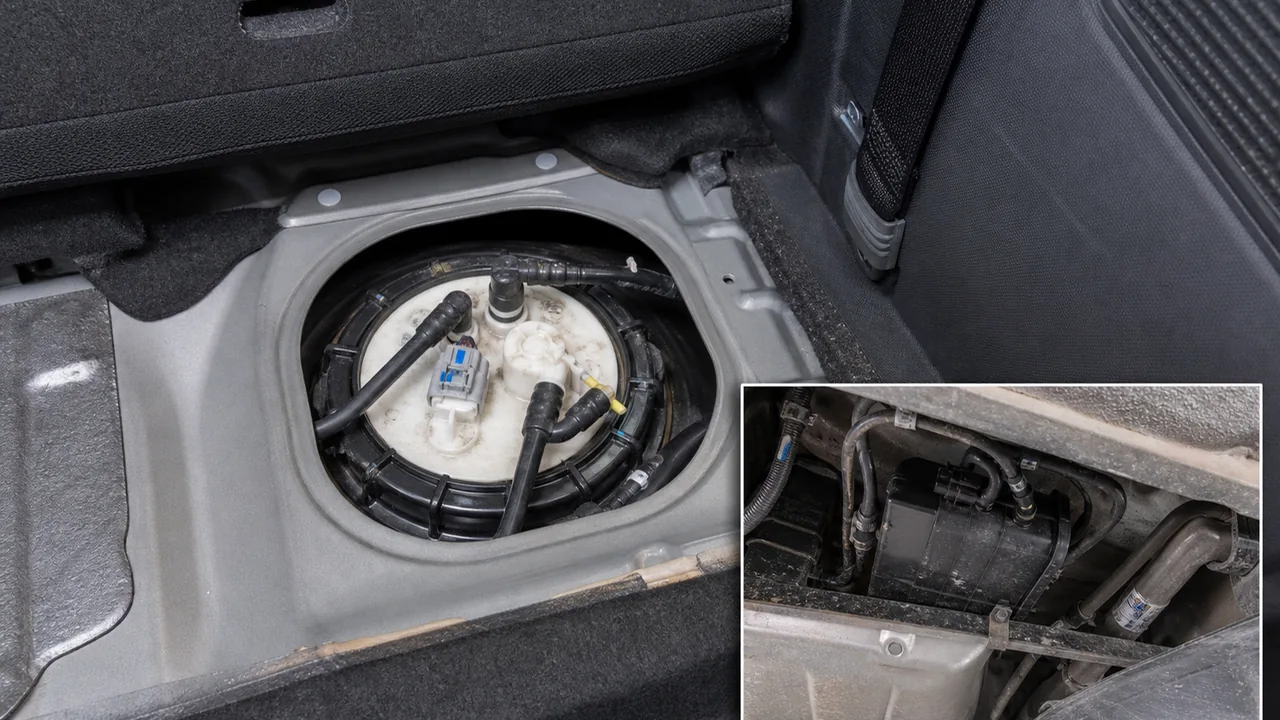
The 2021 Hyundai Kona question is not only about a filter; it is about proving which service opening applies. A rear-seat fuel-pump access cover can sit above the tank, while the EVAP vent filter or canister vent path may be serviced from a different side of the same fuel-tank area.
| Area | What it may access | Why it gets confused |
|---|---|---|
| Rear-seat area | Fuel pump, sender, or tank access cover on some vehicles | Owners see fuel-system access and assume every tank-related part is there |
| Underbody or tank area | Charcoal canister, vapor hoses, vent valve, brackets, or shields | The part may not be visible until shields or canister hardware are identified |
| Filler-neck or rear wheel area | Fresh-air path, vent hose routing, or filter housing on some designs | Small vapor-system parts can be mistaken for simple exterior filters |
The correct answer can vary by engine, drivetrain, market, emissions equipment, and production date. That is why the VIN-specific OEM procedure matters more than a generic Kona parts diagram.
A scan tool can show whether the vehicle is reporting a large leak, small leak, vent-control fault, purge-flow issue, or monitor failure. The code family should decide the test sequence before any part is removed.
| Code or fault family | What it can suggest | Why the filter is not automatically guilty |
|---|---|---|
| P0446 or vent-control related faults | Vent valve command, vent restriction, blocked fresh-air path, wiring, or canister issue | The valve, circuit, hose routing, or canister can mimic a filter restriction |
| P0455 or large leak faults | Loose cap, disconnected hose, cracked line, damaged canister, or failed seal | A leak code needs leak testing before a restriction repair |
| P0456 or small leak faults | Small seal, hose, cap, canister, or valve leakage | Small leaks often require smoke testing and careful connector inspection |
| P0496 or purge-flow related faults | Purge valve flow when it should not occur, control issue, or pressure response problem | The purge side can set EVAP faults without the rear vent filter being blocked |
Clear codes only after documenting them. If the same code returns, the repeat pattern is more valuable than a single stored fault.
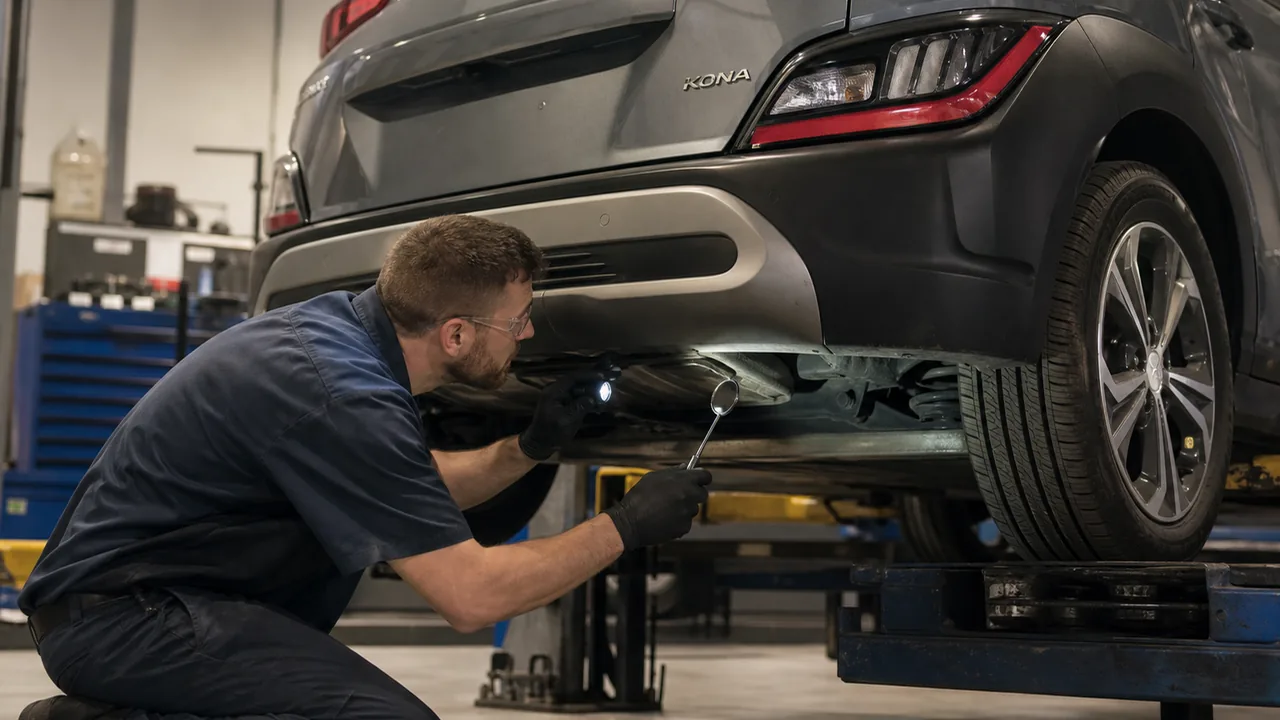
Start with documentation. A stored EVAP code, refueling complaint, odor timing, and recent repair history can tell a technician where to test first. Randomly clearing codes or removing trim can erase useful context and create a second problem.
- Scan the vehicle and write down stored, pending, and permanent codes if your scanner shows them.
- Inspect the fuel cap seal, cap seating, and filler area for visible damage or contamination.
- Note whether the fuel nozzle shuts off early, whether the odor appears after filling, and whether the check engine light returned after clearing.
- From outside the vehicle, look for damaged hoses, broken plastic, or loose connectors near the rear underbody and fuel-tank area.
- Stop before removing seats, shields, vapor hoses, or electrical connectors unless you have the OEM procedure for the exact VIN.
Never support a vehicle with a jack alone, and do not work around fuel vapor with open flames, sparks, hot tools, or smoking materials nearby.
The technician path should not start with rear-seat removal. It should start with scan data and the OEM service procedure. If the code points to vent control, the technician can command the valve where the tool and vehicle support it, then compare system response with physical inspection.
- Confirm the DTC family, pending status, and freeze-frame context.
- Perform a visual inspection of the fuel cap, filler area, vapor hoses, canister, vent filter area, brackets, and electrical connectors.
- Use scan-tool commands to check vent valve and purge behavior when supported by the vehicle and tool.
- Perform an EVAP smoke test or leak test according to accepted service practice and OEM precautions.
- Check wiring and connector condition before condemning a valve or filter.
- Confirm whether the fresh-air path is restricted before replacing the vent filter.
- Install only the correct confirmed part, clear codes, and run readiness checks after repair.
Pressure or vacuum behavior can be useful, but exact values should come from Hyundai service information for the vehicle being tested. Publishing generic values risks sending owners toward a false pass or false fail.
If the EVAP vent filter is a maintenance item and is available separately, a new correct part is usually the cleaner decision than a used filter. If the part is bundled with a canister or valve assembly, the part number, emissions package, connector shape, mounting points, and hose routing must match the exact vehicle.
- Do not buy a used vent filter as a diagnostic shortcut.
- Avoid any canister or filter that smells strongly of raw fuel, shows liquid contamination, or has cracked ports.
- Check that the electrical connector and mounting tabs are intact if the part includes a valve.
- Confirm whether the gasoline, turbo, drivetrain, market, or emissions package changes the part.
- Keep the old part available until readiness checks confirm the repair.
A cheaper used EVAP part is not cheaper if it forces repeat labor, leaves the monitor incomplete, or masks the real leak.
A VIN-specific procedure and EVAP test can prevent unnecessary rear-seat removal and wrong-part replacement. This is especially important when the vehicle has a check engine light, fuel odor, hard refueling, failed readiness, or repeated EVAP codes after clearing.
- Use professional testing if the code returns after basic checks.
- Use professional testing if fuel odor is present or a vapor hose appears damaged.
- Use professional testing if the procedure requires underbody access and safe lift support.
- Use professional testing if the part location differs between diagrams, catalogs, and shop advice.
- Use professional testing if the EVAP monitor will not complete before an emissions inspection.
The practical goal is not to make the repair sound harder than it is. The goal is to verify the correct access path and fault path before trim, shields, hoses, or canister hardware are disturbed.
Replacement notes
Do not remove the rear seat just to see what is underneath. Interior trim, fuel-pump covers, vapor hoses, and electrical connectors can be damaged by exploratory work. The procedure should identify which parts are removed, in what order, and which seals or clips must be handled carefully.
- Verify the official component name, because fuel tank air filter, EVAP vent filter, canister vent filter, and related terms may be used differently in catalogs.
- Confirm whether the part is serviced separately or as part of a larger canister or vent assembly.
- Use the service procedure to decide whether underbody shields, brackets, canister hardware, rear-seat trim, or access covers are involved.
- Avoid pulling on vapor hoses or quick connectors without knowing the release method.
- After replacement, confirm that the EVAP monitor can run and that codes do not return.
If fuel odor is strong, a hose is broken, or the vehicle needs to be raised for underbody access, stop DIY work unless you have the proper support equipment and service information.
FAQ
Does every 2021 Hyundai Kona need rear-seat removal for the EVAP vent filter?
No universal answer should be assumed. Some EVAP vent filters require rear-seat or trim removal, but the correct 2021 Hyundai Kona access path must be verified against the VIN-specific Hyundai OEM service procedure.
Is the EVAP vent filter the same as the fuel pump access cover?
No. The fuel pump access cover may be under the rear seat on some vehicles, but the EVAP vent filter, canister, vent valve, and fresh-air path may be serviced from another area.
Can P0446 or P0456 prove the vent filter is bad?
No. Those codes can point toward vent-control or leak-detection testing, but they do not prove one failed part. Hoses, valves, cap sealing, wiring, canister condition, and smoke-test results all matter.
What should I check before removing interior trim?
Save the codes, check the fuel cap, note fuel odor or hard refueling, inspect visible rear vapor hoses safely, and verify the OEM access procedure for the exact VIN.

Comments
Be the first to add a practical repair note or follow-up question.