
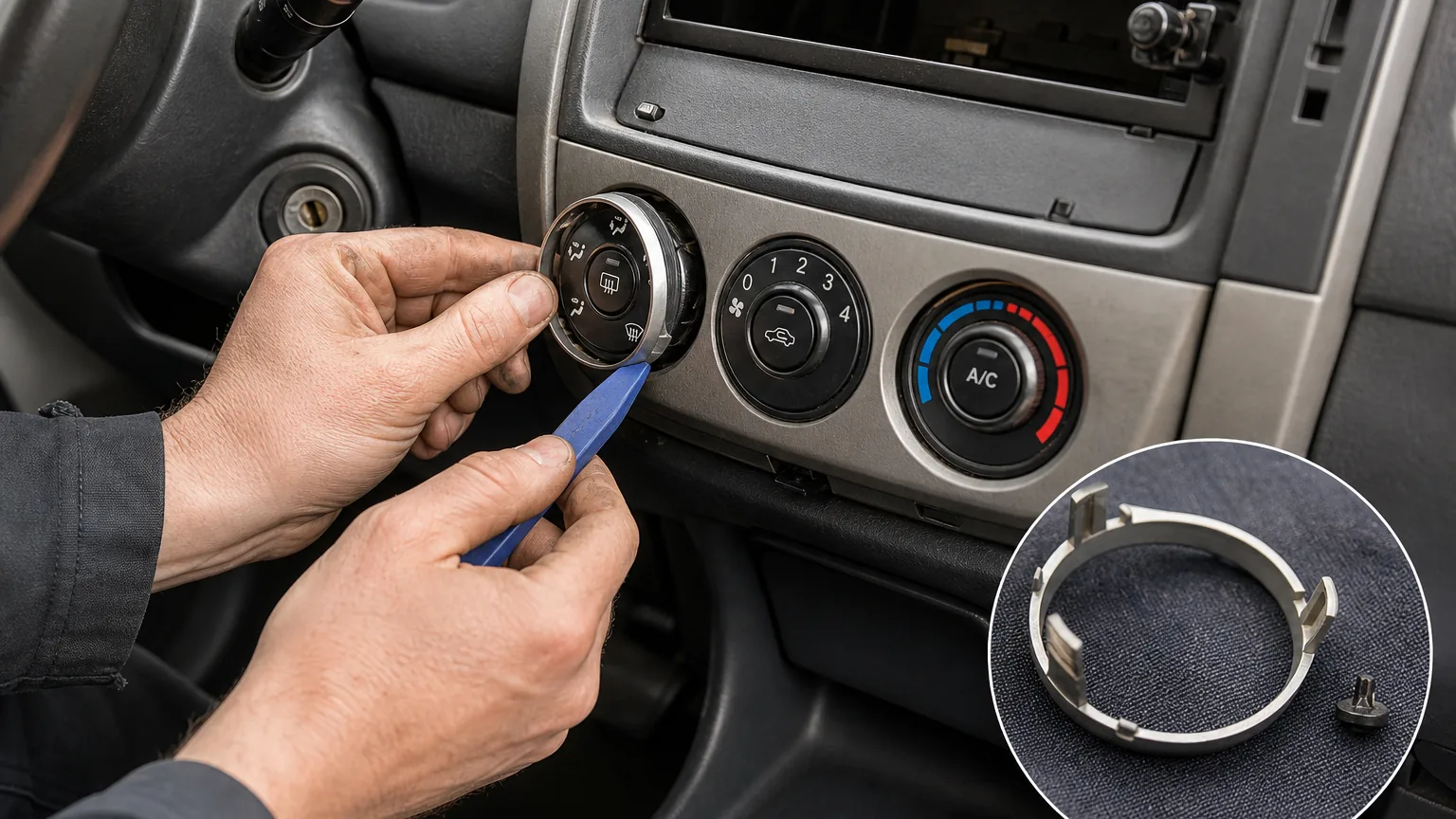
What this part does
The heater dial trim is the visible dashboard surround around the manual HVAC control face, and its main job is to hold the heater-control area neatly in the center stack while covering the edges of the control assembly.
On a manual-control layout, the trim may sit close to the heater knobs, switch blanks, illumination points, storage-pocket trim, radio trim, and lower console pieces. That matters because the panel can be physically trapped even when no obvious screw is visible.
- It provides access to the manual HVAC control face and nearby trim edges.
- It can hide bulb holders, fastener paths, connector access, or clip locations.
- It can be affected by surrounding facia pieces even when the trim itself is not damaged.
- It should not be used as proof that a heating, blower, or airflow fault is caused by the trim.
Common failure signs
The usual reason to remove this trim is access, not diagnosis by guesswork, so the visible sign should guide the next step.
| Sign | Likely path | First check |
|---|---|---|
| Loose or uneven trim | Weak clip, folded tab, missing retainer, or previous removal damage | Press lightly around the edge and inspect clip engagement before removing more parts |
| Cracked facia | Aged brittle plastic, impact damage, or earlier forced removal | Inspect for broken mounting points before buying replacement trim |
| Failed illumination | Bulb, holder, connector, or control-face lighting issue | Plan connector and battery precautions before unplugging anything |
| Sticky heater dial | Spill residue, trim interference, damaged knob, cable resistance, or linkage issue | Check knob movement before and after the trim is loosened |
| Center stack rattle | Loose trim, radio surround, storage pocket, switch blank, or missing fastener | Isolate the noise by light pressure on each panel while parked |
Before replacing it
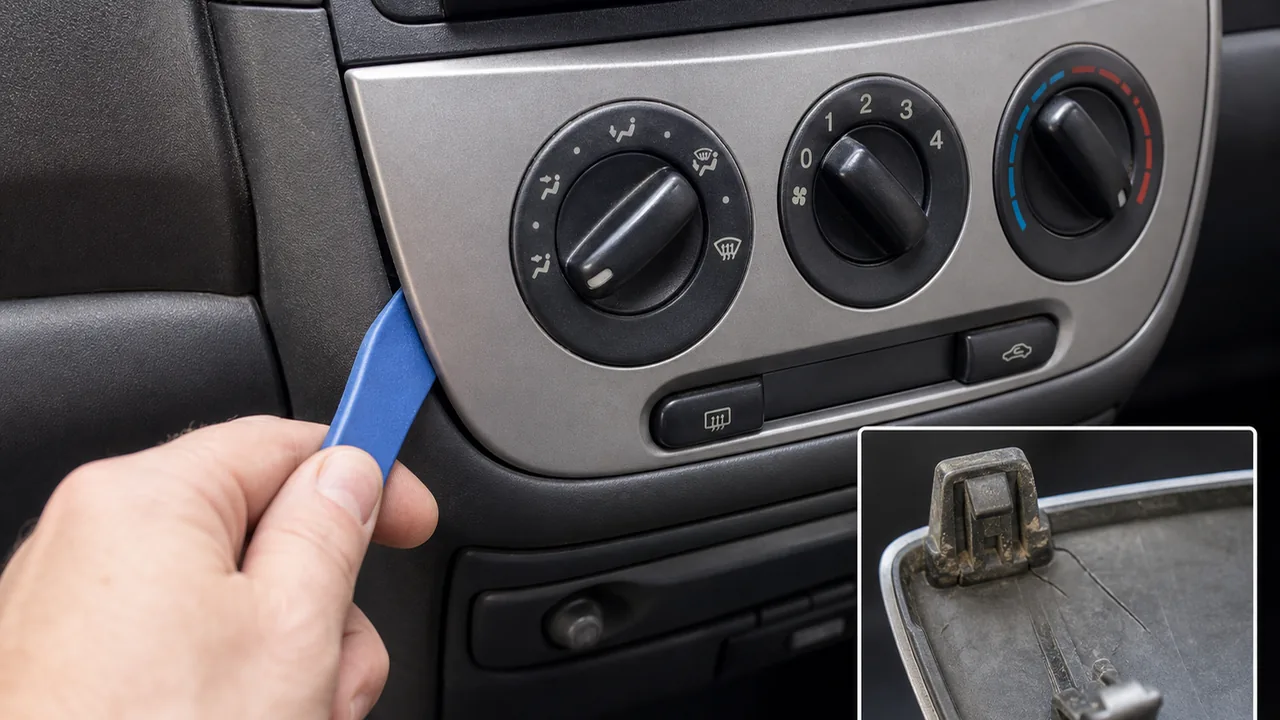
Replacement is sensible only after inspection confirms that the heater dial trim itself is cracked, distorted, missing retaining points, or unable to sit flush after correct refitting.
- Confirm the manual heater dial layout before ordering or fitting any replacement trim.
- Check adjacent facia overlap before assuming the heater dial trim is stuck or broken.
- Inspect visible screw covers, switch blanks, and trim joints with a flashlight.
- Keep replacement clips available if the original clips look brittle, loose, or incomplete.
- Review battery and connector handling before unplugging electrical plugs or bulb holders.
Do not discard the old trim until the replacement has been test-aligned. The original part can confirm tab shape, finish, switch blank positions, and whether a used part is actually the same layout.
Inspection steps
The heater dial trim on a 2004 Toyota Corolla Verso usually comes out by protecting the dash, checking surrounding facia pieces and hidden fasteners, releasing the clips with a plastic trim tool, and disconnecting electrical connectors only after safe access. Resistance often points to an overlapping panel, a hidden screw or screw cover, a clip being loaded from the wrong angle, or previous trim damage rather than a need for more force.
Before touching the trim, confirm the vehicle is the 2004 Corolla Verso and identify whether the HVAC controls are manual heater dials or automatic climate control. This article applies to the manual dial-style heater control area; automatic climate-control panels can use different switch gear, connectors, and trim relationships.
- Inspect the radio surround for overlap before prying the heater dial trim.
- Check the center console trim, storage pocket, ashtray area, and switch blanks for trapped edges.
- Look for screw covers, aftermarket radio bezels, or loose trim joints that may change the release order.
- Pause if the panel moves unevenly, flexes sharply, or starts pulling on wiring or control cables.
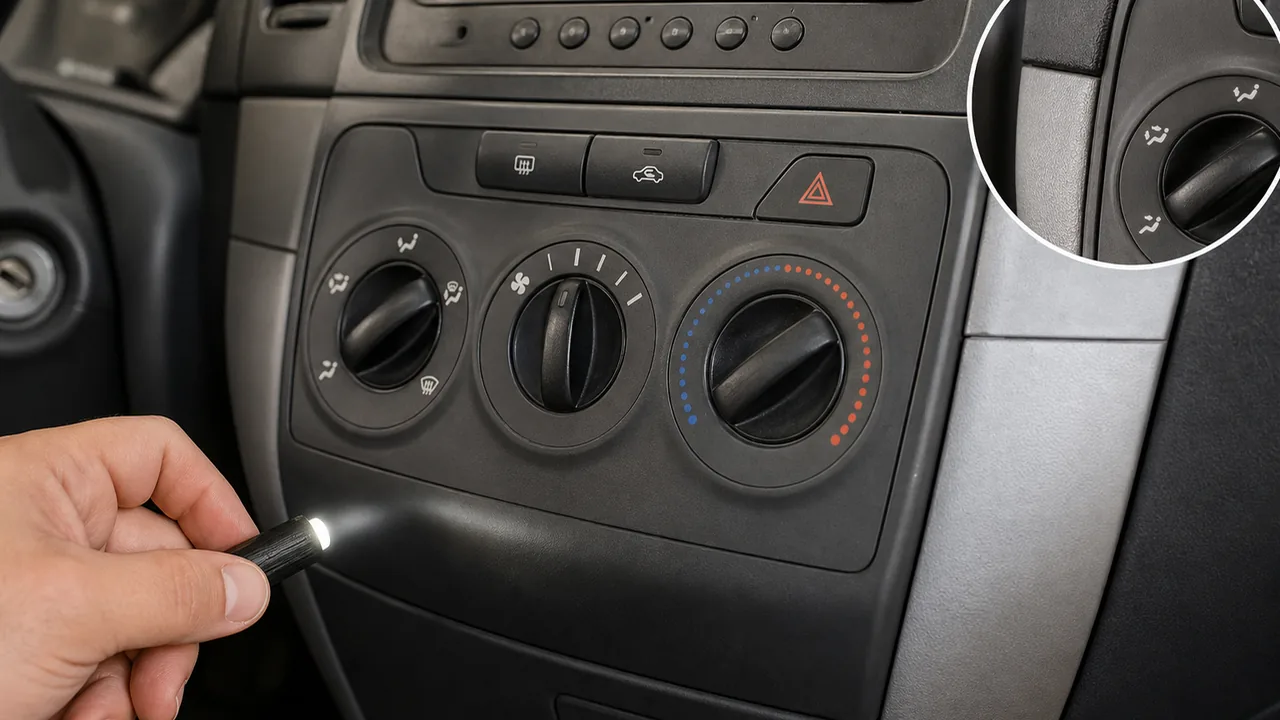
Inspection should come before levering because the correct removal path depends on what overlaps the heater dial trim. The aim is to find the release order, not to prove that the panel can be forced out.
Tools and supplies
- Plastic trim tools for releasing clips without marking the facia.
- Masking tape to protect visible dashboard and console edges.
- Small screwdriver for visible screws or screw covers only.
- Magnetic tray or small container for fasteners and clips.
- Flashlight for checking dark trim gaps and hidden overlap.
- Gloves for sharp plastic edges and metal brackets.
- Replacement clips if matching clips are available before removal.
Removal flow
- Park safely, switch the ignition off, and clear loose items from the center console area.
- Confirm the manual heater-dial layout and compare it with any repair information available for the Corolla Verso.
- Mask the visible edges around the heater trim, radio surround, storage-pocket area, and lower facia.
- Inspect the trim gaps with a flashlight and identify which adjacent pieces overlap the heater dial trim.
- Remove or loosen only the adjacent pieces that clearly trap the heater trim, keeping fasteners organized.
- Check for hidden screws, screw covers, switch blanks, or aftermarket radio trim that may block release.
- Insert a plastic trim tool at a protected edge and apply gradual pressure near a clip area rather than in the middle of a large flat span.
- Release clips progressively around the perimeter, supporting each released area so the panel does not bend sharply.
- Pull the trim only far enough to inspect behind it, then disconnect electrical connectors only if access and battery precautions are correct.
- Place the trim face-up on a clean cloth and inspect clips, tabs, bulbs, and mating edges before further work.
If an electrical connector must be disconnected, follow service information for battery precautions and avoid disturbing airbag-related wiring or unidentified harnesses.
A heater dial trim that will not release is usually being held by something specific: a hidden fastener, overlapping radio or console trim, a clip being loaded from the wrong angle, cold brittle plastic, aftermarket parts, previous repair adhesive, a broken clip, or cable and connector tension behind the panel.
- Check for a hidden fastener or screw cover on the stuck side.
- Inspect whether the radio surround, console trim, storage pocket, ashtray area, or switch blank overlaps the heater trim.
- Move the plastic trim tool closer to the suspected clip and change the pull angle gently.
- Pause if the plastic feels cold, brittle, or begins to whiten at a tab.
- Look for aftermarket radio trim, accessories, drilled holes, or adhesive from previous repairs.
- If the trim opens slightly and then feels tethered, inspect for connector, bulb holder, loom, or HVAC cable tension.
Do not use heavier force as the next diagnostic step. A stuck point is information about the release path, not proof that the clip is stronger than expected.
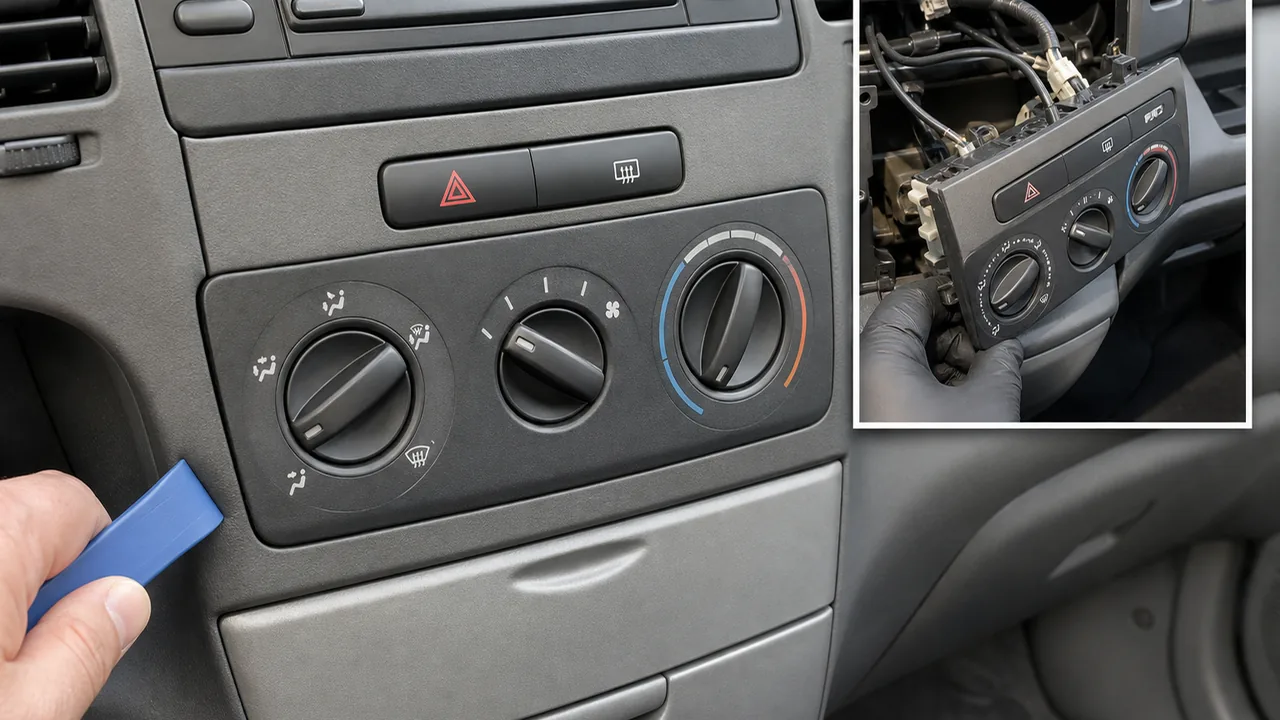
Most owners can handle the visible, low-risk checks around heater dial trim removal, but the job changes category when wiring, HVAC control cables, airbag warnings, or broken mounting points are involved.
| Work type | Owner-safe checks | Technician-level checks |
|---|---|---|
| Trim inspection | Check gaps, overlap, clip alignment, loose edges, and visible cracks | Repair broken mounting points or identify non-original panel modifications |
| Control feel | Move the heater dials gently and note binding before removal | Inspect HVAC cable routing, linkage resistance, or control-head faults |
| Electrical items | Avoid unplugging unclear connectors and plan battery precautions | Diagnose connector seating, illumination circuits, and warning lamps |
| Reassembly | Confirm alignment, knob clearance, and absence of rattles | Correct distorted brackets, damaged retainers, or repeated trim fit issues |
- Photograph the dashboard before disassembly.
- Keep any broken clips, tabs, or screws for matching.
- Note whether the vehicle has manual heater dials or automatic climate control.
- Record whether an aftermarket radio surround or switch has been fitted.
A used heater dial trim can be a sensible option when new parts are limited, but only if it matches the manual-control layout and has intact retaining points.
| Buying check | Why it matters | Reject or verify |
|---|---|---|
| Manual-control layout | Automatic climate-control panels can have different openings and connector access | Reject if the control openings do not match your dashboard |
| Rear tabs and clip towers | Hidden retaining damage can stop the trim from sitting flush | Ask for rear photos before buying |
| Switch blanks and openings | Missing or mismatched blanks can leave gaps in the center stack | Verify the exact blank and switch arrangement |
| Finish and shape | Similar-looking trim may not match the Corolla Verso center stack | Compare radio surround and storage-pocket relationships |
| Repair history | Glue, drilled holes, heat warping, or pry marks suggest poor fit risk | Avoid parts with structural or cosmetic repair damage |
If the old trim is still in one piece, keep it beside the replacement during test fitting so tab shape, clip location, and edge profile can be compared before final installation.
Replacement notes
Reinstallation matters as much as removal because a heater trim panel can look installed while one clip is folded, one edge is trapped, or a connector is not fully seated.
- Inspect every clip, tab, and locating edge before refitting the trim.
- Confirm bulb holders, switch connectors, and any disturbed plugs are fully seated.
- Route wiring so it cannot be pinched by the trim or pulled by heater-dial movement.
- Align the facia squarely with the radio surround, storage pocket, switch blanks, and lower console trim.
- Press evenly near clip areas until the trim seats without sharp bending.
- Check dial movement, fan control, illumination, panel gaps, and new rattles before considering the job finished.
If the trim sits proud after refitting, do not keep pressing on the high spot. Remove it and inspect for a folded clip, trapped connector, misrouted wire, or overlapped facia edge.
FAQ
These questions cover the practical decisions owners usually face before removing the heater dial trim.
Can I remove the heater dial trim with a screwdriver?
Use a screwdriver only for visible screws or covers, not for levering finished dashboard plastic. A plastic trim tool spreads pressure and is much less likely to mark or crack aged trim.
Do I need to remove the radio surround first?
Possibly, but do not assume it without checking the exact layout. If the radio surround overlaps the heater dial trim or blocks a fastener path, it may need to be removed or loosened before the heater trim releases.
Why does the trim move on one side but not the other?
Uneven movement usually points to a hidden fastener, trapped edge, clip angle issue, or adjacent trim overlap. Stop and inspect the stuck side before applying more pressure.
Will removing the trim fix a heater dial that is hard to turn?
Not by itself. Removal may give access for inspection, but a hard-turning dial can involve a control cable, linkage, knob, blend-door resistance, or interference behind the face.
Should I disconnect the battery before unplugging connectors?
If connectors must be unplugged, follow model-specific service information for battery disconnection and reconnection. Be especially cautious near airbag-related wiring and do not disturb airbag connectors.
When should I stop and get help?
Stop if the trim needs heavy force, if wiring is exposed or unclear, if an airbag warning appears, if a mounting tab breaks, or if the heater controls bind after reassembly. Those signs move the job beyond simple trim removal.


Comments
Be the first to add a practical repair note or follow-up question.