
What this part does
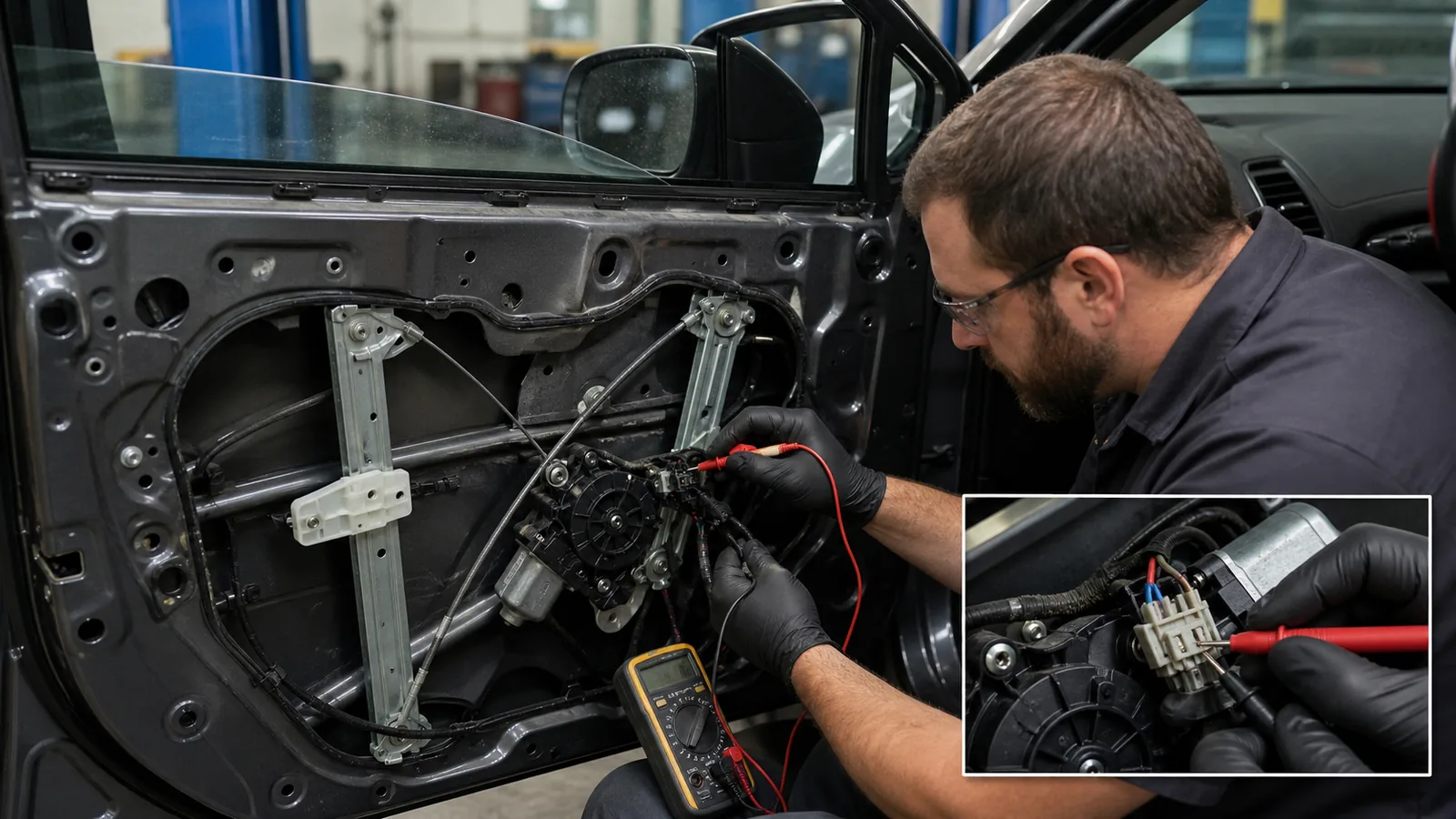
The window motor is the electric drive unit. When the switch request reaches it through the correct circuit path, it turns in one direction to raise the glass and the opposite direction to lower it. The regulator is the lift mechanism inside the door. Depending on vehicle design, it may use cables, guides, arms, sliders, a carrier plate, or rails to hold and move the glass.
- The switch or master switch sends the up or down request.
- The fuse or protected circuit supplies power to the window system.
- The wiring harness and ground path carry the command and return circuit.
- A body control module or door module may supervise the switch, motor, anti-pinch logic, and auto-up behavior on some vehicles.
- The regulator keeps the glass aligned as it moves through the run channels.
A failed motor can leave a good regulator motionless, but a failed regulator can overload or stall a working motor. A binding glass track can also make a good motor and regulator look weak. That is why the test sequence should confirm command, movement, and glass alignment before a part is ordered.
Common failure signs
Symptoms that point to a bad window regulator
- The motor makes noise but the glass barely moves.
- The glass moves crooked, tilts, or leaves a gap along one side.
- The window binds at the same point during travel.
- The glass can be shifted by hand more than it should.
- The glass drops into the door or will not stay attached to the lift plate.
- Grinding, cable slap, popping, or scraping comes from inside the door.
- The window moves only when the glass is helped by hand, which can indicate binding or weak support rather than a simple motor failure.
Symptoms that point to a bad window motor
- The window is silent and motionless after the switch, fuse, wiring, and ground checks confirm a valid motor command.
- The motor receives command but does not run under load.
- The motor runs intermittently after tapping or cooling, which still needs confirmation before replacement.
- The regulator and glass path move freely when safely disconnected or inspected according to service information.
- The motor gear or drive output is damaged, even if the regulator structure is intact.
Symptoms that may be switch, fuse, wiring, or module problems
- The affected window works from one switch but not another.
- Several windows fail at the same time.
- The master lockout switch disables operation unexpectedly.
- Window operation changes when the door is opened, closed, or the harness area is moved.
- A fuse is open, a connector is corroded, or a ground path is loose.
- A scan tool shows a door-module, body-control, switch, or communication fault on vehicles that monitor those circuits.
Before replacing it
- Confirm which window failed and whether it fails from the local switch, the master switch, or both.
- Check the window lockout switch and child lock behavior where applicable.
- Try the other windows. Multiple failed windows can point toward a fuse, master switch, module, or power supply issue.
- Check the relevant fuse using the owner manual or fuse-box labeling. Do not replace a repeatedly opening fuse with a higher-rated one.
- Listen for motor sound while pressing the switch briefly. Stop if the glass binds, tilts, or strains.
- Watch the glass. Crooked movement, looseness, or a vertical side gap usually sends the inspection toward the regulator, glass clips, or run channel.
- Look for visible binding in the run channel, loose weatherstrip, debris, or signs that the glass is not seated squarely.
Owner-safe checks should be brief and low force. A power window that is already binding can damage itself further if the switch is held down while the glass is stuck.
Inspection steps
A window that binds or stops in one position can indicate either a failed regulator or a failed window motor, and the symptoms separate them. If the motor can be heard but the glass does not travel normally, inspect the regulator cables, guides, sliders, glass clips, and window track. If the motor is silent, verify the lockout switch, fuse, switch command, power, ground, connector condition, and any door-module control before replacing the motor.
| Motor hums, clicks, or tries to move, but the glass binds, drops, tilts, or stays in one place | Regulator, cable, guide, glass attachment, or run channel | Stop forcing the switch, support the glass, and inspect the regulator and glass path after safe door-panel access |
| No motor sound from one window after the lockout and fuse checks pass | Motor, switch command, wiring, connector, ground, or door module | Confirm power and ground at the motor connector using the vehicle wiring diagram |
| Several windows fail, the master switch behaves oddly, or operation changes with door movement | Switch, fuse, wiring harness, module, or ground fault | Compare other windows, inspect the door harness area, and scan body or door modules where the vehicle supports it |
Do not assume a noisy motor is healthy or a silent motor is dead. Stripped motor gears, weak motors, broken regulator cables, failed switches, bad grounds, and module-controlled circuits can overlap in symptoms.
| Window is closed but will not operate | Investigate soon | Do not keep cycling the switch. Run owner-safe checks and plan diagnosis before the next failure leaves the window open. |
| Window is stuck partly open | Urgent | Protect the interior from weather, avoid leaving valuables in the vehicle, and diagnose before forcing the glass. |
| Glass dropped into the door | Urgent | Do not drive with loose glass if it can shift. Support the glass and avoid operating the switch until the regulator and attachments are inspected. |
| Glass moves crooked or binds | Urgent if worsening | Stop using the switch. Crooked travel can crack clips, damage the regulator, or pull the glass out of its channel. |
Temporary covering can protect the interior, but it is not a repair. If the glass is loose inside the door, the priority is safe support and diagnosis, not repeated switch operation.
- Identify the exact failure: stuck open, stuck closed, slow, crooked, dropped, noisy, intermittent, or silent.
- Confirm switch behavior from the master switch and local door switch where both are available.
- Check the fuse and any obvious system-wide symptoms before opening the door.
- Listen for the motor while commanding the window briefly. Noise without normal glass movement moves the priority toward regulator and glass-track inspection.
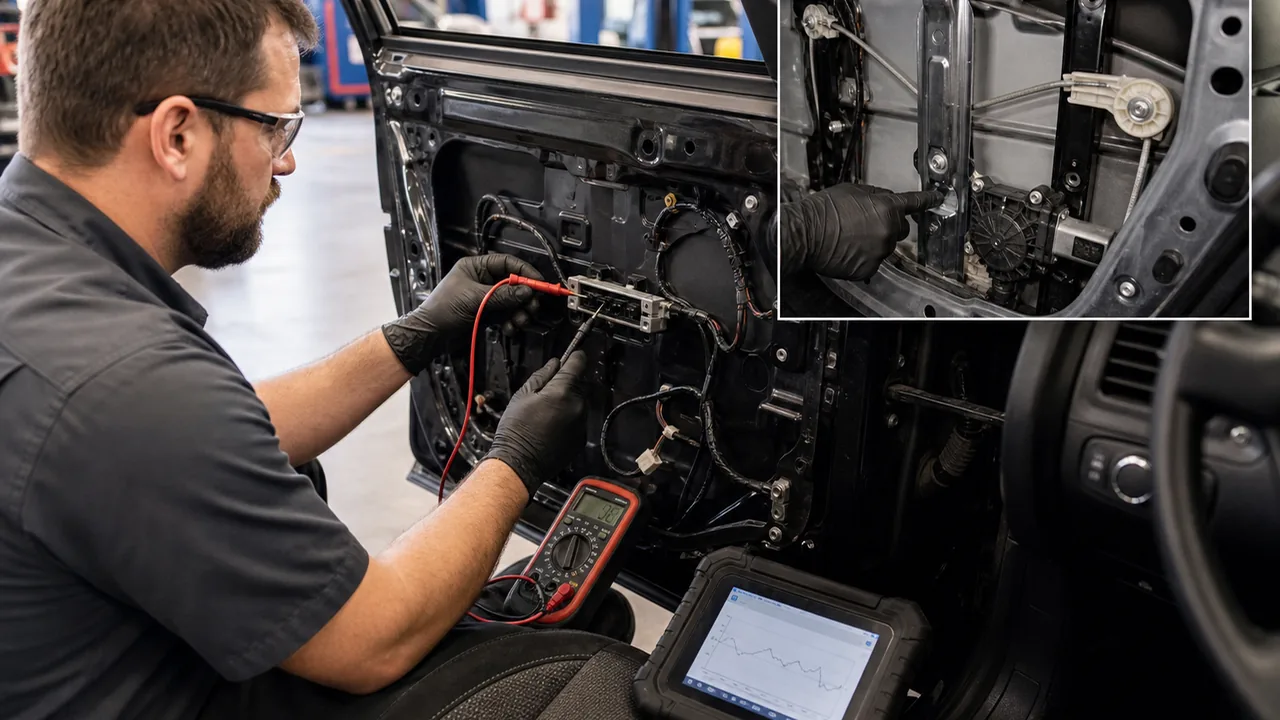
- If the motor is silent, inspect the switch command path using the wiring diagram and service information for the vehicle.
- Scan body or door modules on vehicles that use module-controlled windows, especially if other door functions are abnormal.
- Remove the door panel only after reviewing side-airbag, trim, and glass-support precautions.
- Support the glass before loosening regulator, carrier, or motor fasteners.
- Inspect regulator cables, guides, sliders, arms, glass clips, carrier plate, run channel, and mounting hardware.
- Verify power and ground at the motor connector when the switch is commanded, using proper circuit protection and vehicle-specific test points.
- Make the part decision only after confirming whether the failure is mechanical, electrical, or both.
- After repair, cycle the window while the panel is still off and confirm smooth travel, sealing, and any required initialization or relearn.
Technician-level electrical checks
- Scan body control and door modules where the vehicle supports window data or fault reporting.
- Verify switch command with the correct wiring diagram rather than guessing wire color or pin function.
- Confirm power and ground at the motor connector during an up and down request.
- Inspect connector fit, corrosion, loose terminals, water entry, and harness strain near the door opening.
- Use fused leads and OEM precautions for any direct motor test. Do not bypass anti-pinch, auto-up, or safety logic.
- Check whether a post-repair initialization or relearn is required before judging the repair.
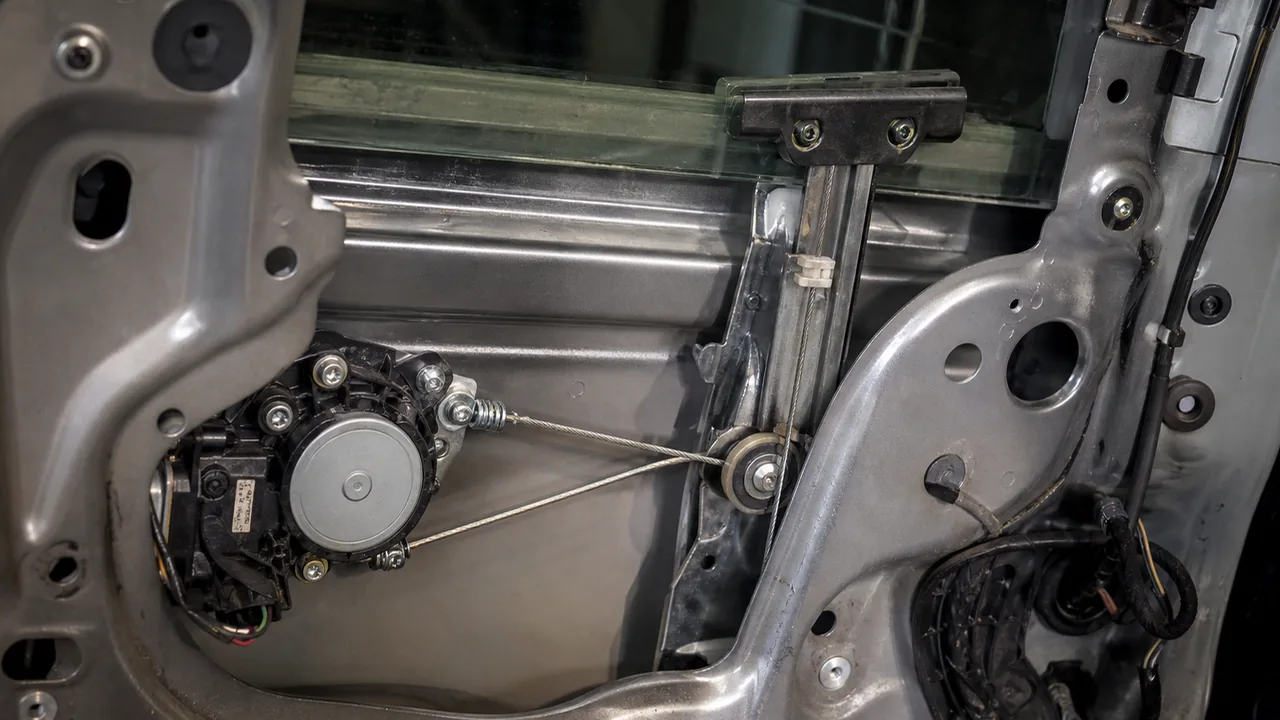
After the door panel is removed safely, observe the regulator while the window is commanded only if the glass is supported and the moving parts are clear of hands, wiring, and trim. Look for cables that flex where they should stay fixed, guides that let the glass lean, clips that no longer hold the glass square, or a run channel that pinches the glass at the same point every cycle.
- Cable regulator: check for frayed cable, broken plastic retainers, loose cable housing, or cable movement that interferes with the glass.
- Scissor or arm regulator: check pivot wear, bent arms, loose rollers, and uneven glass lift.
- Glass attachment: check clips, bolts, bonded tabs, carrier plates, and whether the glass sits squarely in its channel.
- Run channel: check for folded rubber, debris, dry binding, or a channel that guides the glass off center.
- Mounting points: check for missing hardware, corrosion, cracked plastic, or previous repair damage.
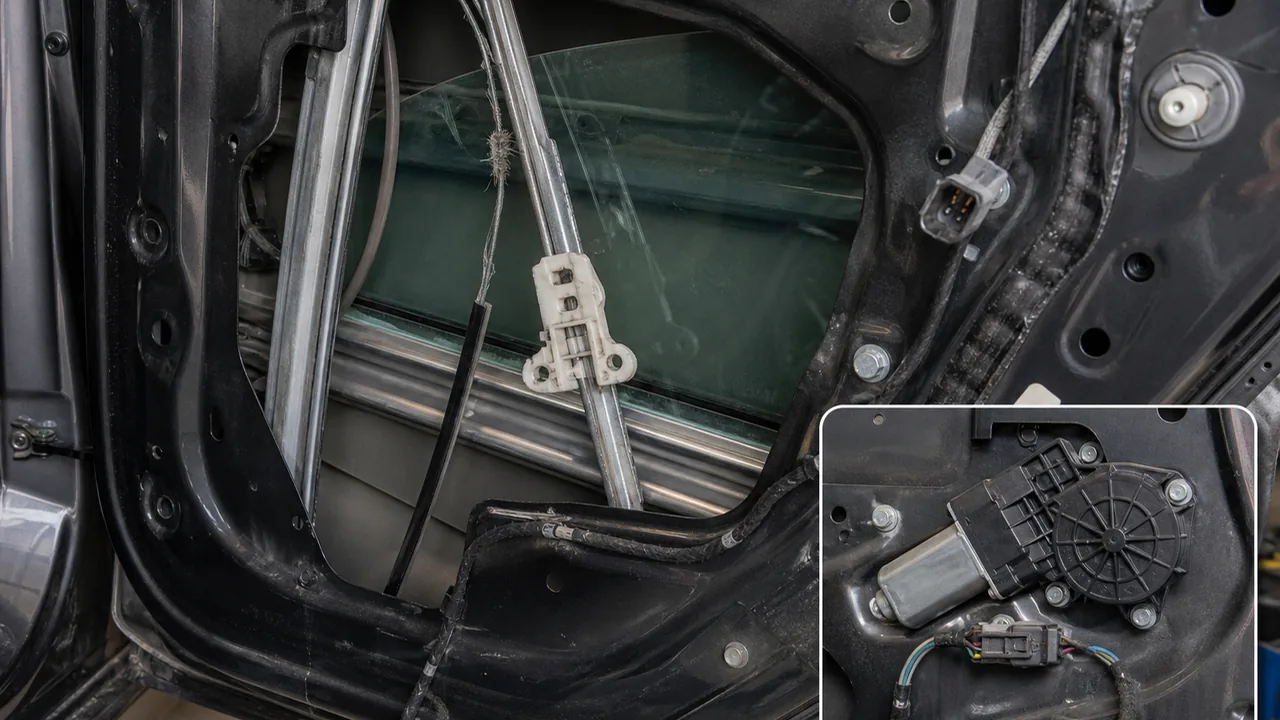
| Broken regulator cable, clip, guide, slider, or arm | Motor noise, crooked glass, loose glass, repeated binding point, or glass dropped into the door | Support the glass and inspect the regulator path, cable retention, guide movement, and glass attachment |
| Failed window motor | No movement after valid command is confirmed, or motor drive failure with regulator intact | Verify power, ground, connector condition, and switch command before condemning the motor |
| Switch or door-module fault | Window works from one control but not another, several door functions act abnormal, or scan data does not match switch input | Test switch input and module output using the vehicle wiring diagram and scan tool where applicable |
| Blown fuse or protected circuit fault | One or more windows stop working, often with no motor response | Check the correct fuse and investigate why it opened if it fails again |
| Wiring or ground issue | Intermittent operation, no command at motor, or changes when the door is moved | Inspect door-jamb harness, connector terminals, and ground path with service information |
| Glass track binding | Slow or crooked travel, high strain sound, or binding at the same point | Inspect run channels, weatherstrip position, debris, and glass alignment before replacing electrical parts |
On simpler systems, the window circuit may not report a body code at all. On newer or more complex systems, the door module or body control module may store vehicle-specific codes or show live data for switch requests and motor commands. That data is useful, but it should be matched against physical inspection because a mechanical regulator failure may look normal electrically.
- A code may help if the switch input is missing.
- A code may help if a door module cannot command the motor.
- A code may help if initialization, anti-pinch, or communication logic is involved.
- No code does not clear the regulator, motor, fuse, wiring, connector, or glass path.
- Do not publish or follow universal pinouts, wire colors, or calibration steps without the correct service information.
- Match the year, make, model, body style, door position, and left or right side.
- Compare connector shape, pin count, mounting points, glass attachment style, and motor orientation.
- Check cable tension, guide wear, slider condition, carrier plate cracks, and missing hardware.
- Avoid assemblies with kinked cables, broken plastic retainers, water damage, corrosion, or rough motor movement.
- Confirm whether auto-up, anti-pinch, memory, or module-controlled features require a specific part version.
- Plan for new clips, fasteners, seals, or run-channel service if the old parts are brittle or distorted.
A used motor attached to a worn regulator can repeat the same failure. A used regulator with a different connector or glass carrier can create a new problem even if it looks similar in photos. Verify the existing part marking when possible and compare the assembly before final installation.
Provide the vehicle year, make, model, body style, which window failed, whether the motor makes noise, whether the glass is stuck open or dropped, whether the window works from either switch, and whether other windows or door functions are affected. That information helps separate regulator, motor, switch, fuse, wiring, and module paths before parts are ordered.
- Use a professional path if the glass cannot be safely secured.
- Use a professional path if wiring or module testing is needed.
- Use a professional path if the regulator must be detached while the glass is supported.
- Use a professional path if the repair requires anti-pinch or auto-up initialization.
- Use a professional path if a fuse opens repeatedly or the connector shows heat, corrosion, or water damage.
Replacement notes
| Motor only | The regulator and glass path are intact, and electrical testing confirms the motor is the failed part | The glass is crooked, dropped, binding, or the regulator cable, guide, or clip is damaged |
| Regulator only | The motor is confirmed to run correctly and the regulator or glass carrier is the failed mechanical part | The motor is weak, noisy internally, has drive damage, or the vehicle parts catalog services the assembly together |
| Complete regulator-motor assembly | The assembly is sold together, both parts show wear, the motor drive and regulator are difficult to separate, or the failure damaged both sides of the system | A simple external electrical fault is present or the part has not been confirmed |
After replacement, verify smooth travel with the door panel still off, confirm the glass seals evenly, and perform any required initialization or relearn using the vehicle procedure. Do not bypass anti-pinch or auto-up safety systems to make a repair appear complete.
FAQ
Can a bad regulator still let the motor make noise?
Yes. A motor can run while a broken cable, cracked guide, loose glass clip, or binding track prevents normal glass movement. Motor noise is useful evidence, but it does not prove the motor is healthy.
Can a bad motor click but not move the glass?
Yes. A motor, relay, module output, or connector may click without producing usable movement. Confirm command at the motor and inspect the regulator before deciding whether the motor or mechanism is at fault.
Should I replace the regulator and motor together?
Replace them together only when the assembly is serviced that way, both parts show wear, or testing confirms damage on both sides. If the issue is a switch, fuse, wiring, ground, or module fault, replacing the assembly will not fix the root cause.
What if the window moves when I help it by hand?
That often points to regulator wear, glass-track binding, loose attachment, or a weak motor under load. Stop forcing the window and inspect the mechanical path before repeated switch operation damages more parts.
Is a direct motor power test safe for DIY diagnosis?
Only with vehicle-specific service information, proper circuit protection, correct polarity awareness, and safe glass support. Many owners are better served by checking symptoms first and leaving direct motor testing to a technician.
Does no DTC mean the regulator and motor are fine?
No. Many power window failures, especially broken regulators and glass attachment problems, do not set a code. A scan is helpful on module-controlled systems, but physical inspection still matters.

Comments
Be the first to add a practical repair note or follow-up question.