
What drivers usually notice
Transmission-like symptoms need immediate triage before conclusions.
2026 Ford F-150 transmission problems usually mean delayed engagement, harsh upshifts or downshifts, slipping, shuddering, gear hunting, or a warning light that can indicate a transmission-related fault, but these symptoms are not proof of a failed transmission. If the truck will not move correctly, slips badly, or bangs into gear, stop driving and arrange inspection.
What matters first is symptom pattern, not guesswork. A mild but repeatable hesitation after selecting Drive can point to fluid, control, software, adaptation, or internal pressure issues. A shudder under light throttle can point to transmission behavior, but it can also reflect engine misfire, driveline vibration, tire variation, or brake drag. A hard shift after cold start may be less urgent than a hot, repeated slam into gear after normal driving.
Use a simple triage approach:
- Red flag: loss of propulsion, severe slip, violent engagement, burning smell, or limp-mode behavior
- Caution flag: delayed shifts, flare between gears, repeated hunting, or new shudder under load
- Lower-risk but still important: occasional firmness, isolated hesitation, or behavior that appears only in one temperature or speed range
Treat the symptom as transmission-related until proven otherwise, then confirm with codes, operating conditions, and a structured inspection rather than assuming full transmission failure.
How the truck behaves under your right foot is useful diagnostic data.
what transmission slipping feels like
hard shift vs normal shift feel
what can mimic transmission shudder
Repeated and worsening symptoms matter more than one isolated event.
transmission shudder symptoms
delayed engagement meaning
gear hunting on pickup trucks
Symptoms guide diagnosis, but symptom alone is not proof.
hard shift causes
transmission flare meaning
converter clutch shudder vs misfire
Unsafe engagement and severe slip justify towing.
Reproduce, scan, separate, then confirm.
Why it happens
Start with control, fluid, and input causes before assuming internal failure.
Often checked first
Calibration behavior, fluid condition where applicable, stored codes, and sensor inputs.
Usually checked after basic evidence
Internal pressure loss, converter faults, or clutch wear supported by repeatable symptoms and scan data.
Safe driving advice
Gather evidence safely; do not force a home diagnosis.
Codes help direction, but they do not prove a failed transmission.
transmission trouble codes explained
check engine light with harsh shifting
no transmission code but still slipping
A technician confirms whether the evidence is truly transmission-related.
Engine, driveline, tire, and brake issues can imitate transmission faults.
what can mimic transmission shudder
misfire vs transmission slip
driveline vibration vs bad transmission
Check VIN-specific service guidance before treating the symptom as a model-wide issue.
Before approving major repair, check the truck's VIN-based warranty status, open recalls, and service bulletin history. That does not mean every complaint has a campaign behind it. It means late-model driveability issues can sometimes involve updated procedures, calibration guidance, or known inspection paths that change what the next step should be.
Use caution with model-specific claims. The exact transmission family, calibration, and related hardware can vary by engine, trim, driveline, and build details, so do not assume every 2026 Ford F-150 uses the same setup without VIN confirmation. The right process is to check dealer service information, ask about software updates or TSB relevance, and verify whether the symptom matches a documented condition before naming a common failure pattern.
This step is also practical for cost control. If the complaint is covered, partially covered, or addressed through a published procedure, the repair path may be very different from an independent guess made from symptoms alone.
Quick answers for the most common owner questions.
Can I keep driving?
Sometimes, but only if the symptom is mild, stable, and not affecting safe engagement or propulsion. Do not keep driving if the truck slips badly, loses drive, bangs into gear, enters limp mode, or feels unsafe in traffic.
Is a hard shift always a transmission failure?
No. A hard shift can indicate transmission-related trouble, but it can also reflect software strategy, adaptation behavior, low-voltage events, sensor input faults, or an engine-related problem that changes torque during the shift.
Can software updates fix shifting issues?
Sometimes. If the complaint is tied to calibration, shift strategy, or a documented service update, software can help. It will not correct every hydraulic, electrical, or internal mechanical problem, so symptom confirmation still matters.
What if no code is stored?
No code does not rule out a real issue. Some problems are intermittent, condition-specific, or more mechanical than electronic. A repeatable symptom with no code still deserves a road test and professional evaluation.
What to check
Book diagnosis early if symptoms repeat; tow if symptoms are unsafe.
Book a diagnostic visit that includes a scan, road test, and symptom-based evaluation before approving major repair.
Schedule a transmission inspection
If your 2026 Ford F-150 shows repeatable transmission symptoms, the next best step is a structured inspection rather than more driving and more guessing. A good visit should start with your symptom notes, code results if available, and a clear statement of whether the issue happens cold, hot, under load, during parking maneuvers, or at one specific speed range.
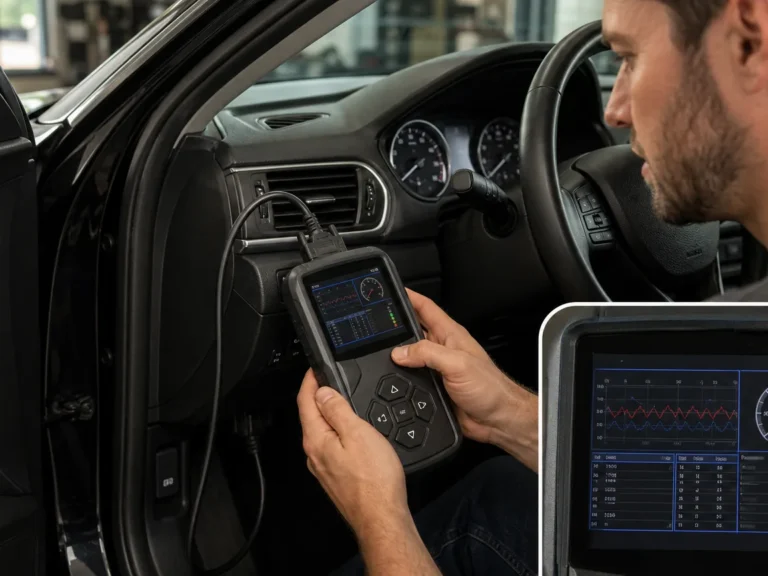
Ask for a transmission-focused diagnostic that includes a code scan, road test, fluid-condition review using the correct procedure, and a written explanation of whether the evidence points toward software, electrical input, fluid-related issues, or internal repair. If the truck is still driveable but symptoms are worsening, book promptly. If it slips badly, loses propulsion, or engages unsafely, tow it.
A clean service handoff improves accuracy and usually shortens time to answer. It also helps you decide whether the next move is dealer warranty review, independent diagnosis, or a second opinion based on recorded evidence rather than fear.


Comments
Be the first to add a practical repair note or follow-up question.